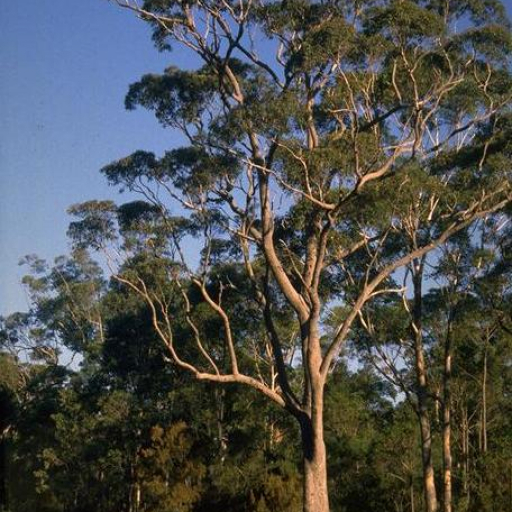
Plant Overview
Known commonly as the Red Bloodwood, this iconic Australian native is famous for the dramatic, blood-red resin that oozes from its trunk like a scene from a forest fable. It is a rugged survivor, often found clinging to sandy coastlines and rocky ridges where other trees struggle to take hold. In the heat of summer, its canopy transforms into a froth of creamy blossoms, providing a vital feast for nectar-loving birds and honeybees.
🔍 How to Identify
- 🧱 The Bark: Unlike many smooth-skinned Eucalypts, the Red Bloodwood wears a thick, persistent coat of "tessellated" bark that looks like a mosaic of small, rough, brownish-gray squares.
- 🥥 The Fruit: It produces large, woody seed pods (gumnuts) shaped like classic Grecian urns, which are often sought after by crafters for their distinct, elegant silhouette.
- 🌸 The Bloom: The flowers are large, creamy-white clusters that grow at the very ends of the branches, ensuring they are visible to pollinators above the thick, leathery leaves.
🏡 In Your Garden
- 🏖️ Soil Specialist: This tree is a specialist of nutrient-poor, sandy soils. If you are planting one, ensure the drainage is impeccable; it will quickly decline if forced to sit in heavy, waterlogged clay.
- 🌬️ Coastal Toughness: Highly resistant to salt spray and buffeting winds, it makes an excellent windbreak for seaside properties, though it requires plenty of space to reach its full, sprawling potential.
⚠️ Safety & Toxicity
- 🌿 Low Risk: Corymbia gummifera is generally safe for humans to handle, and its resin has a long history of traditional medicinal use.
- 🐾 Pet Caution: Like most members of the Myrtaceae family, the foliage contains concentrated eucalyptus oils. While not typically lethal, ingesting the leaves can cause drooling, vomiting, or lethargy in curious dogs and cats.
✨ Fun Fact
The thick, dark red resin (kino) that gives the tree its name was traditionally used by Indigenous Australians as a powerful antiseptic for skin sores and was even tanned into leather or used as a waterproof sealant for fishing equipment!

Detailed Care Instructions
Corymbia gummifera, also known as red bloodwood, is a beautiful tree that can grow up to 20 meters tall. Here are some tips on how to grow Corymbia gummifera:
- Choose the right location: Corymbia gummifera prefers full sun and well-draining soil. Make sure to plant it in a location where it will receive at least 6 hours of sunlight daily.
- Watering: Water the plant regularly, especially during its first few years of growth. Once established, Corymbia gummifera is drought tolerant and can withstand dry conditions.
- Fertilizing: Fertilize the tree with a balanced fertilizer in the spring to promote healthy growth.
- Pruning: Corymbia gummifera does not require much pruning, but you can remove any dead or damaged branches to promote new growth.
- Mulching: Mulch around the base of the tree to retain moisture and suppress weeds.
- Pest and disease control: Keep an eye out for pests such as scales, caterpillars, and borers. Treat any infestations promptly to prevent damage to the tree.
- Propagation: Corymbia gummifera can be propagated from seeds or cuttings. If propagating from seeds, plant them in well-draining soil and keep them moist until they germinate.
By following these tips, you can successfully grow Corymbia gummifera and enjoy its beautiful red flowers and attractive bark.

Place in a bright room that is sun drenched almost all day. Or directly in a south-facing window.

Corymbia Gummifera plants should be watered consistently and thoroughly to ensure they receive enough moisture. It is important to water the plant at the base, being careful not to wet the leaves. The soil should be kept evenly moist but not waterlogged to prevent root rot. Watering frequency may vary depending on the climate and season, but typically, these plants require regular watering, especially during hot and dry periods. It is recommended to water the plant in the morning to allow excess moisture to evaporate during the day and reduce the risk of fungal diseases. Additionally, using a watering can or a soaker hose is ideal to deliver water directly to the roots. Keep an eye on the plant for signs of wilting or yellowing leaves, as this may indicate it needs more water. Adjust your watering schedule accordingly to meet the plant's needs.
To fertilize Corymbia Gummifera, apply a slow-release fertilizer high in phosphorus and potassium in the spring. Spread the fertilizer evenly around the base of the plant, keeping it about six inches away from the trunk. Water thoroughly after fertilizing to help the nutrients penetrate the soil and reach the roots. Repeat this every 6-8 weeks during the growing season, but avoid fertilizing in the winter months.Over-fertilizing can harm the plant, so be sure to follow the recommended dosage on the fertilizer package.
Corymbia gummifera is a native Australian plant that thrives in well-draining soil that is rich in organic matter. It is best to use a sandy loam soil mix with a pH level of around 6.0 to 7.5. The soil should be kept consistently moist but not waterlogged, as the plant does not tolerate waterlogged conditions. Adding compost or leaf mold to the soil can help improve its water retention capacity and provide essential nutrients for the plant's growth. It is also recommended to use a slow-release fertilizer specifically formulated for native Australian plants to ensure optimal growth and health. Additionally, adding a layer of organic mulch around the plant can help retain moisture in the soil and suppress weed growth.
To propagate Corymbia gummifera, you can collect seeds from mature fruits and sow them in a well-draining seed-raising mix. Keep the soil consistently moist and place the seeds in a warm, bright location to encourage germination.
You can also propagate Corymbia gummifera through stem cuttings. Select a healthy, non-flowering stem and cut a piece that is around 4-6 inches long. Remove the bottom leaves and dip the cut end in rooting hormone. Plant the cutting in a pot filled with a mix of equal parts perlite and peat moss, and keep the soil moist but not waterlogged. Place the pot in a warm, bright location and mist the cutting regularly to maintain humidity.
Another method of propagation for Corymbia gummifera is layering. Select a low branch and gently wound a small section of the stem. Apply rooting hormone to the wounded area and cover it with moist sphagnum moss. Secure the moss in place with a plastic wrap and wait for roots to develop. Once roots have formed, you can cut the new plant from the parent and pot it up.
Overall, propagating Corymbia gummifera can be done through seeds, stem cuttings, and layering, providing you with multiple options to grow new plants from an existing specimen.








