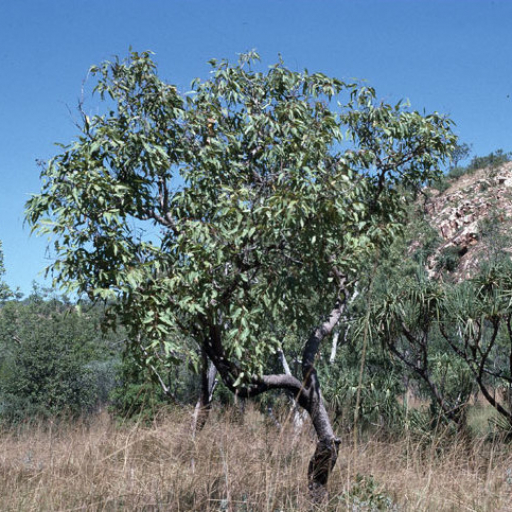
Plant Overview
Known as the Swamp Bloodwood or Spring Bloodwood, this Australian native is a true showstopper of the tropical north. Unlike many of its cousins that prefer arid conditions, this tree thrives where water lingers, lighting up the landscape with massive, pom-pom-like clusters of vibrant pink or red flowers. It is widely beloved by honeyeaters and gardeners alike for its ability to turn a damp corner of the yard into a nectar-filled paradise.
🔍 How to Identify
- 🌸 Spectacular Blooms: It produces large, heavy clusters of flowers (terminal panicles) that range from a delicate shell pink to a deep, fiery crimson.
- 🥥 Ribbed Gumnuts: The fruit is highly distinctive—large, woody, and featuring prominent longitudinal ribs or ridges. The species name ptychocarpa actually translates to "folded fruit."
- 🍃 Leathery Foliage: The leaves are broad, glossy, and dark green, providing a lush, tropical look compared to the thinner, silvery leaves of other eucalyptus-type trees.
🏡 In Your Garden
- 💧 Moisture Lover: As the name "Swamp Bloodwood" suggests, this tree is much more tolerant of "wet feet" than most Corymbia species. It is perfect for low-lying areas of the garden where water tends to collect.
- 🌡️ Frost Sensitivity: Being a child of the tropics, it has a very low tolerance for freezing temperatures. If you live in a cooler climate, it needs a sheltered, north-facing spot or protection during its first few winters.
- 🦜 Wildlife Magnet: It is one of the best trees for attracting nectar-feeding birds. When in bloom, expect a constant hum of activity from honeyeaters and lorikeets.
⚠️ Safety & Toxicity
- 🟢 Non-Toxic: The Swamp Bloodwood is generally considered non-toxic to humans and is not known for causing skin irritation.
- 🐾 Pet Safety: Like most members of the Myrtaceae family, the leaves contain essential oils (eucalyptol). While not deadly, ingestion of large amounts of leaves by dogs or cats can lead to digestive upset or lethargy, so keep an eye on curious chewers.
✨ Fun Fact
The name "Bloodwood" comes from the tree’s thick, dark red resin (kino) that oozes from wounds in the bark. Historically, this "blood" was used by Indigenous Australians for its antiseptic properties to treat wounds and skin conditions!

Detailed Care Instructions
Corymbia ptychocarpa, also known as swamp bloodwood, is a native Australian tree that can be grown in the garden or as a street tree. Here are some tips to help you successfully grow Corymbia ptychocarpa:
- Plant in a suitable location: Corymbia ptychocarpa prefers full sun and well-draining soil. Choose a location that receives at least 6-8 hours of sunlight per day.
- Water regularly: Keep the soil consistently moist, especially during hot and dry periods. Water deeply and infrequently rather than shallowly and frequently.
- Mulch: Mulch around the base of the tree to help retain moisture and suppress weeds. This will also help to protect the roots during extreme temperatures.
- Prune as needed: Prune the tree to remove dead or damaged branches, promote a healthy shape, and improve air circulation.
- Fertilize: Feed the tree with a balanced, slow-release fertilizer in the spring to encourage healthy growth.
- Monitor for pests and diseases: Keep an eye out for common pests and diseases that may affect Corymbia ptychocarpa, such as scale insects and powdery mildew. Treat any issues promptly to prevent them from spreading.
- Be patient: Corymbia ptychocarpa is a slow-growing tree, so it may take some time to reach its mature height of around 15-20 meters. Be patient and provide the tree with the care it needs to thrive.
By following these tips, you can successfully grow Corymbia ptychocarpa and enjoy the beauty of this native Australian tree in your garden.
To water this plant, you should first ensure that the soil is dry before watering. Then, prepare a watering can with water that is at room temperature, as water that is too cold or too hot can shock the plant. Slowly pour the water onto the soil around the base of the plant, making sure not to water the leaves or flowers. Allow the water to soak into the soil for a few minutes before checking to make sure that the water has reached the roots. If the soil is still dry, water the plant again. Be careful not to overwater the plant, as this can lead to root rot. It is recommended to water this plant once a week during the growing season, and less frequently during the dormant season.
To fertilize a Corymbia Ptychocarpa plant, you should use a balanced fertilizer with an N-P-K ratio of 10-10-10. Apply the fertilizer in early spring before new growth begins and again in mid-summer. Be sure to follow the manufacturer's instructions for application rates and frequency. Water the plant thoroughly after fertilizing to help the nutrients reach the roots. Avoid over-fertilizing as this can lead to nutrient imbalances and potentially harm the plant.
The optimal soil for Corymbia Ptychocarpa is well-draining and fertile soil with a pH range between 6.5 to 7.5. The plant prefers soils that are slightly sandy, loamy, and clayey, which are rich in organic matter. It thrives in soils that are moist but not waterlogged. Waterlogging can lead to root rot and affect the growth and development of the plant. Adding organic matter to the soil helps improve soil structure, fertility, and water-holding capabilities. A soil with a good balance of nutrients, including nitrogen, phosphorus, and potassium, is important for the healthy growth of the plant. Additionally, care should be taken to avoid using soils that are contaminated with chemicals or pollutants, as this can negatively impact the plant's health.
Corymbia Ptychocarpa can be propagated through both seeds and cuttings.
To propagate from seed, collect mature seeds from the fruit capsules of a healthy plant. Sow the seeds in a well-draining potting mix, covering them lightly with soil. Keep the soil consistently moist but not waterlogged, and place the pot in a warm, bright location but out of direct sunlight. Germination may take several weeks to months, so be patient.
To propagate from cuttings, take a 4-6 inch long cutting from a healthy, disease-free plant during the growing season. Remove the lower leaves and dip the cut end in rooting hormone to promote root development. Plant the cutting in a well-draining potting mix, keeping the soil consistently moist and placing the pot in a warm, bright location. Rooting can take several weeks to months, so be patient and check for root development by gently tugging on the cutting after a few weeks.
Once roots have developed, transplant the young plants into individual pots and continue to care for them until they are well-established. Transplant them into larger pots or into the garden when they have reached a suitable size. Remember to provide adequate water, sunlight, and nutrients to help the plants thrive.








