Plant Overview
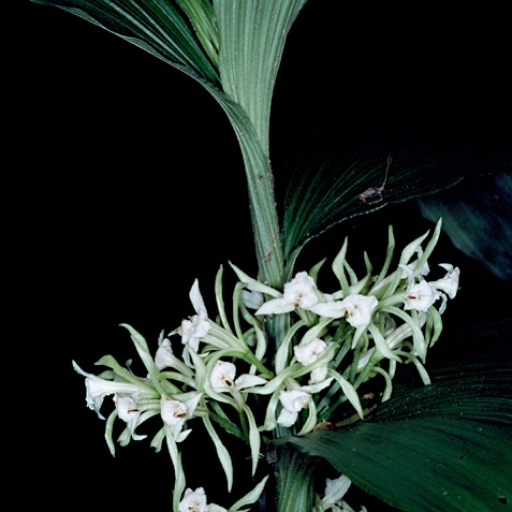
Known as the White Cinnamon Orchid, this elegant terrestrial species is a master of disguise. Native to the humid rainforests of Southeast Asia, the Pacific Islands, and Northern Australia, it often hides in the deep shade of the undergrowth. Unlike the flashy orchids found in floral shops, this plant looks more like a young palm or a ginger plant until its delicate, spicy-scented blossoms reveal its true identity.
🔍 How to Identify
- 🍃 The Foliage: Large, elliptical leaves with prominent longitudinal pleats. These ridges give the leaves a "ribbed" texture, mimicking the look of False Hellebore (Veratrum).
- 🎋 The Stems: Thin, upright, cane-like stems that can grow quite tall, sometimes reaching over 6 feet in their natural habitat, giving the plant a shrub-like appearance.
- 🌸 The Blooms: Fragile clusters of narrow, tubular white or cream flowers. They emerge in starburst shapes from the leaf joints and are famous for their soft, sweet fragrance.
🏡 In Your Garden
- ☁️ Tropical Humidity: As a child of the rainforest floor, this orchid craves high humidity. It is best suited for a greenhouse or a bathroom with plenty of steam; otherwise, its pleated leaves may develop brown, crispy edges.
- ⛰️ Terrestrial Needs: Unlike most orchids that grow on trees (epiphytes), Corymborkis is terrestrial. It requires a rich, loamy potting mix packed with organic matter to mimic the decomposing leaf litter of the jungle.
- 🌑 Shade Lover: This plant is highly sensitive to direct sunlight. It has evolved to thrive in "dappled light," so keep it in a spot where it receives soft, filtered glow rather than harsh afternoon rays.
⚠️ Safety & Toxicity
- 🟢 Status: Generally non-toxic.
- 🐾 Pet Safety: There are no recorded toxic effects for cats or dogs, making it a safe choice for pet-friendly homes.
- 🧤 Handling: While not poisonous, the sap of many tropical orchids can cause minor skin redness or "contact dermatitis" in people with sensitive skin. It is always a good idea to wash your hands after pruning.
✨ Fun Fact
The species name veratrifolia literally translates to "leaves like Veratrum." It was named this because, when it isn't flowering, even experienced botanists can mistake it for the highly toxic False Hellebore plant!

Detailed Care Instructions
To grow Corymborkis Veratrifolia, also known as the spider orchid, you will need to provide the following conditions and care:
- Light: Spider orchids prefer bright but indirect light. Place the plant near a window with filtered sunlight or use artificial lights if needed. Avoid direct sunlight as it may burn the leaves.
- Temperature and Humidity: These orchids thrive in warm to cool temperatures, ideally between 18–25°C (65–77°F) during the day and slightly cooler at night. They also appreciate high humidity, around 50-70%. Using a humidifier or placing the plant on a humidity tray filled with water and pebbles can help maintain appropriate humidity levels.
- Watering: Spider orchids prefer regular watering, but it is crucial not to overwater them. Allow the top layer of the potting mix to dry out slightly before watering again. Use room temperature water and thoroughly soak the potting mix, allowing it to drain. Empty the excess water collected in the saucer or cache pot to avoid waterlogging.
- Potting Mix: Use a well-draining orchid potting mix suitable for epiphytic orchids, such as a mix of bark chips, sphagnum moss, and perlite. Avoid using regular potting soil, as it retains too much moisture and may lead to root rot.
- Fertilizer: Spider orchids benefit from regular feeding during the growing season. Use a balanced orchid fertilizer diluted to half or quarter strength every two weeks. Reduce or suspend fertilization during the dormant period.
- Air Circulation: Good air circulation is essential for spider orchids to prevent fungal or bacterial infections. Avoid placing them in stagnant, enclosed spaces, and ensure proper ventilation around the plant.
- Repotting: Spider orchids generally need to be repotted every two to three years when the potting mix starts to break down. Repot the plant in a slightly larger pot, removing the old mix and gently separating any tangled roots.
Remember that growing orchids can be a bit challenging, so monitor your plant closely and adjust care as necessary. Patience and consistency are key to successfully growing these beautiful plants.

Place in a window with dappled sun or a spot in the middle of a room. Or directly in a window facing west or east.

Watering this plant requires a delicate balance, as overwatering can lead to root rot, but allowing it to dry out completely can also harm the plant. It is important to ensure that the soil is moist but not soaked, and to allow the top layer of the soil to dry out slightly before watering again. This plant thrives in a humid environment, so misting the foliage or placing a tray of water nearby can help to maintain the necessary humidity levels. It is also recommended to use a well-draining soil mix and a pot with drainage holes to prevent water from accumulating in the roots. As a general guideline, water this plant about once a week, adjusting the frequency according to the specific environment and season.
To fertilize the plant, use a balanced fertilizer with equal amounts of nitrogen, phosphorus, and potassium. Mix the fertilizer with water according to the instructions on the package. Apply the fertilizer solution to the soil around the plant once a month during the growing season. Avoid over-fertilizing, as it can damage the plant's roots.
Corymborkis Veratrifolia plant prefers well-draining soil that has a good balance of nutrients. A mix of organic materials such as peat moss, sphagnum moss, perlite, and bark is ideal for this plant. The soil should be slightly acidic with a pH range between 5.5 and 6.5. It is important to avoid using heavy soils that retain too much moisture, as this can lead to root rot. Additionally, the plant does not tolerate soil with high levels of salt, so avoiding fertilizers with high salt content is recommended. Overall, selecting a soil mix that promotes good drainage and aeration while providing essential nutrients is essential for ensuring the health of the Corymborkis Veratrifolia plant.
To propagate this plant, you will need to select a healthy and mature specimen with strong roots. Prepare a sterile cutting tool, such as pruning shears, and cut a section of the stem that has at least two nodes. Nodes are the points where leaves emerge from the stem. Make sure to cut cleanly and avoid crushing or damaging the stem.
After cutting, remove the lower leaves and dip the cut end of the stem into a rooting hormone powder. Then insert the stem into a well-draining potting mix. Water the soil gently and cover the pot with a plastic bag or a transparent plastic dome to create a humid environment.
Place the pot in a bright but indirect light and keep the soil moist but not waterlogged. After a few weeks, new growth should appear, indicating that the cutting has rooted successfully. Remove the plastic covering and gradually acclimate the new plant to its normal growing conditions.
Repeat this process with multiple cuttings to increase your chances of success. You can also propagate this plant from division, which involves separating the parent plant into smaller sections and planting them separately. However, this method should be done carefully to avoid damaging the roots.








