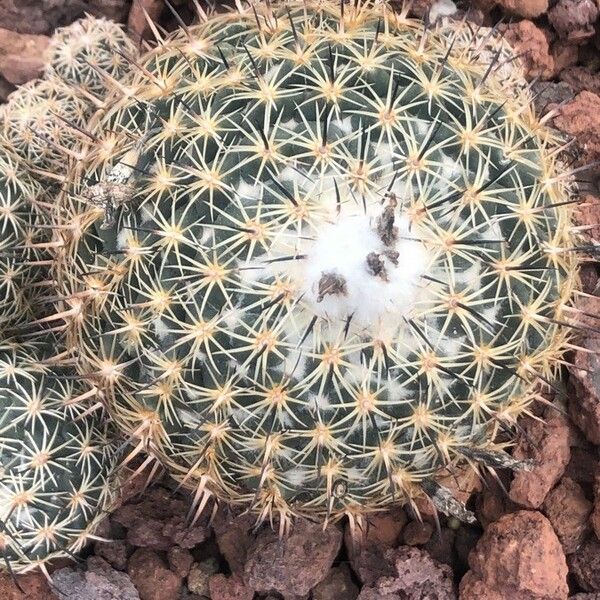
Plant Overview
Known affectionately as the Rhinoceros Cactus or Horned Cactus, this Mexican desert native earns its name from its robust, curved spines that mimic the horn of a rhino. In its natural habitat, it survives the harsh sun by tucking itself into limestone crevices, making it a rugged and fascinating addition to any succulent collection.
🔍 How to Identify
- 🦏 The "Horn": Look for a single, dark, downward-curving central spine that sits atop each tubercle, giving the plant its distinct "horned" appearance.
- 🟢 Geometric Body: The plant has a spherical green stem covered in prominent, nipple-like bumps called tubercles rather than traditional ribs.
- 🌼 Silky Blooms: It produces surprisingly large, lemon-yellow flowers with a delicate, satiny texture that emerge directly from the crown of the plant in late summer.
🏡 In Your Garden
- 🪴 Deep Taproot: Unlike many shallow-rooted succulents, this cactus develops a thick, turnip-like taproot. It requires a deeper pot than you might expect to allow the root to expand without hitting the bottom, which prevents stunted growth.
- 🏜️ Mineral Soil: Because it is adapted to limestone slopes, it dislikes "rich" potting soil. It thrives best in a gritty, mineral-heavy mix (lots of pumice or perlite) that dries out rapidly to prevent the taproot from rotting.
⚠️ Safety & Toxicity
- 🌵 Physical Hazard: While Coryphantha cornifera is not known to be chemically toxic to humans or pets, its spines are incredibly stiff and sharp.
- 👶 Safe Handling: The hooked nature of the spines means they can easily snag clothing or skin. It should be kept on a high shelf away from curious pets and small children who might try to "pet" the interesting texture.
✨ Fun Fact
- ✨ The name Coryphantha is derived from the Greek words koryphe (top) and anthos (flower). This describes its unique botanical habit of blooming exclusively from the very peak of the plant, unlike many other cacti that bloom from the sides.

Detailed Care Instructions
Coryphantha cornifera, commonly known as horned cactus, is a species of cactus native to Mexico. It is known for its unique appearance and relatively easy care requirements. Here are some tips for growing Coryphantha cornifera successfully:
1. Soil Requirements
- Use well-draining soil specifically formulated for cacti and succulents. You can create your own mix by combining potting soil with sand, perlite, or grit to enhance drainage.
2. Light
- Coryphantha cornifera requires plenty of sunlight. Place it in a location where it can receive bright, direct sunlight for at least 6 hours a day. If growing indoors, a south or west-facing window is ideal.
3. Watering
- Water the plant thoroughly but allow the soil to dry out completely between waterings. During the growing season (spring and summer), you may water more frequently (about every 2-3 weeks), while in the winter, reduce watering to once a month or less.
4. Temperature and Humidity
- This cactus prefers warm temperatures. Ideal daytime temperatures range from 70°F to 85°F (21°C to 29°C), while cooler nights (around 50°F to 60°F or 10°C to 15°C) are acceptable. It can tolerate dry air but avoid high humidity.
5. Fertilizing
- Fertilize the plant during the growing season using a diluted, balanced fertilizer formulated for cacti and succulents. Do this every 4-6 weeks during spring and summer.
6. Potting
- Use a pot with drainage holes to prevent waterlogging. Repot your plant every couple of years or when it outgrows its container, using fresh soil.
7. Pest Control
- Watch for common pests such as mealybugs and spider mites. If you notice a pest infestation, treat it promptly with insecticidal soap or neem oil.
8. Propagation
- Coryphantha cornifera can be propagated from seeds or offsets. If propagating from seeds, sow them in a well-draining soil mix and keep them warm and moist until germination.
9. Dormancy
- The plant may enter a dormant period in the winter. During this time, reduce watering and avoid fertilizing.
10. Handling
- Use gloves when handling the cactus, as it may have spines or glochids that can irritate the skin.
By following these guidelines, you can successfully grow and enjoy Coryphantha cornifera as part of your cactus collection.

Place in a bright room that is sun drenched almost all day. Or directly in a south-facing window.

Coryphantha cornifera is a succulent plant that has specific watering needs to thrive. Here’s how to properly water this species:
1. Watering Frequency: Water the plant during its active growing season, typically in spring and early summer. Reduce watering frequency in the fall and winter when the plant is dormant.
2. Soil Moisture: Check the moisture level of the soil before watering. It’s best to water when the top 1-2 inches of soil feels dry. This prevents overwatering, which can lead to root rot.
3. Watering Method: Water the plant thoroughly, ensuring that water reaches the root zone. This can be done by applying water directly to the soil until it drains out of the bottom of the pot. Avoid getting water on the plant's body to prevent rot, especially in humid conditions.
4. Drainage: Ensure that the pot has adequate drainage holes. Good drainage is essential to prevent water accumulation in the soil.
5. Water Quality: Use room-temperature, non-chlorinated water if possible. Rainwater or distilled water is ideal for this type of plant, as it helps avoid chemical buildup from tap water.
6. Seasonal Adjustments: In hot and dry conditions, the plant may need more frequent watering. Conversely, during cooler months or periods of high humidity, reduce the amount of water given.
7. Signs of Watering Needs: Observe the plant for signs of underwatering (e.g., shriveling) or overwatering (e.g., mushy stems and yellowing). Adjust your watering schedule based on these signs.
8. Fertilization Consideration: If you are fertilizing during the growing season, you may need to adjust your watering to ensure that the nutrients are adequately absorbed.
By following these guidelines, you can ensure that your plant receives the appropriate amount of water, leading to healthy growth and vitality.
To fertilize Coryphantha cornifera effectively, follow these instructions:
- Timing: Fertilize during the growing season, which typically spans from spring to early autumn. Avoid fertilizing during the dormant winter months.
- Type of Fertilizer: Use a balanced, water-soluble fertilizer with a ratio such as 10-10-10 or a cactus-specific formulation that is low in nitrogen. The ideal N-P-K ratio promotes healthy growth without overwhelming the plant.
- Dilution: Dilute the fertilizer to half the recommended strength. Cacti are sensitive to excess nutrients, so it’s better to under-fertilize.
- Application Frequency: Apply the diluted fertilizer every 4-6 weeks throughout the growing season. Reduce or stop fertilizing in late summer as the plant prepares for dormancy.
- Method of Application: Water the plant thoroughly before applying the fertilizer to prevent root burn. Apply the diluted solution directly to the soil around the base of the plant, avoiding contact with the plant body.
- Watering: Ensure that the soil is well-draining, and water the plant again with plain water after applying fertilizer to help distribute the nutrients.
- Soil Requirements: Ensure the plant is in well-draining soil suitable for cacti, often a mixture that includes sand or perlite to help retain the right moisture level while preventing excess water retention.
By following these guidelines, you can encourage healthy growth and development for your plant.
The ideal soil for the plant in question should be well-draining, with a pH range of 6.0 to 7.5. It should also be sandy, rocky, or gravelly, with minimal organic matter content. The soil should be kept slightly dry, as too much moisture can harm the roots. Additionally, the plant prefers to grow in a location with full sun exposure.
Coryphantha cornifera is a type of cactus known for its unique appearance. Here are the methods for propagating this plant:
1. Offsets (Pups) Propagation
Coryphantha cornifera typically produces offsets, which can be separated and planted.
- Timing: The best time to propagate is during the growing season, usually in spring or early summer.
- Tools Needed: A sharp, sterile knife or scissors, pots, cactus soil mix, and possibly rooting hormone.
- Steps:
- Identify Offsets: Look for healthy offsets that are large enough to separate from the main plant.
- Remove Offsets: Gently twist or cut the offsets from the main plant, ensuring you don't damage the mother plant or the pups.
- Cure the Cuts: Allow the detached offsets to dry and callus for 1-2 days in a warm, dry place. This helps prevent rot after planting.
- Planting: Fill a pot with a well-draining cactus soil mix. Insert the callused end of each offset into the soil, burying it to the appropriate depth.
- Watering: Water sparingly for the first few weeks. Allow the soil to dry out completely between waterings to prevent rot.
- Light Conditions: Place in bright, indirect light to encourage growth.
2. Seed Propagation
Propagating from seeds is another method, although it requires patience.
- Identify Offsets: Look for healthy offsets that are large enough to separate from the main plant.
- Timing: Seeds can be sown in spring after the last frost.
- Tools Needed: Seed tray or pots, cactus soil mix, plastic cover or clear plastic bag, seeds, and water.
- Steps:
- Prepare Soil: Fill seed trays or pots with a moistened cactus soil mix.
- Sow Seeds: Evenly distribute the seeds on the surface of the soil. Press them down lightly but do not cover them with soil, as they need light for germination.
- Humidity and Temperature: Cover the tray with a plastic cover or bag to maintain humidity. Keep the temperature between 20-30°C (68-86°F).
- Light Conditions: Place the tray in a location that receives bright but indirect sunlight.
- Watering: Use a spray bottle to keep the soil consistently moist but not waterlogged. Remove the cover once seedlings emerge, which may take several weeks to a few months.
- Transplanting: Once seedlings are large enough to handle, transplant them into individual pots, continuing to provide bright light and appropriate moisture levels.
3. General Care Post-Propagation
Regardless of the propagation method, newly propagated plants should be cared for as follows:
- Prepare Soil: Fill seed trays or pots with a moistened cactus soil mix.
- Monitoring Watering Needs: Water once the soil is completely dry to avoid overwatering.
- Gradual Acclimatization: If the plants have been kept indoors or in a protected environment, gradually acclimatize them to outdoor conditions before placing them in full sun.
- Fertilization: After a month, you may begin to fertilize with a diluted cactus fertilizer during the growing season.
By following these methods, propagation of Coryphantha cornifera can be successful, leading to healthy new plants.
Common pests of the rhinoceros cactus include Scale insect, mealybugs, spider mites. Make a habit of checking your rhinoceros cactus frequently for pests so that any infestations can be caught and managed early.








