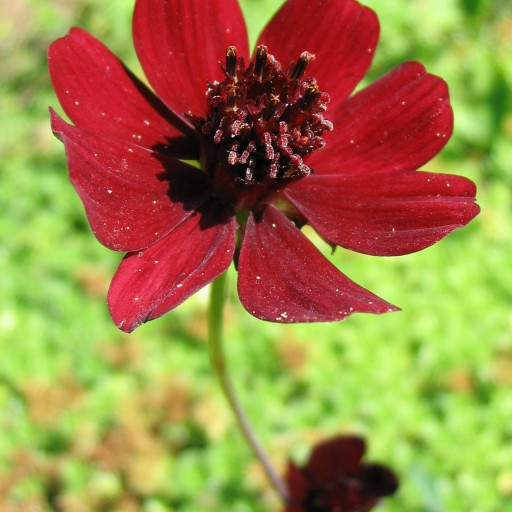
Plant Overview
Known famously as the "Chocolate Cosmos," this Mexican native is a true sensory delight for the garden. It doesn't just look like gourmet dark chocolate; it actually releases a rich, cocoa-vanilla fragrance that intensifies on warm summer afternoons. Once thought to be extinct in the wild, this plant is a survivor that transitioned from the hills of Mexico to become a prized jewel in modern landscaping.
🔍 How to Identify
- 🌸 Velvety Petals: Deep, dark maroon to brownish-red flowers that appear almost black in certain lighting, featuring a luxurious, velvety texture.
- 🌿 Feathery Foliage: Pinnate (feather-like) green leaves that form a dense, low-growing mound, providing a lush base for the flowers.
- 📏 Slender Stems: The blossoms dance atop long, thin, wiry stems that can reach up to 24 inches high, giving the plant an airy, elegant silhouette.
🏡 In Your Garden
- ☀️ The Sun Factor: These plants are sun-worshippers. To get that signature chocolate scent and deep color, they need at least six hours of direct sunlight. In shade, the stems become weak and "leggy."
- 🥔 Tuberous Roots: Much like Dahlias, Chocolate Cosmos grow from tubers. They are sensitive to "wet feet" during the winter; in colder zones, you must lift the tubers from the soil and store them in a dry, frost-free place until spring.
- 🦋 Pollinator Buffet: Despite its unique scent, it is highly attractive to butterflies and bees, serving as a sophisticated centerpiece for a pollinator-friendly garden.
⚠️ Safety & Toxicity
- 🐾 Pet Safety: Good news for pet owners! The Chocolate Cosmos is generally considered non-toxic to cats, dogs, and horses.
- 👶 Kid-Friendly: It is safe for curious children. While the scent might mimic a treat, the plant is not for consumption, but it won't cause skin irritation or poisoning if handled.
✨ Fun Fact
Because this species is self-sterile and rarely produces viable seeds, almost every Chocolate Cosmos on the planet today is a clone! They are all thought to be descendants of a single plant collected in Mexico back in 1902, preserved entirely through the dedicated root division of gardeners.

Detailed Care Instructions
Here are some steps on how to grow Cosmos Atrosanguineus (Chocolate Cosmos) plant:
- Soil and location: Choose a well-draining soil with pH levels between 6.5 to 7.5. This plant prefers full sun but can tolerate partial shade as well.
- Planting: Start by preparing the planting area, amend the soil if necessary by adding compost or well-rotted manure. Dig a hole large enough to accommodate the rootball of the plant. Space the plants about 12 to 18 inches apart.
- Planting time: Cosmos Atrosanguineus is typically planted in spring after the last frost. However, in areas with mild winters, it can also be planted in fall.
- Watering: Keep the soil consistently moist, especially during the hot summer months. Avoid overwatering as it can cause root rot.
- Fertilization: Use a balanced, slow-release fertilizer during planting and then fertilize every six to eight weeks. Follow the product instructions on the fertilizer package for the correct dosage.
- Mulching: Apply a layer of organic mulch around the plants to help retain moisture, suppress weeds, and regulate soil temperature.
- Pruning: Remove any dead or damaged foliage to maintain plant health and appearance. Deadhead the flowers regularly to encourage continuous blooming.
- Winter care: Chocolate Cosmos is not frost hardy and may not survive harsh winters. In colder regions, it's best to treat it as an annual or dig up the tubers and store them in a cool, dry place during the winter.
- Propagation: Chocolate Cosmos can be propagated through dividing tubers in spring or by collecting and sowing seeds in late autumn or early spring.
Remember to always refer to specific care instructions for your particular plant, as different varieties and growing conditions may require slightly adjusted care.

Place in a bright room that is sun drenched almost all day. Or directly in a south-facing window.

To water this particular plant, it is important to keep the soil evenly moist but not waterlogged. Avoid letting the soil dry out completely, as this can cause the plant to wilt and suffer from stress. When watering, apply water gently at the base of the plant, being careful not to get water on the leaves or flowers. Watering early in the morning or late in the evening when temperatures are cooler can also help reduce water evaporation and ensure the plant takes up as much water as possible. Additionally, adding a layer of mulch around the base of the plant can help retain moisture in the soil and reduce the frequency of watering needed.
To fertilize this plant, you should use a balanced fertilizer with equal amounts of nitrogen, phosphorus, and potassium. Apply the fertilizer once every four to six weeks during the growing season, which is typically from spring to fall. Follow the manufacturer's instructions for how much fertilizer to use per application. Avoid over-fertilizing, as this can damage the plant's roots and foliage. Water the plant thoroughly after applying fertilizer to help it absorb the nutrients.
The best soil for growing this plant is a well-draining, fertile soil that is slightly acidic with a pH range of 6.0-6.5. It should be rich in organic matter, such as compost or well-decomposed manure. The texture of the soil should be a loamy sand with good water retention capacity but also good drainage. Avoid using heavy clay soils or soils that are too alkaline as they can cause problems with root growth and nutrient uptake. A soil with a good nutrient balance is recommended, as this plant requires a regular supply of nitrogen, potassium, and phosphorus for healthy growth. Additionally, adding a layer of mulch around the base of the plant can help retain moisture, prevent weed growth, and provide valuable nutrients as it breaks down over time.
Cosmos Atrosanguineus plant can be propagated in several ways. One way is by taking cuttings from the stem of a mature plant. To do this, select a healthy stem that is at least 4 inches long and has several leaves. Cut the stem just below a node, which is where the leaves emerge. Remove any leaves from the bottom half of the stem. Dip the bottom of the stem into rooting hormone powder and place it into a pot filled with moist potting soil. Cover the pot with a clear plastic bag to maintain humidity and place it in a warm, bright location. After a few weeks, roots should develop and the plant can be potted into its own container.
Another way to propagate Cosmos Atrosanguineus plant is by dividing the roots of an established plant. This is best done in the spring when new growth is just beginning. Gently remove the plant from its container and carefully separate the roots into smaller sections. Each section should have a few stems and a healthy root system. Repot each section into its own container with fresh potting soil.
Lastly, Cosmos Atrosanguineus plant can be grown from seed. Sow the seeds in a pot with potting soil and cover lightly with soil. Keep the soil moist and warm, and seedlings should emerge within a week or two. Once seedlings have developed a few leaves, they can be potted into their own containers.
Common pests of the chocolate cosmos include Aphids, thrips, larvae. Make a habit of checking your chocolate cosmos frequently for pests so that any infestations can be caught and managed early.








