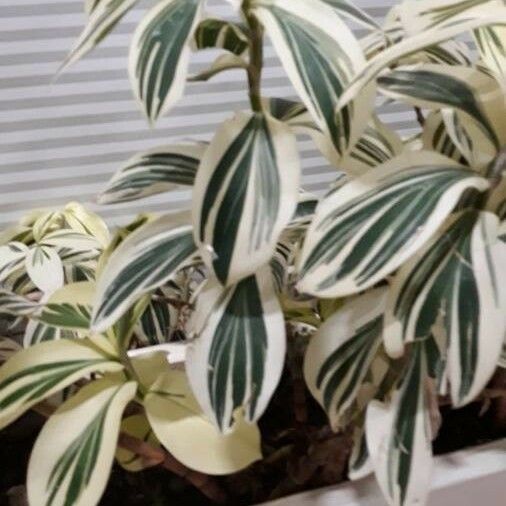
Plant Overview
Known affectionately as the Spiral Ginger or Step Ladder Ginger, Costus arabicus is a tropical showstopper that looks like it stepped right out of a prehistoric jungle. Despite its name, this plant isn’t actually from Arabia—it hails from the lush rainforests of South America. Its most mesmerizing feature is the way its leaves grow in a perfect, winding staircase pattern up the stem, topped with delicate flowers that resemble crumpled silk or "fried eggs."
🔍 How to Identify
- 🌀 The Spiral Stem: Unlike typical gingers, the stems of this plant twist as they grow, creating a unique corkscrew or "spiral" effect that earns it its nickname.
- 🍃 Lush Foliage: The leaves are broad, elliptical, and a deep, waxy green. They are arranged spirally around the fleshy stalks, making the plant look architectural even when not in bloom.
- 🍳 Fried Egg Flowers: It produces snowy-white, tubular flowers with bright yellow centers. The petals have a delicate, crinkled texture that looks remarkably like crepe paper.
🏡 In Your Garden
- ☁️ Humidity is Key: Because it originated in the humid understory of tropical forests, it thrives in "bathroom-like" conditions. If the air is too dry, the leaf tips will turn brown and crispy.
- 💧 Thirsty Rhizomes: It grows from underground rhizomes. While it loves consistent moisture, it hates sitting in "wet feet." Use a well-draining potting mix to prevent the roots from rotting during the dormant season.
- 🌤️ Dappled Light: Think of its natural home under tall trees; it prefers bright, filtered light. Harsh, direct afternoon sun can scorch the beautiful spiraling leaves.
⚠️ Safety & Toxicity
- ✅ Safe Status: Costus arabicus is generally considered non-toxic to humans and common household pets like cats and dogs.
- 🧤 Skin Sensitivity: While not poisonous, the sap from broken stems can occasionally cause mild skin irritation for those with very sensitive skin. It is always best to wash your hands after pruning.
✨ Fun Fact
The name arabicus is actually a historical mistake! When the famous botanist Carl Linnaeus named the plant in the 1700s, he incorrectly believed it originated in the Arabian Peninsula because it was being traded through those routes. In reality, it’s a true South American native!

Detailed Care Instructions
To grow Costus Arabicus plant, you can follow the following steps:
- Obtain the plant: Look for a reputable plant nursery or specialized shop that sells Costus Arabicus plants. You can also try to source it from experienced gardeners or online plant sellers.
- Choose the right location: Costus Arabicus thrives in warm and humid environments. It can be grown outdoors in tropical or subtropical regions or indoors in a greenhouse or a well-lit room.
- Prepare the soil: Costus Arabicus prefers well-draining soil rich in organic matter. Prepare the soil by adding compost or well-rotted manure to enhance fertility and drainage.
- Planting: Dig a hole in the prepared soil that is slightly larger than the size of the root ball. Place the plant in the hole and backfill with soil, gently firming it around the base of the plant. Ensure that the plant is planted at the same depth as it was in its container.
- Watering: Keep the soil evenly moist but not waterlogged. Allow the top inch or two of soil to dry out between waterings. Avoid overwatering as it can cause root rot.
- Fertilization: Apply a balanced organic fertilizer monthly during the growing season to promote healthy growth and flowering. Follow the manufacturer's instructions for the appropriate dosage.
- Pruning: Regularly remove dead or damaged leaves to maintain a tidy appearance and prevent disease. Pruning can also be done to control the size and shape of the plant.
- Pests and diseases: Monitor the plant for common pests like aphids, spider mites, and scale insects. Treat any infestations promptly with organic insecticidal soap or neem oil. Ensure good air circulation around the plant to prevent fungal diseases.
- Mulching: Apply a layer of organic mulch around the base of the plant to conserve moisture, suppress weed growth, and provide a slow release of nutrients.
- Propagation: Costus Arabicus can be propagated through division. When the plant becomes too large, carefully dig it up and divide it into smaller clumps, ensuring that each division has some healthy roots and foliage. Replant divisions in separate pots or in different locations in the garden.
Remember that different plant species may have specific requirements, so it's always best to consult specialized books, websites, or local experts for specific care instructions for the Costus Arabicus plant.

Place in a window with dappled sun or a spot in the middle of a room. Or directly in a window facing west or east.

Costus Arabicus is a plant that requires adequate watering for healthy growth. To water it, you should first ensure that the soil is dry to the touch before watering. This can be done by inserting your finger into the soil to a depth of about an inch. If the soil feels dry, it is time to water the plant.
When watering, it is important to ensure that the water is evenly distributed throughout the soil. You can achieve this by watering around the base of the plant, rather than directly onto the leaves or flowers. Avoid over-watering the plant as this can cause root rot or other issues.
It is also important to pay attention to the temperature and humidity levels in the environment where the plant is situated. In dry or hot conditions, the plant may require more frequent watering. On the other hand, in cooler or humid environments, the plant may require less water.
In addition to regular watering, it is recommended to fertilize the plant every few weeks to provide it with the necessary nutrients for healthy growth. This can be done using a balanced fertilizer or one specifically formulated for Costus Arabicus plants.
To fertilize this particular plant, you will need to apply a balanced fertilizer once a month during the growing season. Be sure to follow the manufacturer's instructions for application rates and timing. Additionally, it's important to monitor the plant for signs of nutrient deficiencies such as yellowing leaves or stunted growth, as this may indicate that it needs additional fertilization. However, be cautious not to over-fertilize as this can harm the plant. Lastly, ensure that the soil is moist before applying the fertilizer to minimize the risk of burning the roots.
Costus Arabicus plant requires a well-draining soil that is rich in organic matter. The ideal soil for this plant is loamy soil that has a pH range of 6.0 to 7.5. It is recommended to mix the soil with compost or peat moss to improve its moisture retention and to provide additional nutrients to the plant. Additionally, the soil should be airy to allow sufficient air circulation, which is essential for healthy root development. It is important to avoid using heavy soil or soil that compacts easily, which can restrict root growth and lead to issues such as root rot. Therefore, the soil should be loose and friable, allowing the roots to spread out easily and absorb nutrients from the soil. Moreover, the soil should be free from any pests, diseases, or chemical residues that can harm the plant's growth and health.
The propagation of this plant can be done through various methods such as seed propagation, division, and stem cuttings. Seed propagation is done by collecting the mature seed pods from the plant and sowing them in a potting mix. The potting mix should be kept moist and warm until germination occurs.
Division involves separating the plant into smaller sections and replanting them. This is done by carefully digging up the plant and cutting the root ball into smaller sections. Each section should have several leaves and roots attached, and they can be replanted in separate pots.
Stem cuttings can also be used to propagate the plant. This is done by taking a section of stem, about 6 inches long, and removing the leaves from the bottom half. The stem is then placed in a potting mix and kept moist until roots start to form. Once the roots have formed, the new plant can be transplanted into its own pot.
All propagation methods require careful attention to watering, light, and temperature to ensure success. With proper care, Costus Arabicus can be easily propagated and grown into a thriving plant.
Common pests of the variegated spiral ginger include Scale insect, mealybugs, spider mites, aphids, thrips. Make a habit of checking your variegated spiral ginger frequently for pests so that any infestations can be caught and managed early.








