Plant Overview
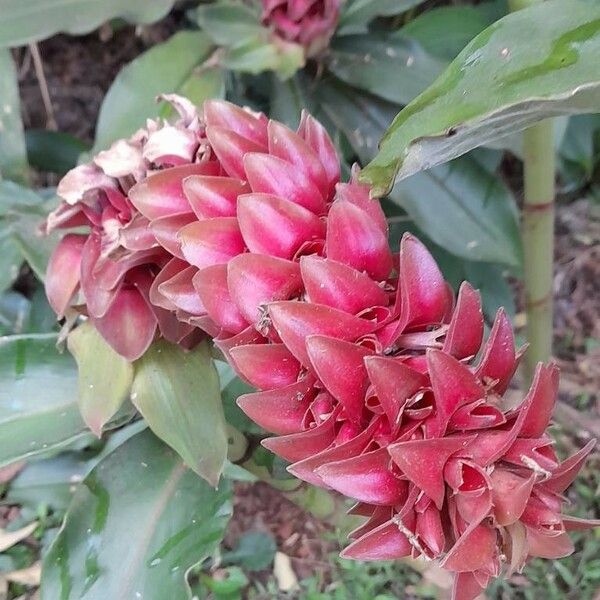
Known to many as the Red Tower Ginger, Costus comosus is a showstopper that looks like it was plucked straight from a prehistoric jungle. Despite its common name, it isn't a "true" ginger, belonging instead to the spiral ginger family, famous for stems that gracefully twist as they grow. Its striking, velvety foliage and vibrant red cones make it a favorite for gardeners looking to add a dramatic, tropical flair to their collection.
🔍 How to Identify
- 🐚 Spiral Stems: Unlike many plants that grow straight up, the stalks of the Red Tower Ginger twist in a gentle corkscrew or spiral pattern.
- 🍃 Velvety Foliage: The undersides of the broad, lance-shaped leaves are covered in fine, soft hairs, giving them a distinct "fuzzy" or velvety texture to the touch.
- 🗼 The "Tower" Inflorescence: At the top of the stalks, a bright, waxy red cone (bract) develops. Small, tubular yellow or orange flowers peek out from between these red scales one by one.
🏡 In Your Garden
- 💧 Thirst for Humidity: This plant is a true child of the tropics; it thrives in high humidity and consistently moist soil. If the air is too dry, the leaf edges may begin to turn brown and crispy.
- ⛅ The "Goldilocks" Light: While it loves the heat, the Red Tower Ginger prefers filtered sunlight. Too much direct afternoon sun can scorch its soft leaves, while too much shade may prevent those iconic red towers from forming.
⚠️ Safety & Toxicity
- 🐾 Pet-Friendly: Great news for animal lovers—Costus comosus is generally considered non-toxic to dogs, cats, and horses.
- 👶 Child Safety: While not poisonous, the waxy bracts and flowers are not meant for consumption. As with any ornamental plant, it is best to keep it out of reach of curious toddlers to avoid choking hazards or stomach upset.
✨ Fun Fact
The Red Tower Ginger is a specialized "hummingbird canteen." The bright red color of the bracts is a visual beacon for hummingbirds, who use their long beaks to reach the nectar hidden deep within the yellow tubular flowers. In return, the birds act as the plant's primary pollinators!

Detailed Care Instructions
To grow a Costus comosus plant, also known as a spiral ginger, follow these steps:
- Choose the right location: Find a spot in your garden or indoors that receives partial to full shade. These plants prefer indirect sunlight or dappled shade.
- Prepare the soil: Costus comosus plants prefer well-drained soil, rich in organic matter. Amend the soil by adding compost or well-rotted manure to improve its nutrient content and drainage.
- Planting: Dig a hole slightly larger than the root ball of your Costus comosus plant. Place the plant in the hole, ensuring that the top of the root ball is level with the soil surface. Backfill the hole with soil, gently firming it around the roots.
- Watering: Keep the soil consistently moist, but not waterlogged. Water the plant regularly, especially during dry periods, ensuring that the soil does not dry out completely.
- Mulching: Apply a layer of organic mulch around the base of the plant to retain moisture, suppress weeds, and improve soil fertility. Pine straw, wood chips, or compost are suitable options.
- Fertilizing: Feed your Costus comosus plant with a balanced, slow-release fertilizer every two to three months during the growing season. Follow the manufacturer's instructions for application rates.
- Pruning: Remove any dead or damaged foliage to maintain a healthy plant. You may also trim back overgrown stems to maintain the desired shape.
- Protect from frost: Costus comosus plants are sensitive to cold temperatures. If you live in a frost-prone area, cover your plant or bring it indoors during the winter months.
- Propagation: Costus comosus plants can be propagated through division. Every few years, carefully lift the plant from the ground, separating the root clumps into smaller sections and replanting them.
- Pest and disease control: Monitor your plant regularly for pests like aphids, mealybugs, or spider mites. If detected, treat them with an appropriate insecticidal soap or horticultural oil, following the instructions on the label. Additionally, provide good air circulation around the plant to prevent diseases like root rot.
With proper care and maintenance, your Costus comosus plant should grow well and provide you with beautiful foliage and flowers.
To properly water this plant, you will want to ensure that the soil is consistently moist but not waterlogged. It is important to avoid letting the soil dry out completely, so you should check the moisture level regularly. When watering, use room temperature water and allow it to soak gently through the soil, being sure to avoid the leaves as much as possible. You may want to consider using a watering can with a long, narrow spout to make this process easier. Depending on the location of the plant and other environmental factors, you may need to water anywhere from once a week to several times a week.
To fertilize this plant, you can use a balanced slow-release fertilizer with an equal ratio of nitrogen, phosphorus, and potassium. Apply the fertilizer evenly around the plant's root zone in the early spring before new growth appears. Repeat the application once every four to six weeks until mid-summer. Avoid over-fertilizing as it can lead to excessive foliage growth at the expense of flowers. Water the plant thoroughly after fertilizing.
Costus Comosus plant prefers well-draining soil that is rich in nutrients. A mixture of equal parts of peat, perlite, and coarse sand is a good soil blend for this plant. The soil should be kept moist, but not waterlogged. The plant also benefits from regular fertilization with a balanced fertilizer. It is important to avoid using heavy clay soils or soils that retain too much moisture as they can cause root rot and other diseases. Additionally, the plant prefers slightly acidic soil with a pH range of 5.5 to 6.5.
To propagate this plant, you will need to carefully divide the established rhizomes. First, choose a healthy parent plant that has multiple stems and a well-developed root system. Then, gently remove the plant from its container or garden bed and carefully separate the rhizomes using a sharp knife or pruners.
Each new division should have at least one stem and several healthy roots. If the parent plant has many stems, you can divide it into several smaller sections, each containing a few stems and roots.
Before planting the new divisions, cut away any damaged or diseased foliage and roots. You can dip the cut ends in a rooting hormone powder to encourage faster root growth.
Plant each division in a well-draining soil mix and water thoroughly. The new plants should be kept out of direct sunlight and in a humid environment like a greenhouse or covered porch until they have fully rooted and developed new foliage.
With proper care and maintenance, these new plants should grow into healthy, mature specimens that can be propagated again in the future.








