Plant Overview
Known as the Golden Marguerite or Dyer’s Chamomile, this sun-drenched perennial is like a concentrated burst of summer in a meadow. Its Latin name, tinctoria, hints at its vibrant history as a primary source for natural yellow dyes used in textiles for centuries. If you are looking for a plant that bridges the gap between a rugged wildflower and a refined garden border, this golden beauty is a top-tier choice.
🔍 How to Identify
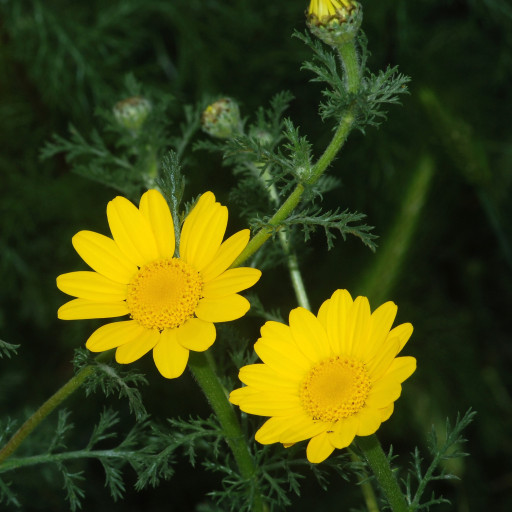
- 🌼 Vibrant Blooms: Features daisy-like flower heads that are entirely golden-yellow—both the central disk and the surrounding petals—unlike the white-and-yellow look of common chamomile.
- 🌿 Ferny Foliage: The leaves are deeply divided and lace-like, providing a soft, feathery texture that remains attractive even when the plant isn't blooming.
- 👃 Aromatic Scents: When the leaves are crushed, they release a pleasant, herbal fragrance, though it is slightly more pungent than the sweet scent of Roman chamomile.
🏡 In Your Garden
- ☀️ Sun-Worshiper: This plant craves direct sunlight. In shaded areas, it tends to become "leggy" or floppy as it stretches toward the light, so give it the brightest spot available.
- 🏜️ Lean and Mean Soil: It thrives in poor, sandy, or gravelly soil. Avoid over-fertilizing, as rich soil often results in lush green leaves but very few of those iconic golden flowers.
- ✂️ Deadheading Nuance: To keep it blooming all summer, you must remove faded flowers. Because it is a short-lived perennial, allowing some seeds to drop in autumn ensures you’ll have a fresh generation next spring.
⚠️ Safety & Toxicity
- 🟢 Generally Safe: Cota tinctoria is considered non-toxic to humans and most pets, making it a safe addition to family-friendly landscapes.
- 🧤 Skin Sensitivity: Like many members of the Aster family, it contains sesquiterpene lactones which can cause mild skin irritation or "daisy dermatitis" in sensitive individuals. It’s a good idea to wear gloves when pruning a large patch.
✨ Fun Fact
🎨 The Weaver's Gold: Before the invention of synthetic pigments, this plant was the "gold standard" for the textile industry. Boiling the flower heads produces a remarkably permanent, lightfast dye that can turn wool and silk anything from a soft primrose yellow to a deep, burnt orange.

Detailed Care Instructions
To grow Cota Tinctoria (also known as Dyers chamomile or Golden Marguerite), follow these steps:
- Choose a suitable location: Cota Tinctoria grows best in full sun, although it can tolerate partial shade. Ensure the soil is well-drained, fertile, and has a pH level between 6.0 and 7.5.
- Prepare the soil: Before planting, loosen the soil and remove any weeds or debris. You can also add compost or well-rotted manure to improve the soil's fertility.
- Sow the seeds: Cota Tinctoria can be grown from seeds. Sow the seeds directly into the soil in the spring or early summer, as it prefers warm temperatures. Scatter the seeds on the soil surface and lightly press them down, but avoid burying them too deeply.
- Watering and maintenance: Water the seeds or young plants regularly to keep the soil moist but not waterlogged. Once the plants are established, they are relatively drought-tolerant. Avoid overwatering, as it can lead to root rot. Mulching around the plants will help retain moisture and suppress weeds.
- Fertilization: Cota Tinctoria does not require heavy fertilization. However, you can give it a light application of balanced fertilizer in early spring to promote healthy growth.
- Pruning: Regular deadheading of spent flowers will encourage continuous blooming. You can remove the faded flowers by pinching or using shears. Additionally, pruning the plant back in early spring can help encourage more compact growth.
- Pests and diseases: Cota Tinctoria is relatively resistant to pests and diseases. However, keep an eye out for common garden pests like aphids or slugs. If necessary, treat with appropriate organic or chemical pesticides.
- Propagation: Cota Tinctoria can be propagated by dividing the clumps in early spring or collecting and planting the seeds from mature plants.
By following these guidelines, you should be able to successfully grow Cota Tinctoria in your garden.

Place in a bright room that is sun drenched almost all day. Or directly in a south-facing window.

To properly water this plant, first, you need to ensure that the soil around it is slightly moist to the touch. You can use a finger or a moisture meter to check the soil moisture level. If the soil is dry, water the plant thoroughly, ensuring that water reaches the roots. However, avoid over-watering as it may lead to root rot and cause the plant to wilt. It is recommended to water the plant once a week or as needed depending on the weather conditions. Additionally, it is best to water it in the morning or evening when the sun is not too harsh to prevent the water from evaporating too quickly.
To fertilize this plant, you should use a well-balanced fertilizer with equal parts nitrogen, phosphorus, and potassium. Apply the fertilizer once a month during the growing season, which is typically from spring to early fall. Be sure to dilute the fertilizer according to the instructions on the label before applying it to avoid over-fertilizing, which can damage the plant. Alternatively, you can use organic fertilizers, such as compost or manure, which provide slow-release nutrients to the plant. Spread a layer of compost or manure around the base of the plant once a year and gently work it into the soil. Water the plant after fertilization to help the nutrients penetrate the soil and reach the roots.
For the Cota Tinctoria plant, it is recommended to use well-draining soil that is slightly acidic with a pH range of 5.5-6.5. The soil should also be rich in nutrients, such as nitrogen, phosphorus, and potassium, to support proper growth and development of the plant. It is important to avoid heavy clay soils as they retain too much water, leading to root rot and ultimately killing the plant. Instead, opt for a soil mix that includes organic matter, such as compost, to help retain moisture while also providing essential nutrients for the plant. Regular fertilization is also recommended during the growing season to promote healthy growth and strong blooms.
There are a few ways to propagate this plant. One method is to take stem cuttings from a healthy and established plant. Select a stem that is about 3-4 inches in length and make a clean cut with a sharp pair of scissors or pruning shears. Remove the lower leaves from the stem, leaving only a few at the top. Dip the cut end of the stem into rooting hormone powder to encourage root growth. Plant the stem in a well-draining potting mix and water thoroughly. Keep the soil moist but not saturated and place the pot in a bright, but indirect, location. In a few weeks, new roots should begin to form and the plant should start to grow.
Another way to propagate this plant is through division. Carefully remove the entire plant from its pot or outdoor location and gently pull apart the root ball into smaller sections. Each section should have some roots and some healthy foliage. Plant each section in a well-draining potting mix and water thoroughly. Keep the soil moist but not saturated and place the pots in a bright, but indirect, location. In a few weeks, new growth should emerge from the divided sections.
Finally, this plant can also be propagated through seed. Collect the seeds from a mature plant and sow them in a well-draining potting mix. Cover the seeds lightly with soil and water thoroughly. Keep the soil moist but not saturated and place the pot in a bright, but indirect, location. In a few weeks, seedlings should begin to emerge and grow.








