Plant Overview
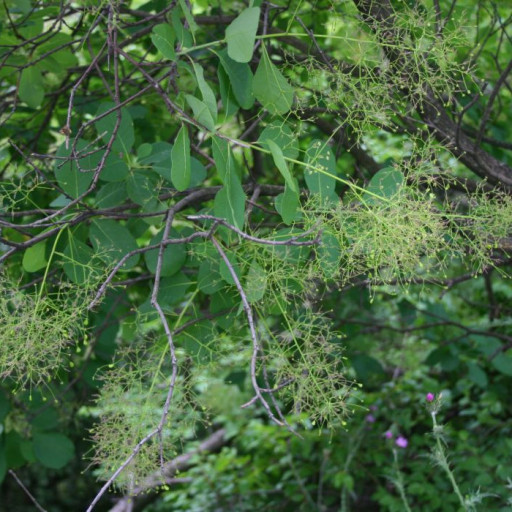
Known affectionately as the Smoke Bush or Venetian Sumac, Cotinus coggygria is the garden's master of atmosphere. Originating from Southern Europe and Central Asia, this shrub is famous for its mid-summer transformation, when it appears to be enveloped in a puff of purple or pink mist. It has long been a favorite in Victorian-style gardens for its dramatic, moody foliage and ethereal "smoke" clouds.
🔍 How to Identify
- ☁️ The "Smoke": After the tiny flowers bloom, the plant produces long, billowy hairs on the flower stalks. From a distance, this creates a hazy, cloud-like effect that gives the plant its name.
- 🍃 Rounded Foliage: The leaves are smooth, waxy, and distinctively oval or "egg-shaped." Depending on the variety (like the popular 'Royal Purple'), they can range from a deep, wine-red to a bright, neon chartreuse.
- 🍂 Autumn Glow: Before the leaves drop in winter, they put on a spectacular show, turning vibrant shades of orange, coral, and scarlet, making it a "four-season" interest plant.
🏡 In Your Garden
- ☀️ Sun Seeker: To get the deepest purple hues, this plant needs "full sun." If tucked away in the shade, those moody maroon leaves will often fade to a dull, muddy green.
- ✂️ The Pruning Trade-off: You have a choice! If you prune it back hard every year (coppicing), you will get massive, oversized leaves but no "smoke." If you leave it alone, you’ll get smaller leaves but plenty of those iconic misty clouds.
- 💧 Drainage is Key: The Smoke Bush is incredibly drought-tolerant once established, but it absolutely hates "wet feet." It thrives in rocky or poor soil where other plants might struggle, making it perfect for those difficult sunny spots.
⚠️ Safety & Toxicity
- 🧪 Low Toxicity: While not considered deadly, the Smoke Bush is a distant relative of Poison Ivy and contains tannins and sap that can be irritating.
- 🐾 Skin & Stomachs: The sap may cause mild skin irritation (dermatitis) in sensitive individuals or pets. If chewed on by curious dogs or cats, it can cause an upset stomach or drooling, so it’s best kept as an ornamental rather than a snack.
✨ Fun Fact
The "smoke" you see isn't actually the flower itself! The true flowers are tiny and insignificant. The hazy effect is created by the delicate, feather-like hairs on the stalks of the sterile flowers, which stay on the plant long after the fertile ones have faded.

Detailed Care Instructions
| Color | Yellow |
| Soil Ph | Tolerates Both Acidic And Alkaline Soils |
| Lighting | Full Sun |
| Soil Type | Prefers Infertile Loam, But Tolerates All Soils Except Wet, Poorly Drained Soils |
| Bloom Time | Late Spring To Mid-Summer |
| Plant Type | Deciduous Shrub |
| Mature Size | 10 To 15 Feet High, Similar Spread |
| Native Area | Southern Europe To Central China |
| Sun Exposure | Full Sun |
| Hardiness Zones | 4 To 9 |
To help your Cotinus Coggygria plant grow successfully, follow these steps:
- Planting: Choose a suitable location that receives full sun or partial shade. The soil should be fertile, well-draining, and slightly acidic to neutral pH. Dig a hole slightly larger than the plant's root ball and place the plant in the hole, ensuring the base of the stem is level with the ground. Backfill the hole with soil and firm it gently around the plant.
- Watering: Cotinus Coggygria requires regular watering, especially during the first year of growth. Water deeply and consistently, ensuring the soil remains moist but not waterlogged. Reduce watering frequency once the plant is established.
- Mulching: Apply a layer of organic mulch around the base of the plant to conserve moisture, suppress weeds, and provide insulation. Keep the mulch a few inches away from the plant's stem to prevent rot.
- Pruning: Prune Cotinus Coggygria in late winter or early spring to remove any dead, damaged, or diseased wood. You can also prune to shape the plant or control its size. Avoid heavy pruning as it may negatively affect bloom production.
- Fertilizing: Feed the plant with a balanced, slow-release fertilizer in early spring, according to the package instructions. Additionally, you can apply compost or well-rotted manure around the base of the plant annually to enhance soil fertility.
- Protection: Protect young Cotinus Coggygria plants from harsh winter conditions by covering them with a layer of mulch or burlap. This will help insulate the roots and prevent damage.
- Pests and Diseases: Cotinus Coggygria is generally resistant to pests and diseases. However, keep an eye out for common issues like aphids, scale insects, and powdery mildew. Treat any problems promptly with organic insecticidal soap or appropriate fungicides.
Remember to regularly monitor and care for your Cotinus Coggygria plant as it grows, adjusting watering, pruning, and fertilizing as needed. With proper care, it should thrive and provide you with beautiful foliage and blooms.

Place in a bright room that is sun drenched almost all day. Or directly in a south-facing window.

To water this plant, it's important to ensure that the soil is consistently moist but not waterlogged. This can be achieved by watering deeply once a week, or more frequently during hot and dry periods. When watering, it's best to avoid getting water on the leaves to prevent fungal growth. It's also important to allow the soil to dry out slightly between watering to prevent root rot. Using a well-draining soil and adding a layer of mulch can also help retain moisture in the soil.
For best results, fertilize this plant in the early spring before new growth appears. Use a balanced, slow-release fertilizer designed for woody plants, applying it according to package directions. Avoid fertilizer burn by not over-applying and making sure the soil is moist before and after application. Don't fertilize after mid-summer, as it can cause new growth that won't have time to harden off before winter.
For optimal growth and health of this plant, it is recommended to use well-draining soil that is rich in organic matter. The soil pH should be slightly acidic to neutral, between 5.5-7.0. Avoid using heavy clay soils or soils that retain too much water, as it can lead to root rot and other issues with the plant's health. Adding compost or other organic matter to the soil can help improve its structure and fertility. Additionally, ensuring adequate drainage and proper watering practices can help maintain healthy soil conditions for this plant.
There are a few ways to propagate this plant, but one of the most common methods is through hardwood cuttings. You will need to take cuttings from the previous year's growth during the dormant season (late autumn to early spring). The cuttings should be about 10-15 cm long and have three to four buds.
Remove any leaves from the bottom of the cutting and dip it into rooting hormone. Then insert the cutting into a pot filled with a well-draining soil mix. Water the cutting well and cover the pot with a clear plastic bag to create a mini greenhouse environment.
Place the pot in a warm, bright spot but out of direct sunlight. Over the next few weeks, keep the soil damp and ensure that the plastic bag stays in place to maintain humidity. After a few weeks, check for roots by gently tugging on the cutting. If it resists, roots have formed.
Once the cutting has rooted, remove the plastic bag and gradually acclimate the plant to the outdoor environment by exposing it to increasing amounts of sunlight and wind.
Another option is to propagate through layering. With this method, you bend a low-growing stem down to the ground and bury a portion of it under the soil. You can use a rock or wire to hold the stem in place. Keep it watered and eventually, roots will form at the buried part of the stem. Cut it from the parent plant and transplant the new plant where you'd like it to grow.








