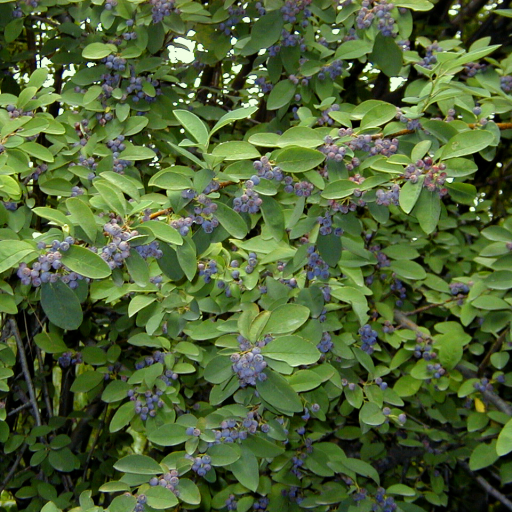
Plant Overview
Often called the Peking Cotoneaster, this hardy shrub is the unsung hero of northern landscapes. Originating from the rocky slopes of Northern China, it is prized for its "living fence" aesthetic and its dramatic seasonal wardrobe changes. If you are looking for a plant that handles harsh winters with grace while providing a dense privacy screen, this is your top candidate.
🔍 How to Identify
- 🍃 Pointed Foliage: The leaves are elliptic and come to a very sharp, distinct point—this is actually what its Latin name acutifolius (acute leaf) refers to.
- 🌸 Blushing Blooms: In late spring, look for tiny, nodding clusters of white flowers with a delicate pink tint that look like miniature bells tucked into the greenery.
- 🌑 Ink-Black Berries: Unlike many of its red-berried cousins, the Peking Cotoneaster produces smooth, egg-shaped berries that ripen to a deep, dark purple-black by autumn.
🏡 In Your Garden
- 🧱 The Living Wall: Because of its dense, upright branching habit, it is one of the most popular choices for "formal" hedges. It responds incredibly well to shearing and shaping.
- 🍂 Autumn Fireworks: This plant is a showstopper in the fall. The glossy green leaves transform into a fiery spectrum of brilliant orange, wine-red, and golden yellow.
- 🐦 Wildlife Tavern: While humans shouldn't eat them, the berries provide a vital winter food source for songbirds, and the dense branches offer excellent nesting sites.
⚠️ Safety & Toxicity
- 🐾 Mildly Toxic: The berries and leaves contain cyanogenic glycosides, which can be harmful if ingested.
- 🤢 Symptoms: Keep a close eye on curious pets and children. Ingestion can cause stomach upset, drooling, or lethargy. It is best treated as an ornamental-only plant.
✨ Fun Fact
Despite its humble, twiggy appearance, the Peking Cotoneaster is a member of the Rosaceae (Rose) family! This means it is a distant cousin to apples, pears, and cherries, which explains why its small black fruits look like tiny, dark crabapples.

Detailed Care Instructions
To successfully grow Cotoneaster acutifolius, follow these steps:
- Choose a planting location: Cotoneaster acutifolius prefers full sun to partial shade and well-drained soil. It can tolerate a wide range of soil conditions, but performs best in fertile, loamy soil.
- Prepare the soil: Before planting, remove weeds, rocks, and other debris from the planting area. Loosen the soil and incorporate organic matter such as compost or well-rotted manure to improve soil fertility and drainage.
- Planting: Dig a hole that is slightly wider and deeper than the root ball of the plant. Place the plant in the hole, ensuring that it is planted at the same depth as it was in its nursery container. Backfill the hole with soil, gently firming it around the roots to remove any air pockets. Water thoroughly after planting.
- Watering: While Cotoneaster acutifolius is drought-tolerant once established, it benefits from regular watering during the first growing season. Water deeply, allowing the top few inches of soil to dry out between waterings. Monitor rainfall and adjust your watering accordingly.
- Mulching: Apply a layer of mulch around the base of the plant to help conserve soil moisture, suppress weed growth, and regulate soil temperature. Use organic mulch such as wood chips or straw, and maintain a layer of 2-3 inches deep.
- Pruning: Cotoneaster acutifolius can be pruned to maintain its shape and remove dead or damaged branches. Pruning is usually done in late winter or early spring before new growth begins. Avoid heavy pruning, as this can reduce flowering and fruit production.
- Fertilization: Apply a balanced, slow-release fertilizer in spring to promote healthy growth and flowering. Follow the instructions on the fertilizer packaging for dosage and application guidelines.
- Pest and disease control: Cotoneaster acutifolius is generally resistant to pests and diseases. However, aphids and scale insects may occasionally be a problem. Monitor your plants regularly and treat with appropriate insecticides if necessary.
- Winter protection: In colder climates, provide protection during winter by applying a layer of mulch around the base of the plant and using burlap or a frost blanket to cover the plant on nights when temperatures drop significantly.
- Regular maintenance: Regularly monitor the plant for any signs of pests, diseases, or nutrient deficiencies. Remove any dead or damaged branches promptly to maintain the health and appearance of the plant.
By following these steps, you can successfully grow Cotoneaster acutifolius and enjoy its attractive foliage, flowers, and berries.

Place in a bright room that is sun drenched almost all day. Or directly in a south-facing window.

To water this plant, it is important to first ascertain the moisture level of the soil. Insert your finger about an inch into the soil to feel for moisture. If it feels dry, then it is time to water the plant. Ensure that you use a watering can or hose with a gentle stream to avoid damaging the roots. Water the plant slowly and steadily until the soil is moist, but not waterlogged. Avoid overwatering the plant as this can lead to root rot. It is best to water the plant in the morning or evening when the sun is not too strong to prevent water evaporation.
First, select a balanced fertilizer with equal amounts of nitrogen, phosphorus, and potassium. Begin fertilizing in the early spring when new growth begins to emerge. Using a small measuring scoop, carefully distribute the fertilizer granules around the base of the plant, avoiding contact with the leaves and stems. Water deeply after fertilizing to help the nutrients penetrate the soil and reach the plant's root system. Repeat this application every four to six weeks during the growing season. During the fall and winter months, discontinue fertilization and allow the plant to go dormant.
Cotoneaster Acutifolius is a type of shrub that requires soil with specific characteristics to grow and thrive. The ideal soil for this plant should be well-draining, with a pH level ranging from mildly acidic to neutral. It should also be rich in organic matter, such as compost or leaf mold, to provide the plant with the necessary nutrients for optimal growth.
In addition to the soil, it is important to ensure that the planting location receives adequate sunlight and has good air circulation around the foliage to prevent disease. It is also recommended to water the plant regularly, but not excessively, to prevent waterlogging the roots.
When planting Cotoneaster Acutifolius, it is advisable to add a layer of mulch around the base of the plant to help retain moisture and suppress weed growth. This can be done using organic materials such as well-rotted manure, grass clippings, or shredded leaves.
Overall, providing the correct type of soil, along with appropriate sunlight, water, and nutrient levels, will help ensure the healthy growth and longevity of Cotoneaster Acutifolius.
Propagation of this plant can be done through stem cuttings. Take stem cuttings of about 10-15 cm length from the parent plant during dormancy in early spring or late fall. Make sure the cutting has at least one node near the bottom. Remove the leaves from the bottom half of the cutting and dip the base of the stem in rooting hormone powder. Plant the cutting in a well-draining potting mix in a container with good drainage. Firmly press the soil around the stem cutting and water it. Place the container in a bright, indirect light and keep the soil moist but not waterlogged. In a few weeks, the cutting should start producing roots. Once the new plant has developed a good root system, it can be transferred to a larger container or planted in the ground.








