Plant Overview
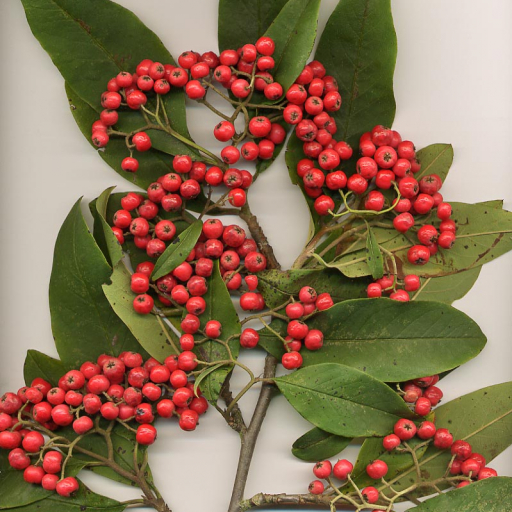
Known as the Himalayan Tree Cotoneaster, this plant is a winter superstar that transforms from a quiet green giant into a "living bird feeder." Native to the cold, high-altitude slopes of the Himalayas, it is one of the few members of its family that can grow into a full-sized, elegant tree. Its dramatic display of crimson berries against a backdrop of frost is the stuff of garden legends.
🔍 How to Identify
- 🍃 The Foliage: Large, elliptic leaves that are a dull, dark green on top with a pale, slightly "felted" or fuzzy underside.
- 🌸 Summer Blooms: In early summer, it produces dense, flat clusters (corymbs) of tiny white flowers that hum with the sound of visiting bees.
- 🍎 Winter Fruit: The most striking feature is the heavy clusters of bright red, spherical berries that weigh down the branches from autumn through mid-winter.
🏡 In Your Garden
- 🐦 A Wildlife Magnet: If you want to see waxwings, thrushes, or blackbirds, this is your tree. The berries provide a vital high-energy food source when the ground is frozen.
- 🏔️ Himalayan Hardiness: Unlike many delicate ornamental trees, the Frigidus is incredibly tough. It thrives in exposed, windy sites and is remarkably tolerant of urban pollution and poor soil.
- 🌳 Space Requirements: Be aware that this isn't a tiny hedge plant; it has a vigorous, spreading habit. Give it plenty of room to develop its natural "fountain" shape, as heavy pruning can spoil its elegant silhouette.
⚠️ Safety & Toxicity
- 🚫 Status: Mildly toxic to humans and pets.
- 🐾 The Risks: The berries contain cyanogenic glycosides. While birds can eat them safely, they can cause stomach upset, vomiting, or lethargy in dogs, cats, and curious children if consumed in large quantities. It is best to admire the berries on the branch rather than in a bowl!
✨ Fun Fact
The Cotoneaster frigidus was a superstar of the Victorian era. Plant hunters brought it from Nepal in 1824, and it quickly became a "must-have" in English estate gardens because it was one of the few trees that could provide vibrant color during the bleakest months of the year.

Detailed Care Instructions
To grow Cotoneaster Frigidus, you can follow these steps:
- Select a suitable location: Choose a spot with full sun to partial shade. Cotoneaster Frigidus can tolerate different soil types but prefers well-draining soil.
- Prepare the soil: Remove any weeds or debris from the planting area. Loosen the soil and add organic matter, such as compost, to improve its fertility and drainage.
- Planting: Dig a hole that is slightly larger than the root ball of the Cotoneaster Frigidus plant. Place the plant in the hole and make sure it is positioned at the same depth as it was in the container. Backfill the hole with soil, gently firming it around the roots.
- Watering: After planting, water the Cotoneaster Frigidus thoroughly to settle the soil and ensure good root establishment. Water regularly, especially during dry periods, to keep the soil moist but not waterlogged.
- Mulching: Apply a layer of organic mulch, such as wood chips or straw, around the base of the plant. This helps conserve moisture, suppresses weeds, and maintains a consistent soil temperature.
- Pruning: Cotoneaster Frigidus may require occasional pruning to maintain its shape and remove dead or damaged branches. Prune in late winter or early spring before new growth appears.
- Fertilizing: Cotoneaster Frigidus generally doesn't require much fertilization. However, if the plant seems lacking in growth or vigor, you can apply a balanced slow-release fertilizer in spring.
- Pest and disease control: Monitor the plant for any signs of pests, such as aphids or scale insects, and treat accordingly. Cotoneaster Frigidus is generally resilient against diseases but can occasionally be affected by leaf spot or powdery mildew.
- Winter protection: If you live in a colder climate, provide some winter protection for the plant, especially during its first few years of growth. You can use a layer of mulch or burlap to insulate the roots from freezing temperatures.
- Regular maintenance: Regularly check the Cotoneaster Frigidus plant for any issues, including water stress, pest infestation, or disease. Provide appropriate care and take necessary measures to ensure its healthy growth.
Remember, specific care requirements may vary based on your location and climate conditions, so it's always helpful to consult local gardening resources or experts for personalized advice.

Place in a bright room that is sun drenched almost all day. Or directly in a south-facing window.

Here are some detailed instructions on how to water a certain plant without mentioning its common name:
1. Determine the watering needs of the plant - Cotoneaster Frigidus requires regular watering, but not to the point where the soil becomes waterlogged or soggy. It prefers moist but well-draining soil.
2. Check the soil moisture - Before watering, check the soil moisture by inserting your finger into the soil up to about 2 inches. If the soil feels dry, it's time to water. If it's still damp or wet, wait a few more days before watering.
3. Water slowly and deeply - When watering, do it slowly and deeply to ensure that the water reaches the roots. It's better to water deeply but less frequently than to water shallowly but frequently. Use a watering can or a hose with a gentle stream to avoid disturbing the roots.
4. Don't leave standing water - After watering, make sure to drain any excess water from the saucer or tray. Don't let the plant sit in standing water, as it can lead to root rot and other problems.
5. Water consistently - Cotoneaster Frigidus plant benefits from consistent watering, but don't overdo it. Water once or twice a week, depending on the weather conditions and the moisture level of the soil.
6. Watch for signs of overwatering or underwatering - Signs of overwatering include yellowing leaves, wilting, and root rot. Signs of underwatering include drooping leaves and dry soil. Adjust your watering routine accordingly.
Remember that different species of plants have different watering needs, so it's important to research the specific requirements of your plant to ensure it receives the proper care.
To fertilize this plant, apply a balanced granular fertilizer in early spring before new growth begins. Follow the instructions on the fertilizer packaging for the recommended amount to use. Spread the fertilizer evenly around the root zone of the plant, avoiding direct contact with the stem. Water the plant thoroughly after fertilizing to help nutrients reach the roots. Repeat this process every year to maintain healthy growth.
The soil preferred for this plant should have good drainage and be relatively rich in nutrients. It should be slightly acidic with a pH range of 5.5 to 6.5. A mix of sandy and loamy soil is ideal for this plant, with a moderate amount of organic matter mixed in. The plant prefers a soil that is moist but not overly wet or soggy, as this can lead to root rot. It is also important to note that the plant prefers a soil that is well-aerated and does not become compacted easily.
Cotoneaster frigidus is a shrub that can be propagated through various methods. One way to propagate it is through tip cuttings. For this, select a healthy branch and cut a 4-6 inch piece from the tip. Remove the leaves from the lower 3 inches of the cutting and dip the cut end into rooting hormone. Plant the cutting in a container filled with a well-draining planting mix. Keep the soil moist and place the container in a bright, but indirect sunlight. In a few weeks, roots should begin to form and new growth will emerge from the stem.
Another way to propagate Cotoneaster frigidus is through layering. Select a low branch from the plant and gently bend it towards the ground. Create a small hole in the soil and bury a section of the branch without removing it from the main plant. Use a tight loop of wire or a forked stick to secure the bent branch. Keep the soil moist and wait for new shoots to emerge from the buried section, which will eventually develop into roots. Once the cutting has developed roots, it can be gently removed from the parent plant and transplanted to a new location.
Finally, Cotoneaster frigidus can also be propagated through seed. Collect the berries in the fall and remove the seeds. Soak the seeds overnight and plant them in a container filled with well-draining soil. Keep the soil moist and in a warm, bright location. In a few weeks, the seeds should begin to germinate and will eventually develop into young plants that can be transplanted into the garden.








