Plant Overview
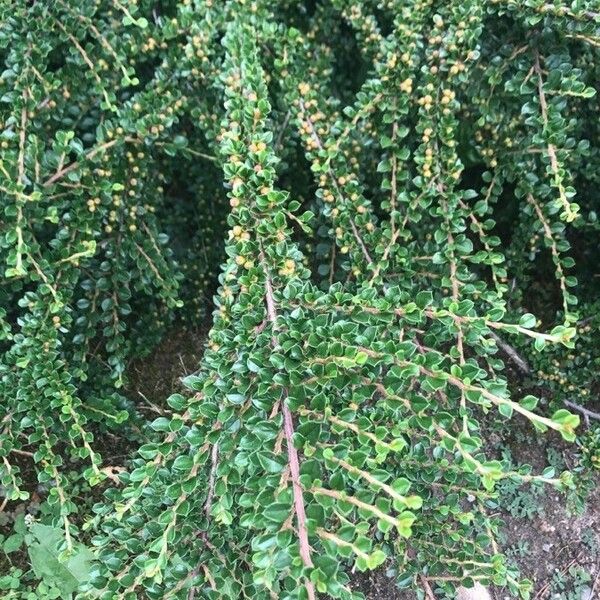
Often called the Nan-shan Cotoneaster, this hardy traveler from the mountains of China is a master of texture and resilience. Its stiff, arching branches create a beautiful "fishbone" or "herringbone" pattern that looks just as striking covered in winter frost as it does in the summer heat. It is the ultimate choice for gardeners seeking a high-impact, low-maintenance groundcover that changes colors with the seasons.
🔍 How to Identify
- 🌿 Branching Pattern: Look for a distinct "herringbone" structure where secondary branches grow flat and symmetrical from the main stem, creating a feathered appearance.
- 🍃 Foliage: The leaves are tiny, rounded, and glossy green. In the autumn, they put on a dramatic show, turning brilliant shades of orange and deep scarlet before falling.
- 🍎 Fruit: Following small, pink-white spring flowers, the plant produces a heavy crop of round, bright red berries (pomes) that can persist long into the winter.
🏡 In Your Garden
- 🧗 Slope Specialist: Because of its low, spreading habit and tough root system, it is famously used for erosion control on steep banks or rocky edges where other plants struggle to take hold.
- 🐝 Wildlife Magnet: In late spring, the understated flowers are a favorite for honeybees. By winter, the berries become a vital food source for songbirds like thrushes and waxwings when other food is scarce.
- ✂️ Low Maintenance: It is incredibly "set it and forget it." It thrives in poor soil and is highly resistant to urban pollution, though it appreciates well-drained ground to prevent root rot.
⚠️ Safety & Toxicity
- 🚫 Mildly Toxic: Like many members of the Rose family, the berries and leaves contain cyanogenic glycosides.
- 🐾 Pets & Kids: If ingested in large quantities, the berries can cause stomach upset, drooling, or lethargy in dogs, cats, and humans. It is best to admire the berries visually and keep curious toddlers or pets from "snacking" on them.
✨ Fun Fact
Despite its reputation as a rugged garden workhorse, the Cotoneaster Nan-Shan is a prize species for Bonsai enthusiasts. Its naturally tiny leaves and interesting, gnarled bark allow it to be trained into a miniature "ancient tree" that looks centuries old in just a few years.

Detailed Care Instructions
To grow Cotoneaster Nan-Shan plant, you can follow these steps:
- Choose a suitable location: Cotoneaster Nan-Shan prefers full sun to partial shade, and well-draining soil. Select a spot in your garden that gets at least 6-8 hours of direct sunlight and has soil that is loamy and fertile.
- Prepare the soil: Before planting, prepare the soil by removing any weeds or grass from the planting area. Loosen the soil to a depth of about 12-18 inches and amend it with organic matter, such as compost, to improve its fertility and drainage.
- Planting: Dig a hole that is slightly larger than the rootball of the Cotoneaster Nan-Shan plant. Place the plant in the hole, ensuring that the top of the rootball is level with the soil surface. Fill the hole with soil, lightly firming it around the roots to eliminate any air pockets. Water the plant thoroughly after planting.
- Watering: Cotoneaster Nan-Shan plants prefer consistently moist soil but are also drought-tolerant once established. Water the plant regularly, especially during the first year, to help it develop a strong root system. Avoid overwatering, as it can lead to root rot.
- Mulching: Apply a layer of organic mulch, such as wood chips or shredded bark, around the base of the plant. Mulching helps retain soil moisture, suppresses weeds, and regulates soil temperature. Keep the mulch at least a few inches away from the stem to prevent rot.
- Pruning: Cotoneaster Nan-Shan generally doesn't require much pruning. However, you can remove any dead, damaged, or crossing branches to maintain a tidy appearance. Prune in late winter or early spring before new growth begins.
- Fertilizing: In early spring, before new growth starts, you can apply a slow-release balanced fertilizer around the plant according to the package instructions. Avoid applying excessive fertilizer, as it can lead to excessive foliage growth without flowering.
- Pests and diseases: Cotoneaster Nan-Shan is generally resistant to most pests and diseases. However, occasional issues may include aphids, scale insects, or fire blight. Monitor your plant regularly for any signs of pests or diseases and take appropriate action if needed.
Remember to regularly monitor the plant's growth and make adjustments as necessary to ensure it thrives.
When it comes to watering this specific plant species, it is important to consider a few key factors. First and foremost, you should take into account the environmental conditions in which the plant is situated. These include factors such as temperature, humidity, and sunlight exposure. Secondly, it is crucial to consider the unique characteristics of the plant's root system and its specific water requirements.
To properly water the Cotoneaster Nan-Shan plant, it is recommended to follow a few general guidelines. Start by checking the soil moisture level on a regular basis, either through a visual inspection or by using a moisture meter. The goal is to maintain moist but not waterlogged soil.
When watering, use a gentle and even watering technique to ensure that the water is distributed evenly throughout the soil. Be mindful to avoid overwatering, as this may lead to root rot. It is better to water deeply but infrequently, allowing the soil to dry out slightly between waterings. This will encourage healthy root growth and prevent soil compaction.
It is worth noting that the water requirements may vary depending on the time of year. During the plant's active growing season, which is typically spring and summer, the water needs may be higher due to increased transpiration. In contrast, during the plant's dormant period in winter, less frequent watering may be necessary.
To further optimize the watering process, it is beneficial to add a layer of organic mulch around the base of the plant. This helps to retain moisture in the soil, reduce weed growth, and provide insulation for the roots during extreme temperatures.
Lastly, it is essential to monitor the plant's overall health and observe any signs of stress. Wilting, yellowing leaves, or stunted growth can indicate either over or underwatering. Adjust the watering routine accordingly, ensuring that the plant receives the appropriate amount of water for its optimal growth and development.
To provide proper nourishment for your Cotoneaster Nan-Shan plant, follow these fertilizing instructions:
- Choose a balanced, slow-release fertilizer formulated for woody plants.
- Apply the fertilizer in early spring, just before new growth emerges.
- Measure the recommended amount of fertilizer according to the package instructions.
- Sprinkle the fertilizer evenly around the base of the plant, avoiding direct contact with the trunk.
- Gently work the granules into the top layer of soil without causing damage to the roots.
- Water the plant thoroughly after fertilizing to help dissolve and distribute the nutrients.
- Repeat the fertilization process once or twice a year, following the same procedure.
- Monitor the plant's overall health and growth. Adjust the fertilization frequency or amount if necessary, depending on the plant's needs.
Remember to read and follow the instructions on the fertilizer packaging for best results.
When selecting soil for the cultivation of Cotoneaster Nan-Shan, it is important to consider certain characteristics that promote optimal growth and health for the plant. This particular species of Cotoneaster generally thrives in well-draining soils that are rich in organic matter. Such soils provide a proper balance of moisture retention and aeration, which is crucial for the plant's root development and overall vitality.
The ideal soil composition for Cotoneaster Nan-Shan typically consists of a combination of loam, sand, and organic matter. Loam provides good drainage and moisture retention, while sand contributes to a friable texture, ensuring proper aeration and preventing waterlogged conditions. Organic matter, such as compost or well-rotted manure, enhances soil fertility, improves nutrient availability, and supports beneficial soil microorganisms.
It is advisable to avoid heavy clay soils as they tend to retain excessive moisture and can lead to root rot or other drainage-related issues. Similarly, extremely sandy soils can allow water to pass through too quickly, resulting in poor nutrient retention and drying out of the plant.
When planting Cotoneaster Nan-Shan, it is beneficial to prepare the soil beforehand by turning it over and incorporating organic matter into the top layer. This helps improve the soil structure and nutrient content, ensuring the plant's successful establishment. Additionally, amending the soil with slow-release fertilizers specifically formulated for shrubs or applying organic mulch around the base of the plant can further support its growth and overall health.
Regularly monitoring soil moisture levels and ensuring proper irrigation practices are essential for Cotoneaster Nan-Shan. Overwatering should be avoided, as it can cause root rot and other water-related problems. It is advisable to water the plant deeply but infrequently, allowing the soil to partially dry out between waterings.
Lastly, periodic soil testing can help identify any nutrient deficiencies or imbalances and allow for targeted fertilization to meet the plant's specific needs.
Cotoneaster Nan-Shan is a deciduous shrub that belongs to the Rosaceae family. It is a versatile and hardy plant that can be propagated through various methods, including division, layering, and cuttings. Here is a step-by-step guide on propagating Cotoneaster Nan-Shan:
- Choosing the Parent Plant: Select a healthy and vigorous Cotoneaster Nan-Shan plant as the parent plant for propagation. Ensure that it is free from diseases, pests, or any signs of stress.
- Timing: The best time to propagate Cotoneaster Nan-Shan is in late spring or early summer when the plant is actively growing.
- Division: This method involves separating a portion of the parent plant with roots for replanting. Dig around the base of the plant and carefully lift it from the ground. Gently tease apart the roots into smaller sections, ensuring that each division has enough roots and shoots to grow independently. Plant the divisions in suitable soil, providing proper care until they establish.
- Layering: Layering is another effective technique for propagating Cotoneaster Nan-Shan. Choose a low-hanging branch that is flexible and close to the ground. Gently bend the branch and secure it to the soil using U-shaped pins or small rocks. Make a small cut on the underside of the branch at the point of contact with the ground and cover it with soil or compost. Keep the soil consistently moist, and after a few months, the branch will develop roots. Once rooted, sever the branch from the parent plant and transplant it to a new location.
- Cuttings: Taking cuttings is a commonly used method for propagating many plants, including Cotoneaster Nan-Shan. Select a healthy side shoot from the parent plant, preferably with a semi-hardwood stem. Using sharp and clean pruning shears, cut a 4-6 inch (10-15 cm) section of the stem just below a leaf node. Remove any lower leaves and dip the cut end in a rooting hormone powder to encourage root development. Plant the cutting in a pot containing a well-draining soil mixture, ensuring that at least two leaf nodes are below the soil level. Place the cutting in a warm, humid environment with indirect light. Mist the cutting regularly to maintain moisture and prevent wilting. Over time, the cutting will develop roots, and once established, it can be transplanted to a permanent location.
Remember to provide proper care, including regular watering, appropriate sunlight exposure, and protection from extreme weather conditions, to ensure successful propagation and healthy growth of Cotoneaster Nan-Shan plants.







