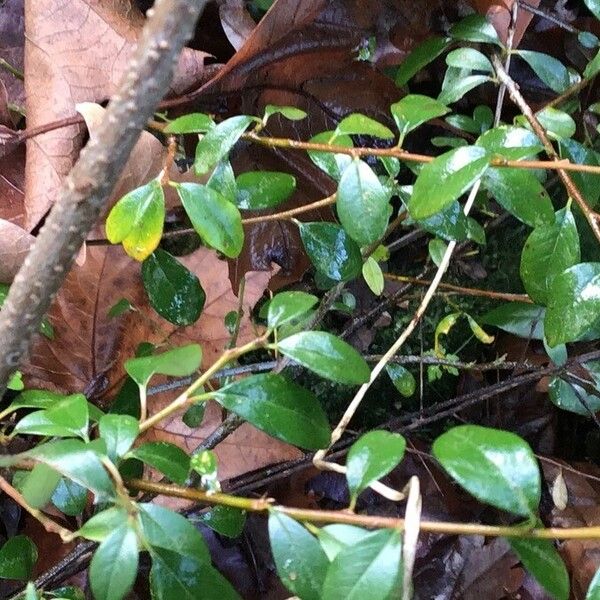
Plant Overview
Known affectionately as the "Creeping Cotoneaster," this hardy groundcover is a favorite for those looking to transform a bland slope or a rocky ledge into a lush, evergreen tapestry. Originating from the mountainous regions of China, it is celebrated for its prostrate habit, meaning it "hugs" the ground rather than growing toward the sky. It provides a year-round show, shifting from snowy spring blossoms to brilliant scarlet berries in the winter.
🔍 How to Identify
- 🌿 The Foliage: Look for tiny, oval-shaped leaves with a glossy, dark green finish. In colder climates, these leaves often take on a beautiful reddish-purple tint during the winter months.
- 🌸 The Blooms: In late spring, the plant is peppered with small, five-petaled white flowers that closely resemble miniature apple blossoms.
- 🍒 The Fruit: Following the flowers, the plant produces abundant, pea-sized bright red berries (pomes) that cling to the branches long after the first frost.
- 👣 Growth Habit: It stays very low to the ground (usually under 12 inches) but spreads wide, with branches that often root themselves wherever they touch the soil.
🏡 In Your Garden
- 🌱 Living Armor: This plant is an elite choice for erosion control. Because it forms a dense mat and roots as it crawls, it effectively "nails" topsoil into place on steep banks where grass refuses to grow.
- 💧 Drainage is Key: While it is incredibly "tough as nails" regarding wind and cold, it absolutely hates "wet feet." It thrives in well-draining soil and is surprisingly drought-tolerant once its root system is established.
- ✂️ Low Maintenance: Unlike many groundcovers, it rarely becomes invasive. It grows at a moderate pace, making it easy to keep within its designated boundaries with just a light annual trim.
⚠️ Safety & Toxicity
- 🐾 Status: Mildly Toxic.
- 👶 Details: The berries and leaves contain cyanogenic glycosides. If ingested in large quantities, they can cause stomach upset, drooling, or lethargy in pets and small children. It is best to plant it in areas where toddlers or curious dogs aren't likely to treat the berries like a snack.
✨ Fun Fact
The name Cotoneaster actually comes from the Latin cotoneum (meaning "quince") and aster (meaning "resembling"). While its tiny red fruits look like miniature quinces, they are much better suited for providing winter food for birds than for making human jam!

Detailed Care Instructions
To grow Cotoneaster Radicans, follow these steps:
- Plant selection: Choose healthy, well-rooted cotoneaster plants from a reputable nursery or garden center. Look for plants with young, green leaves and avoid any with yellow or wilted leaves.
- Site selection: Choose a location that receives full to partial sun exposure. Cotoneasters prefer well-draining soil, so ensure the planting area has good drainage. If the soil is heavy clay or poorly draining, improve it by adding compost or organic matter.
- Planting: Dig a hole slightly larger than the rootball of the plant. Place the cotoneaster in the hole, ensuring the top of the rootball is level with the surrounding soil. Backfill the hole with soil, gently firming it around the roots. Water thoroughly.
- Watering: Cotoneasters require regular watering, especially during dry periods. Water deeply, allowing the soil to dry slightly between waterings. Avoid overwatering as it can lead to root rot.
- Mulching: Apply a 2-3 inch layer of organic mulch around the base of the plant to help conserve moisture, suppress weeds, and regulate soil temperature.
- Pruning: Cotoneasters can be pruned to maintain their desired shape and size. Prune in late winter or early spring before new growth emerges. Remove dead, damaged, or crowded branches. Shape the plant as desired, cutting back to a side branch or bud. Avoid heavy pruning as it may reduce flowering and fruiting.
- Fertilizing: Cotoneasters generally don't require heavy fertilization. However, you can apply a balanced, slow-release fertilizer in early spring to provide nutrients to the plant. Follow the instructions on the fertilizer package for application rates.
- Pests and diseases: Cotoneaster Radicans is relatively resistant to pests and diseases. However, keep an eye out for aphids, scales, or spider mites. Treat infestations with insecticidal soap or horticultural oil if necessary.
- Propagation: Cotoneasters can be propagated through hardwood or semi-hardwood cuttings taken in late summer or early fall. Dip the cut end of the cutting in rooting hormone and plant it in a well-draining potting mix. Place the pot in a warm, bright location and keep the soil consistently moist until roots develop.
By following these steps, you can grow Cotoneaster Radicans successfully and enjoy its beautiful foliage and berries.
Cotoneaster Radicans is a type of plant that requires proper watering to ensure its growth and health. To water this plant, start by checking its soil moisture level. You can do this by inserting your finger about an inch into the soil. If it feels dry, then it's time to water the plant.
Fill a watering can or a hose with water and apply it gently to the soil around the plant until it's moist. Avoid soaking the plant, as this can lead to root rot or other diseases.
Water the plant deeply once a week during the growing season (spring and summer) and reduce the frequency during the dormant season (fall and winter). Adjust your watering schedule based on weather conditions and the plant's specific needs.
Make sure that the pot or container has adequate drainage to prevent waterlogging, as this can also harm the plant's roots.
In conclusion, watering Cotoneaster Radicans is a vital part of its care routine, and proper watering ensures its growth and survival.
When fertilizing this plant, it is important to use a balanced fertilizer with equal amounts of nitrogen, phosphorus, and potassium. Apply the fertilizer in the early spring before the plant starts actively growing. Mix the fertilizer with soil and water thoroughly after application. Be careful not to over-fertilize, as this can harm the plant. Use a slow-release fertilizer if you are unsure about the right amount of fertilizer to use. Follow the manufacturer's instructions for application rate and timing.
The best type of soil to use with this plant would be a well-draining soil that is rich in nutrients. It should have a pH level between 6.0 and 7.5, and should be slightly acidic to neutral in nature. The soil should be moist but not waterlogged, as this can lead to root rot. Additionally, it should be able to retain moisture for a sufficient period of time, to ensure that the plant receives adequate water supply. The ideal soil type should be a loamy soil that can provide good aeration and drainage while retaining sufficient moisture. When planting, it is important to prepare the soil by adding compost or other organic matter to improve the soil structure and nutrient levels.
The process of propagating this plant involves taking stem cuttings from healthy plants. Using a sharp, sterile tool, cut a 4-6 inch section of stem just below a leaf node. Remove any leaves from the bottom third of the cutting and dip the cut end in rooting hormone powder. Plant the cutting in a pot filled with well-draining soil and water thoroughly. Keep the soil consistently moist and place the pot in a location with bright, indirect light. After a few weeks, new growth should appear, indicating that roots have formed. At this point, the cutting can be transferred to a larger container or planted in the ground.








