Plant Overview
Often called Zabel’s Cotoneaster, this deciduous shrub is a master of understated elegance and seasonal transformation. Native to the rocky slopes of Northern and Central China, it is beloved by gardeners for its graceful, arching "fountain" shape. Whether it’s draped in delicate spring blossoms or dripping with crimson berries in the autumn, this plant provides year-round visual interest and vital support for local wildlife.
🔍 How to Identify
- 🍃 The Leaves: Small, oval-shaped leaves that are a soft, dull green on top but feature a distinctive fuzzy, grayish-white underside.
- 🌸 The Blooms: In late spring, it produces clusters of 3 to 10 nodding flowers that are white with a charming pinkish tint.
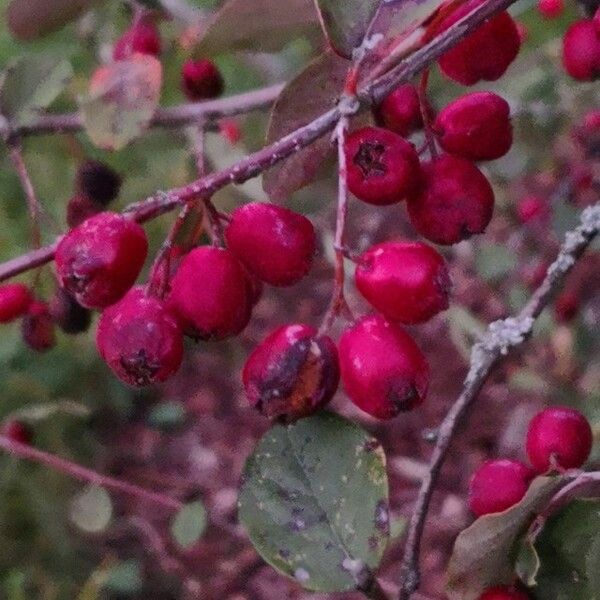
- 🍒 The Fruit: In late summer and fall, the plant is covered in bright red, slightly elongated (ovoid) berries that hang in heavy, decorative bunches.
🏡 In Your Garden
- 🌱 Versatile Structure: Because of its naturally arching branches, it works beautifully as an informal hedge or as a "screening" plant to hide fences.
- 💪 Hardy Nature: This species is exceptionally tough; it is drought-tolerant once established and thrives in poor, rocky soils where other plants might struggle.
- 🐦 Wildlife Magnet: It is a high-value plant for biodiversity. Bees flock to the nectar-rich spring flowers, and songbirds rely on the berries as a crucial food source during the leaner winter months.
⚠️ Safety & Toxicity
- 🐾 Status: Mildly toxic to humans and pets.
- 🚫 Details: Like many members of the Rose family, the berries and leaves contain cyanogenic glycosides. While birds can eat them safely, ingestion by humans, dogs, or cats can cause stomach upset, drooling, or lethargy. It is best to keep an eye on curious toddlers and pets.
✨ Fun Fact
The name Cotoneaster is derived from the Latin cotoneum (meaning "quince") and aster (meaning "resembling"). It literally translates to "looking like a quince," referring to the similar leaf shape shared by these two distant botanical cousins.

Detailed Care Instructions

Place in a bright room that is sun drenched almost all day. Or directly in a south-facing window.

To water this plant, make sure to thoroughly soak the soil around the base of the plant. This can be done by watering slowly and deeply, allowing the water to penetrate the soil and reach the roots. Be careful not to overwater, as too much water can lead to root rot. It is best to water this plant in the morning or evening, rather than in the heat of the day, to minimize water loss through evaporation. Keep in mind that the amount of water needed may vary depending on the climate and soil conditions.
For optimal growth and health of this plant species, it is recommended to use well-draining soil that is rich in nutrients and organic matter. The soil should have a pH level between 6.0 and 7.5. A mix of regular garden soil, peat moss, and perlite or sand can be used to create a suitable soil blend. It is also important to ensure good drainage as this plant prefers not to have wet roots. Additionally, applying a layer of mulch over the soil can help maintain moisture and provide nutrients to the plant over time.








