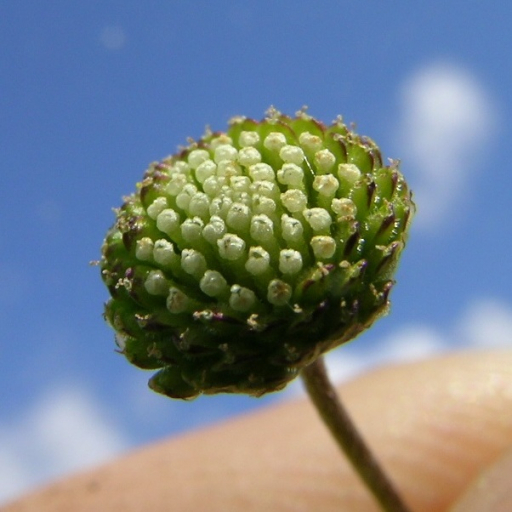
Plant Overview
Known as Common Brassbuttons or sometimes "Carrot Weed" due to its feathery foliage, Cotula australis is a tiny traveler that has spread from its native Australasia to gardens worldwide. It is a master of the "miniature world," often forming soft, fern-like carpets in the cracks of garden paths or tucked away in damp corners of the lawn. While many consider it a humble weed, its button-like flowers have a minimalist charm that fascinates macro-photographers.
🔍 How to Identify
- 🌿 The Foliage: The leaves are deeply divided and feathery, resembling a tiny version of a carrot top or a delicate fern. They are often covered in fine, soft hairs that give them a slightly grayish-green tint.
- 🟡 The "Buttons": Unlike a typical daisy, these flowers lack the long outer petals (ray florets). Instead, they look like small, flat, greenish-yellow buttons perched on the ends of thin, wiry stems.
- 🌱 Growth Habit: This is a low-growing, spreading annual. It rarely stands taller than a few inches, preferring to creep along the ground and fill in bare spots.
🏡 In Your Garden
- 🧱 Urban Survivor: You will most likely find this plant in "disturbed" areas. It loves the compacted soil between paving stones, the edges of gravel driveways, or damp patches in a neglected lawn.
- 💧 Moisture Indicator: While it is surprisingly drought-tolerant once established, a sudden flush of Brassbuttons usually indicates that a patch of soil has been consistently moist or recently disturbed. It uses these windows of opportunity to flower and set seed rapidly.
⚠️ Safety & Toxicity
- ✅ Low Risk: Cotula australis is generally considered non-toxic to humans and common household pets.
- 🤚 Skin Sensitivity: Like many members of the Asteraceae (daisy) family, some individuals may experience mild skin irritation (contact dermatitis) if they pull large quantities of the plant with bare hands.
- 🐾 Pet Safety: It is not known to be poisonous to dogs or cats, though it isn't exactly a gourmet snack for them either!
✨ Fun Fact
The name Cotula comes from the Greek word "kotule," which means "small cup." This refers to the cup-like shape formed by the base of the flower head where the tiny florets sit!

Detailed Care Instructions
To grow Cotula Australis, follow these steps:
- Choose the right location: Cotula Australis prefers full sun but can tolerate partial shade as well. Make sure the location has well-drained soil with good organic matter content.
- Prepare the soil: Cultivate the soil to a depth of 12 inches and remove any weeds or rocks. Add compost or well-rotted manure to improve the soil's fertility and drainage.
- Planting: Cotula Australis can be propagated from seeds or cuttings. If using seeds, sow them in the prepared soil, covering them lightly with a thin layer of soil. Space the seeds or cuttings about 6-8 inches apart. Water gently after planting.
- Watering: Cotula Australis requires regular watering, especially during the first few weeks after planting to help establish its root system. Afterward, water deeply but infrequently, allowing the soil to dry out slightly before the next watering.
- Mulching: Apply a layer of organic mulch around the plants to retain moisture, suppress weed growth, and protect the roots from temperature fluctuations.
- Fertilization: Cotula Australis usually doesn't require much fertilization. However, you can apply a balanced, slow-release fertilizer in early spring to promote healthy growth.
- Pruning: Trim Cotula Australis occasionally to maintain its compact and tidy appearance. Pinch back the stems to encourage bushier growth and remove any dead or damaged foliage.
- Pest and disease control: Cotula Australis is generally resistant to many pests and diseases. However, keep an eye out for aphids, snails, or slugs, and address them promptly if needed.
- Winter care: Cotula Australis is perennial in mild climates but may require winter protection in colder regions. Apply a layer of mulch over the plant to insulate it from freezing temperatures.
- Propagation: Cotula Australis can be easily propagated by dividing the plant in early spring or by taking stem cuttings and rooting them in a well-draining propagation mix.
Following these steps should help you successfully grow Cotula Australis and enjoy its charming green foliage and vibrant yellow flowers.

Place in a bright room that is sun drenched almost all day. Or directly in a south-facing window.

The best approach to watering this plant would be to provide a steady and consistent supply of moisture to the soil. This can be achieved by watering deeply once or twice a week, depending on the weather and soil conditions. It is important to avoid overwatering, as this can lead to waterlogged soil and root rot. Instead, allow the soil to dry out slightly between watering sessions, checking the moisture level by sticking your finger a few inches into the soil. When watering, aim to saturate the soil thoroughly, ensuring that the water reaches the root zone. To avoid wetting the foliage, pour the water directly onto the soil or use a drip irrigation system. Additionally, it is recommended to mulch around the base of the plant to help retain moisture in the soil and reduce water loss through evaporation.
For optimal growth and health, it is recommended to fertilize the Cotula Australis plant every 2-3 months during the growing season. Use a balanced, all-purpose fertilizer and apply it according to the manufacturer's instructions. Avoid over-fertilizing, as this can lead to excessive growth and weaken the plant. It is also important to water the plant thoroughly before and after fertilizing to ensure proper absorption of nutrients.
Cotula Australis plant requires a well-draining soil with a slightly acidic to neutral pH range. It is recommended to use a soil mix that contains loam, sand, and peat moss. The soil should also be rich in nutrients such as nitrogen, phosphorus, and potassium, which can be achieved by adding fertilizer or compost to the soil. It is important to ensure that the soil is not too wet, as excess moisture can lead to root rot. Therefore, adding perlite or sand to the soil mix can help improve drainage. Overall, the ideal soil for Cotula Australis plant should be well-draining, nutrient-rich, and slightly acidic to neutral in pH.
To propagate this plant, you can start by taking cutting from the stem. Choose stems that are healthy and have no signs of damage. Use a clean, sharp pair of scissors or pruning shears to make a clean cut below the node at a 45-degree angle. Remove any leaves from the lower two-thirds of the cutting, leaving a few leaves on the upper third.
Dip the cut end in rooting hormone powder to encourage root growth. Fill a small pot with a well-draining soil mix and make a hole in the center. Insert the cutting into the hole and gently firm the soil around it. Water the cutting thoroughly and place it in a bright, warm location, but away from direct sunlight.
Keep the soil moist but not overly wet. Within a few weeks, roots should form and new growth will emerge from the top. Once the new plant has developed a strong root system and a few leaves, it can be transplanted into a larger pot or into the ground.
Another method of propagation is through division. When the plant becomes too large or bushy, you can divide it into smaller pieces. Carefully dig up the plant and separate the clumps into several smaller sections, making sure each section has some roots and foliage. Replant the sections into separate pots or into the ground and water them well.








