Plant Overview
Often called the Nicaragua Cannonball Tree, this rare giant is a true botanical marvel. Known for its "cauliflory"—the habit of growing flowers and fruits directly from its main trunk—it looks like a living piece of prehistoric art. While it is a relative of the more common Couroupita guianensis, this species is a precious find, currently listed as endangered in its native Central American habitats.
🔍 How to Identify
- 🌸 The Flowers: Spectacular, waxy blooms that grow on long, tangled vines snaking around the trunk. They feature fleshy, pinkish-orange petals and a unique "hood" structure in the center.
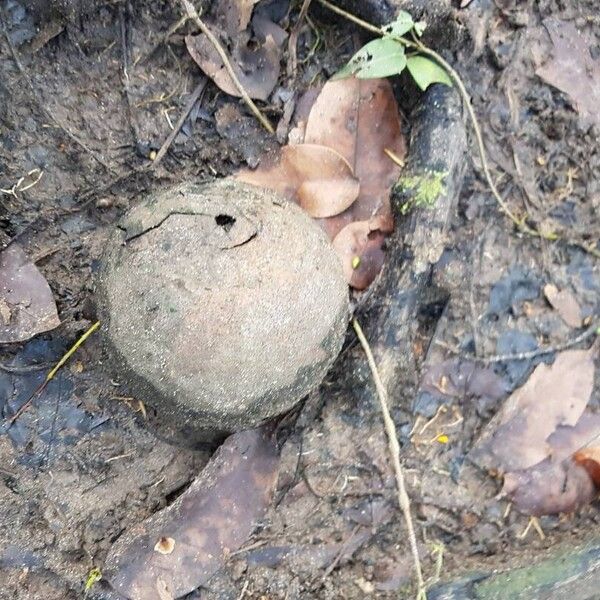
- ⚽ The Fruit: Massive, spherical, woody pods that resemble rusted cannonballs. These heavy fruits can stay on the tree for a long time before falling.
- 🍃 The Foliage: Large, vibrant green leaves that are "obovate" (teardrop-shaped) and grow in lush clusters at the ends of the upper branches, forming a dense canopy.
🏡 In Your Garden
- 🌳 Space & Scale: This is not a plant for a small backyard or a container. It requires a vast amount of space and deep, rich soil. Because the heavy fruits can drop without warning, it should never be planted near walkways or patios.
- 🌦️ Microclimate: It is a strictly tropical species. It craves high humidity and "wet feet" (consistently moist soil). It has no tolerance for frost; even a light chill can cause it to drop its leaves and go into shock.
⚠️ Safety & Toxicity
- 🐾 Non-Toxic but Pungent: The fruit pulp is not considered toxic to humans or pets, but it is notoriously smelly. When a "cannonball" cracks open, the fermenting pulp emits a powerful, unpleasant odor that some compare to rotting garbage.
- ☄️ Physical Danger: The primary safety concern is the weight of the fruit. A single pod can weigh several pounds; standing beneath the tree during the ripening season is genuinely hazardous.
✨ Fun Fact
The flowers of the Cannonball Tree are master manipulators! They produce no nectar. Instead, they grow two different types of pollen: one that is fertile and "hidden," and another "fake" pollen that is brightly colored and tasty, specifically designed to lure bees into the flower to do the work of pollination.

Detailed Care Instructions







