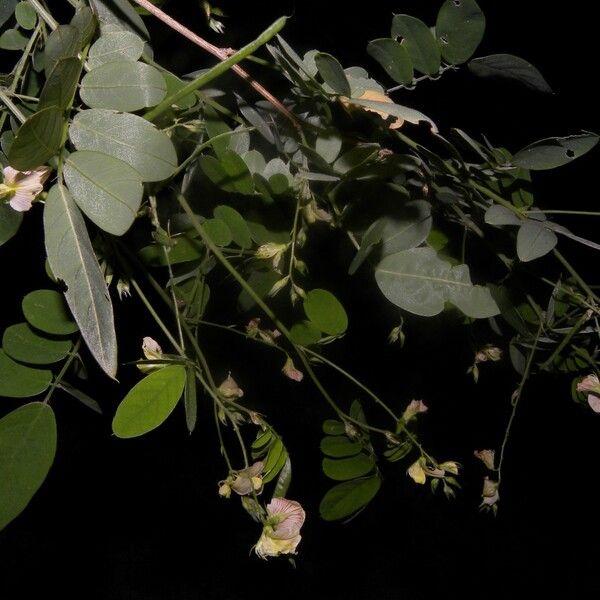
Plant Overview
Often referred to by the charming name Anilillo or the Carib Coursetia, this resilient shrub is a hidden gem of the Neotropics. Native to the dry thickets of the Caribbean, Central America, and the southwestern United States, it is a master of survival in rocky, sun-drenched landscapes. While it may look delicate with its airy foliage, it is a tough-as-nails member of the pea family that brings a touch of wild elegance to arid gardens.
🔍 How to Identify
- 🌿 Feathery Foliage: The leaves are "pinnately compound," meaning they look like tiny green feathers. Each leaf is made up of several pairs of small, oval leaflets that give the plant a light, lacy appearance.
- 🌸 Pea-Like Blooms: It produces dainty flowers that look like miniature sweet peas. They are typically creamy white or pale yellow, often blushing with a soft pink or purple tint on the outer petals.
- 🫘 Slender Pods: After blooming, the plant develops thin, straight seed pods. These pods are light brown and split open when dry to scatter the next generation of seeds.
🏡 In Your Garden
- ☀️ Sun Worshipper: This plant thrives in "harsh" conditions. It prefers rocky or sandy soil where water drains away quickly. If you have a spot in your garden where other plants wither from the heat, the Coursetia will likely feel right at home.
- 🌱 Soil Improver: As a member of the Fabaceae family, it has a secret superpower: it "fixes" nitrogen. It works with soil bacteria to pull nitrogen from the air and store it in its roots, actually making the surrounding soil richer for neighboring plants.
- 🦋 Pollinator Magnet: While the flowers are small, they are rich in nectar. Expect to see native bees and small butterflies visiting frequently, as it is a vital food source in dry environments.
⚠️ Safety & Toxicity
- 🟢 Generally Safe: There are no widespread reports of Coursetia caribaea being highly toxic to humans or common garden visitors.
- 🐾 Pet Caution: Like many wild legumes, the seeds and pods contain complex proteins that might cause mild stomach upset if ingested in large quantities by curious dogs or cats. It is best kept as an ornamental rather than a snack.
✨ Fun Fact
In some regions of Mexico and Central America, the Coursetia is so well-adapted to the heat that it is used as a "pioneer species" to help restore land that has been over-farmed or cleared, paved the way for more sensitive plants to return!

Detailed Care Instructions

Some plants require more regular watering than others, which should be done every few days. It's critical to maintain the soil moist all of the time. The water requirements of the same plant placed in pots with varying sizes will differ. Because the water in the smaller pot evaporates faster than the water in the larger pot, it will require more watering. Regardless of pot size, the surface should constantly be maintained moist.








