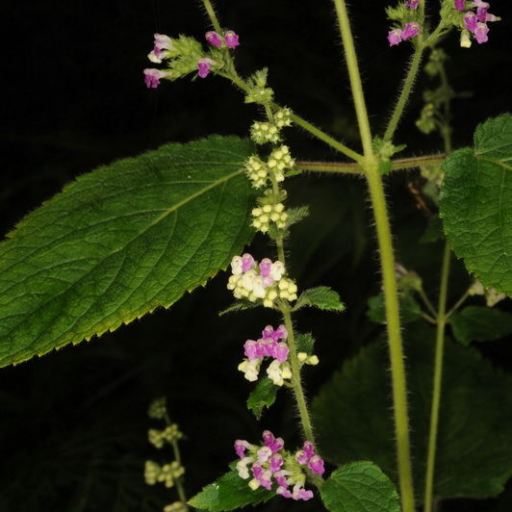
Plant Overview
Known as the Himalayan Helmet Flower, Craniotome furcata is a delicate member of the mint family that carpets the cool, damp forest floors of the Himalayas and Southeast Asia. While it lacks the aggressive scent of culinary mint, its elegant spikes of tiny, hooded flowers make it a hidden gem for woodland enthusiasts. In its native habitat, it is often found peeking out from the misty undergrowth of rhododendron forests.
🔍 How to Identify
- 🌿 Square Stems: Like many of its cousins in the Lamiaceae family, this plant features distinct four-angled (square) stems that are often covered in fine, soft hairs.
- 🍃 Velvety Leaves: The leaves are soft to the touch, broadly ovate or heart-shaped, and feature "toothed" (serrated) edges that give the plant a lush, textured look.
- 🌸 Hooded Blossoms: The tiny flowers appear in dense, upright spikes. They are typically white, pale pink, or light purple, featuring a "furry" upper lip that resembles a miniature helmet or hood.
🏡 In Your Garden
- 💧 Moisture Lover: This plant is a true "forest dweller." It thrives in conditions that mimic a damp woodland floor, meaning it dislikes drying out and prefers soil that remains consistently moist.
- 🌥️ The Shade Solution: Because it naturally grows under dense tree canopies, it is a fantastic choice for North-facing gardens or "problem spots" that receive very little direct sunlight.
- 🌱 Soft Growth: Unlike some woody shrubs, this is a soft-stemmed herbaceous plant. It creates a gentle, mounding shape that works well as a filler between larger shade-loving perennials like Hostas.
⚠️ Safety & Toxicity
- ✅ Low Risk: There are no widespread reports of Craniotome furcata being toxic to humans or common household pets.
- 🐾 Textural Irritation: While not poisonous, the fine hairs on the stems and leaves can sometimes cause a mild "scratchy" sensation in the throat if a curious pet decides to chew on it, which usually discourages further snacking.
✨ Fun Fact
The name Craniotome is derived from the Greek words for "skull" or "helmet" (kranion) and "to cut" (tome), referring to the unique, precision-split shape of the flower's upper lip, which is perfectly designed to "cap" a visiting pollinator's head with pollen!

Detailed Care Instructions
To grow Craniotome Furcata, also known as the Forked Sage, you can follow these steps:
- Obtain seeds: You can purchase Craniotome Furcata seeds from a reputable seed supplier, preferably one specializing in rare or exotic plant species. Alternatively, you can try to source seeds through online plant forums or by contacting local nurseries specializing in unusual plants.
- Soil preparation: Craniotome Furcata prefers sandy or well-draining soil. Prepare a pot or planting area with a mix of sandy soil, perlite, and organic compost. This mix will promote good drainage and provide necessary nutrients.
- Sowing seeds: Fill a small tray or pot with the prepared soil mix. Scatter the Craniotome Furcata seeds over the soil surface, then gently press them down to secure them in place. Cover the seeds lightly with a thin layer of soil, about 1/8 inch or less.
- Watering: Moisten the soil using a spray bottle or a gentle-stream watering can. Ensure the soil is evenly moist but not waterlogged. Maintaining moist soil with good drainage is crucial during the germination stage.
- Temperature and light requirements: Craniotome Furcata prefers warm temperatures of around 70-85°F (21-29°C). Place the seed tray in a warm location with indirect sunlight. A bright, partially shaded spot indoors or in a greenhouse is ideal.
- Germination: Craniotome Furcata seeds usually germinate within 2-4 weeks. Be patient and consistent with watering to avoid drying out or over-saturating the soil. Once seedlings emerge, provide them with bright but indirect light for healthy growth.
- Transplantation: Once the seedlings have grown to a manageable size and have at least two sets of true leaves, they can be transplanted into individual pots. Use a similar soil mix as before, ensuring good drainage and nutrition.
- Care and maintenance: Craniotome Furcata prefers a sunny location, so gradually acclimate the plants to direct sunlight. Water regularly, allowing the soil to dry slightly between waterings. Provide occasional fertilization using a balanced, water-soluble fertilizer diluted to half strength.
- Pruning and shaping: As the Craniotome Furcata grows, you can prune and shape it to your desired form. This plant has a branching habit, so regular pruning encourages bushiness and denser foliage.
- Protect from frost: Craniotome Furcata is generally not frost-resistant, so if you live in a climate with cold winters, you may need to bring the plant indoors or provide some form of frost protection during the colder months.
By following these steps, you should be able to successfully grow Craniotome Furcata and enjoy its distinctive foliage and aromatic scent.

Place in a bright room that is sun drenched almost all day. Or directly in a south-facing window.

The best way to water this plant is to ensure that the soil is completely dry before watering it again. You can check the moisture level by sticking your finger about an inch into the soil. If it feels dry, then it’s time to water the plant. Make sure to water it thoroughly, allowing the water to penetrate deep into the soil. However, avoid overwatering the plant as it can lead to root rot. It’s recommended to water the plant once a week during the growing season and reduce the frequency during the winter months. You can also mist the leaves occasionally to provide some humidity.
To fertilize this plant, use a balanced fertilizer with equal amounts of nitrogen, phosphorus, and potassium. During the plant's growing season, fertilize every two weeks with a water-soluble fertilizer, diluting it to half strength. Take care not to over-fertilize, as it can harm the plant. Water the plant well before and after fertilizing to prevent root burn.
Craniotome Furcata thrives best in well-draining soil with a slightly acidic pH level between 6-7.5. A nutrient-rich soil mixture containing a blend of organic materials such as peat moss, perlite, and vermiculite would be ideal for promoting healthy growth and development of the plant. It is recommended to add coarse sand to the soil mixture to improve drainage and prevent waterlogging. The soil should be kept moist, but not waterlogged, as overwatering can lead to root rot and other health issues for the plant.
To propagate this plant, you will need to take stem cuttings in the early spring or late fall. Select healthy stems that are at least 4 inches long with several nodes. Using a sterilized sharp blade, cut the stem at an angle just below a node. Remove any lower leaves from the stem, leaving only the top two or three leaves.
Fill a pot with a well-draining soil mix, and create a planting hole in the soil. Dip the cut end of the stem into a rooting hormone powder and gently tap off any excess. Place the stem into the planting hole and gently press the soil around it.
Place the pot in a bright place with indirect sunlight and keep the soil moist but not wet. After about a month, roots should start to form. Once the roots have grown, gently tug on the stem to ensure that it has firmly rooted in the soil.
After the cutting has fully rooted, you can transplant it to a larger pot or into a garden bed. Make sure to acclimate the plant to its new surroundings gradually, allowing it to adjust to its new environment.








