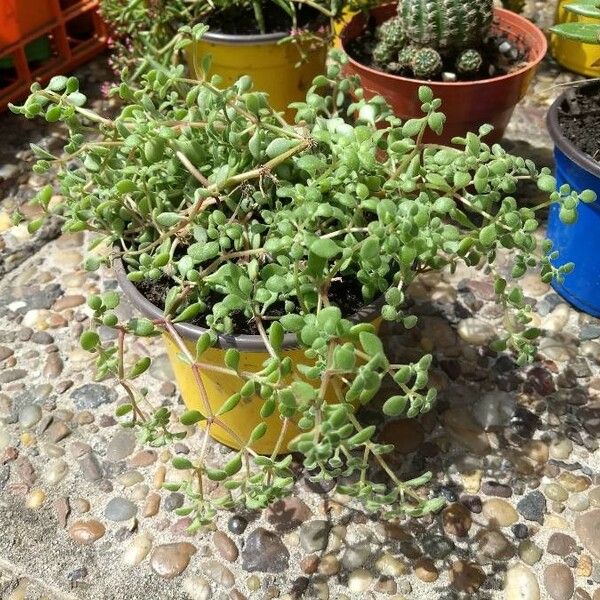
Plant Overview
Often called the "Fragile Crassula," this delicate South African succulent is nature’s version of a living carpet. While many succulents grow in rigid rosettes, this species prefers to sprawl and wander, filling gaps in rock gardens or cascading gracefully over the edges of hanging pots. Its name "expansa" perfectly describes its ambitious habit of stretching across any available soil it can find.
🔍 How to Identify
- 🌿 Leaf Texture: Tiny, oval, and fleshy leaves that feel slightly jelly-like to the touch. They are usually a bright lime green but can "blush" deep red when exposed to high sun.
- 🌸 Floral Display: Miniature, star-shaped white or pale pink flowers that emerge from the leaf axils, often making the plant look like it has been dusted with powdered sugar.
- 🌱 Stem Structure: Thin, wiry, and reddish stems that are surprisingly brittle. They break easily, which is actually a survival tactic to help the plant spread.
🏡 In Your Garden
- 🌵 The "Fragile" Factor: This plant earned the nickname fragilis because it falls apart if handled roughly. However, every broken segment that touches the ground will likely sprout roots and become a brand-new plant within weeks.
- ☀️ Light & Color: It is a master of adaptation; it stays lush and green in shaded spots but turns a vibrant, fiery bronze in bright, direct sunlight. It requires very little soil depth, making it perfect for "living walls" or crevice planting.
⚠️ Safety & Toxicity
- 🐾 Pet Safety: Crassula expansa is generally considered non-toxic to cats and dogs, making it a "worry-free" choice compared to more dangerous succulents like Jade plants or Euphorbias.
- 👶 Child Safety: While non-toxic, the tiny, bead-like leaves can be a choking hazard for curious toddlers. It is best kept in hanging baskets out of reach of small hands.
✨ Fun Fact
- 🧬 Night Breather: Like most members of its family, this plant uses CAM photosynthesis. It keeps its "pores" closed during the blistering heat of the day to save water and only opens them at night to breathe in carbon dioxide.

Detailed Care Instructions
| Humidity | Dry |
| Lighting | Part Sun |
| Difficulty | Medium |
| Temperature | 18°C - 28°C |
| Hardiness Zones | 9B - 11B |
To grow a Crassula Expansa plant, or commonly known as the Jade plant or Money tree, you can follow these steps:
- Light: Jade plants need bright, indirect sunlight. Place them near a north or east-facing window where they can receive partial sunlight. Avoid extreme heat or direct sunlight as it may scorch the leaves.
- Temperature: These plants prefer moderate temperatures between 60-75°F (15-24°C). Protect them from drafts and sudden temperature changes.
- Watering: Water your jade plant when the top 1-2 inches of soil feel dry. Overwatering can lead to root rot, so it's important to let the soil dry out between waterings. During the winter months, reduce watering as the plant goes into a dormancy period.
- Soil: Use well-draining soil with a mixture of regular potting soil and perlite, pumice, or sand to enhance drainage. Avoid using heavy, moisture-retentive soils.
- Fertilizer: Feed your jade plant with a balanced, water-soluble fertilizer during the growing season (spring to autumn). Dilute the fertilizer to half the recommended strength and apply it every 2-3 months.
- Pruning: Prune your jade plant to maintain its shape or size. Remove any dead or diseased leaves and stem sections, and pinch back new growth to encourage bushier growth.
- Propagation: Crassula Expansa can be propagated through stem or leaf cuttings. Allow the cuttings to callus for a few days before planting them in a well-draining soil mix. Keep the soil slightly moist until new roots develop.
- Pests and Diseases: Monitor your plant for common pests like mealybugs or spider mites. Treat any infestations with appropriate insecticides or by manually removing the pests. Avoid overwatering to prevent root rot.
Remember, Jade plants are slow-growing, so be patient and provide consistent care. With time, your Crassula Expansa plant will grow into a beautiful, bushy specimen.

Place in a bright room that is sun drenched almost all day. Or directly in a south-facing window.

To water this plant, fill a watering can with room temperature water and slowly pour the water onto the soil around the base of the plant. Allow the soil to fully absorb the water, ensuring that excess water is drained out of the bottom of the pot. Water the plant only when the soil feels dry to the touch and avoid over-watering as this can lead to root rot. It is important to also ensure that the plant is not left standing in water as this can also cause damage to the roots.
To fertilize the Crassula Expansa plant, you can use a balanced fertilizer with an NPK ratio of 10-10-10. Mix the fertilizer with water according to the instructions on the packaging and apply it to the soil around the plant. Do not apply the fertilizer directly on the plant's leaves or stem. Fertilize the plant once a month during the growing season (spring and summer) and stop fertilizing during the dormant season (fall and winter). Make sure to water the plant thoroughly after fertilizing to help the nutrients reach the roots.
The ideal soil to use with this plant should be well-draining and aerated. It is recommended to use a mixture of coarse sand, perlite, and loamy soil in equal parts. This blend will allow for proper water drainage and prevent the roots from becoming waterlogged. The plant also prefers a slightly acidic soil, with a pH range between 6.0 and 7.0. It is important to avoid using heavy soils that hold moisture for extended periods, as this can lead to root rot and other issues. Overall, a well-draining, aerated soil with neutral to slightly acidic pH is ideal for this plant to thrive.
To propagate this plant, select a healthy stem from the parent plant and cut it just below a leaf node. Remove any leaves from the lower part of the stem, leaving 2-3 leaves at the top. Allow the cuttings to dry for a few hours to prevent rotting, then dip the cut end in rooting hormone and plant it in a well-draining potting mix. Water the cutting lightly and place it in bright but indirect sunlight. Keep the soil moist but not soggy and mist the leaves occasionally to keep them from drying out. After a few weeks, roots should start to form and the cutting can be transplanted into its own pot or added to a container with other succulents.
Common pests of the fragile crassula include Mealybugs. Make a habit of checking your fragile crassula frequently for pests so that any infestations can be caught and managed early.








