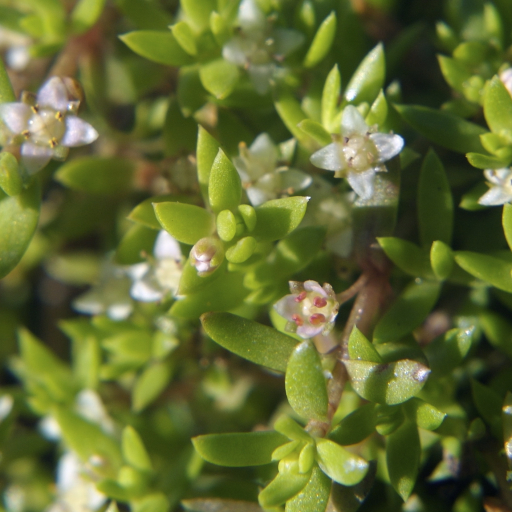
Plant Overview
Known as the "New Zealand Pigmyweed" or "Swamp Stonecrop," this plant is a master of adaptation that looks like a charming miniature succulent but hides a fiercely competitive nature. Originally brought to Europe and other regions as an "oxygenator" for garden ponds, it has become one of the most aggressive aquatic invaders in the world. It is a botanical survivor, capable of growing in deep water, floating on the surface, or creeping across damp mud.
🔍 How to Identify
- 🍃 Succulent Leaves: The leaves are small, narrow, and fleshy, growing in opposite pairs along the stem. They are typically bright green but can turn reddish when stressed or exposed to high light.
- 🌸 Tiny Blooms: In the summer, it produces minuscule, four-petaled white or pale pink flowers that grow on short stalks from the base of the leaves.
- 📏 Growth Habit: It forms dense, carpet-like mats that can become several feet thick, completely covering the surface of a pond or the floor of a wetland.
🏡 In Your Garden
- 🚫 The Invasive Risk: If you have a garden pond, think twice before introducing this plant. It grows so rapidly that it can quickly choke out native lilies and submerged plants, eventually depleting oxygen levels and harming fish.
- 🧊 Indestructible Nature: This plant is nearly impossible to kill. It remains green and active throughout the winter, can survive being frozen solid in ice, and can even tolerate brackish (slightly salty) water.
⚠️ Safety & Toxicity
- ✅ Safe for Touch: Crassula helmsii is not known to be toxic to humans, dogs, or cats upon contact or accidental ingestion.
- 🌊 Environmental Hazard: The primary "danger" is ecological. In many countries, including the UK, it is illegal to plant this species in the wild or even sell it, as it destroys natural habitats and clogs drainage systems.
✨ Fun Fact
This plant is a true "zombie" of the water world; a new colony can sprout from a fragment as small as 5 millimeters (less than a quarter-inch). This means a single piece stuck to a bird's foot or a fishing net is enough to infest an entire new lake!

Detailed Care Instructions
| Soil Ph | 5.0-7.5 |
| Humidity | High |
| Lighting | Part Sun |
| Soil Type | Moist But Well-Drained |
| Difficulty | Medium |
| Plant Type | Broadleaf Perennial Evergreen |
| Hibernation | Cold Period |
| Native Area | South Africa |
| Temperature | 20°C - 30°C |
| Sun Exposure | Full Sun, Partial Shade |
| Hardiness Zones | 9-12 |
To grow Crassula Helmsii, also known as swamp stonecrop, follow these steps:
- Choose a suitable location: Crassula Helmsii is an aquatic plant that thrives in wetland environments. It can be grown in ponds, water gardens, or even in containers filled with water. Ensure the plant receives ample sunlight, at least 6 hours a day.
- Planting: Place the plant in water, making sure its roots are submerged. It can be planted directly in the soil or in a container filled with aquatic compost or loamy soil.
- Watering: Keep the water level consistent, ensuring the plant always has enough water to keep its roots submerged throughout the growing season. However, avoid waterlogging the plant, as this can lead to root rot.
- Fertilization: Crassula Helmsii does not require regular fertilization. However, you can add a slow-release aquatic fertilizer to the water or soil once every few months to provide needed nutrients.
- Pruning: Prune any dead or damaged leaves or stems regularly to maintain the plant's health and appearance. This will also help prevent overcrowding.
- Overwintering: Crassula Helmsii is cold hardy and can survive in temperatures as low as -20°C (-4°F). During winter, if the surface of the pond freezes, the plant can be cut back and submerged deeper in the water to protect it from freezing.
- Control spreading: Crassula Helmsii is an invasive species in some parts of the world, so it's important to keep its growth under control. Regularly check for any signs of spreading into unwanted areas and remove the plant if necessary.
Remember to check your local regulations before introducing Crassula Helmsii into aquatic ecosystems, as it can be considered an invasive species in some regions.

Place in a window with dappled sun or a spot in the middle of a room. Or directly in a window facing west or east.

To water this plant, you should first ensure that the soil is completely dry to the touch before watering. Once you have confirmed this, use a watering can or spray bottle to moisten the soil until it is evenly damp. It is important to not overwater this plant, as it can lead to root rot and other issues. Additionally, avoid getting water on the leaves or stem of the plant, as this can cause damage or encourage the growth of mold or fungi. Instead, aim to only water the soil around the base of the plant. Finally, make sure that the pot or container has adequate drainage to allow excess water to escape and prevent waterlogged soil.
To fertilize this plant, use a diluted liquid fertilizer during the growing season. Apply the fertilizer once a month, being careful not to over-fertilize as it can easily damage the plant. During the dormant season, reduce fertilization frequency to every two months. Use a balanced fertilizer that contains equal amounts of nitrogen, phosphorus, and potassium. Avoid using high-nitrogen fertilizers that can cause excess growth but weaken the plant overall.
The ideal soil for the plant is a loamy or sandy soil that is well-draining and rich in nutrients. It can also tolerate slightly acidic or alkaline soils with a pH range between 6.0 and 8.0. The soil should be moist but not waterlogged as it can cause root rot. The plant also prefers a slightly humid environment, so adding a layer of mulch or pebbles around the base of the plant can help retain moisture. To ensure optimum growth, it is recommended to fertilize the plant once a month during the growing season with a balanced fertilizer.
To propagate this plant, you should first cut healthy stems from the parent plant. The stems should be around four inches long and have some leaves. Remove the leaves from the bottom two inches of the stem to expose the nodes. Dip the end of the stem in rooting hormone. Then, place the cutting in well-draining soil. Water the soil, but be careful not to overwater it. Place the cutting in a location where it will receive bright (indirect) sunlight. Keep the soil moist but not waterlogged, and within a few weeks, new growth should appear, indicating that the cutting has successfully taken root.








