Plant Overview
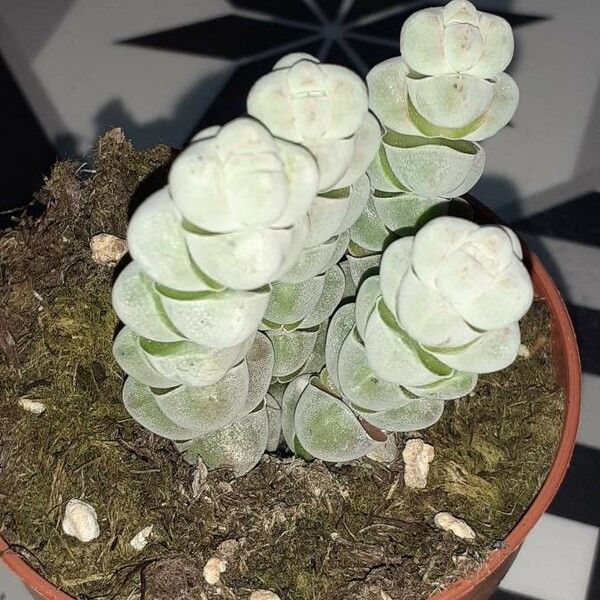
Known as the "Plegma Crassula" or "Stacked Crassula," this architectural gem looks like a meticulously carved piece of living limestone. Hailing from the arid coastal deserts of Namibia and South Africa, it has evolved a bizarre, geometric form to survive extreme heat and drought. It is a slow-growing masterpiece that adds a futuristic, "alien" vibe to any succulent collection.
🔍 How to Identify
- 🍃 The Shingle Effect: The leaves are incredibly thick, fleshy, and tightly packed, overlapping each other so closely that the central stem is completely hidden from view.
- 🏛️ Square Columns: Growth occurs in distinct, four-angled vertical columns. These "stacks" resemble miniature pagodas or ancient temple pillars reaching toward the sky.
- 🌫️ Powdery Coating: The surface is covered in a fine, mealy powder known as farina. This gives the plant a ghostly, grayish-green or silvery hue and acts as a natural sunscreen against harsh UV rays.
🏡 In Your Garden
- 💧 The "Rot" Warning: This plant is a true desert specialist and is highly sensitive to overwatering. It requires an extremely gritty mineral substrate—think more rocks and pumice than soil—to ensure the roots never sit in moisture.
- ☀️ Light & Color: To maintain its compact, "stacked" shape, it needs bright, direct light. In low-light conditions, the plant will "stretch" (etiolate), losing its iconic geometric symmetry and becoming weak.
⚠️ Safety & Toxicity
- ✅ Safe Status: Crassula plegmatoides is generally considered non-toxic to humans and is not known to be poisonous.
- 🐾 Pet Caution: While not listed as a high-risk plant, ingesting succulent leaves can cause mild digestive upset in cats or dogs. Because of its unique texture, it may be tempting for curious pets to chew, so keeping it on a high shelf is recommended.
✨ Fun Fact
🛡️ Natural Insulation: The tight, shingled arrangement of the leaves isn't just for aesthetics; it creates a tiny microclimate. By trapping a thin layer of air between the overlapping leaves, the plant protects its core from the scorching daytime heat and the freezing desert nights.

Detailed Care Instructions
Here are the steps to grow Crassula plegmatoides plant:
- Purchase a healthy Crassula plegmatoides plant from a reputable nursery or online store. Alternatively, you can propagate the plant from cuttings.
- Choose a well-draining pot with drainage holes. A terra cotta or clay pot works well. Fill the pot with a succulent or cactus potting mix, or create your own by combining standard potting soil with perlite or sand for better drainage.
- Place the Crassula plegmatoides plant in the pot, ensuring that the soil level is about an inch below the rim of the pot.
- Find a spot that receives bright, indirect sunlight for at least 4-6 hours a day, preferably near a south or west-facing window. Avoid placing the plant in direct sunlight as it can scorch the leaves.
- Water the plant thoroughly, allowing the water to drain out completely. Ensure the soil is dry before watering again. Overwatering can lead to root rot, so it's important to let the soil dry out between waterings.
- Crassula plegmatoides is a drought-tolerant succulent and can withstand periods of dryness. As a general guideline, water the plant every 2-3 weeks during the growing season (spring and summer) and reduce watering to once a month during the dormant period (fall and winter).
- Fertilize the plant sparingly once a month during the growing season using a balanced, water-soluble fertilizer diluted to half the recommended strength. This will provide the necessary nutrients for healthy growth.
- Prune the plant as needed to maintain its shape and to remove any dead or dry leaves. You can also propagate the plant by taking stem cuttings and allowing them to dry for a few days before planting them in a well-draining soil mix.
- Occasionally, Crassula plegmatoides may develop pests such as mealybugs or scale insects. Inspect your plant regularly and if you notice any pests, remove them manually or treat the plant with an appropriate insecticidal soap according to package instructions.
By following these steps and providing the right lighting, watering, and care, you can successfully grow Crassula plegmatoides plant. Good luck!

Place in a bright room that is sun drenched almost all day. Or directly in a south-facing window.

To water this plant, check the soil's moisture level before watering to prevent over-watering. Over-watering can lead to root rot and can kill the plant. When the topsoil feels dry to the touch, it's time to water. Water the plant directly at the base to encourage the roots to grow deeper. Be sure to avoid getting water on the leaves as this can cause the plant to rot. Allow the excess water to drain out of the pot before placing it back in its spot. Ideally, water this plant once a week or when the topsoil feels completely dry to the touch.
To fertilize this plant, you should use a well-balanced fertilizer with a 10-10-10 NPK ratio. Apply the fertilizer at half strength during the growing season, which is spring and summer. Make sure to water the plant before and after fertilizing to avoid any damage to the roots. Avoid fertilizing during the dormant season, which is fall and winter.
The recommended soil for the plant in question should be well-draining and porous, with a pH level of around 6.0 to 7.0. It should also contain a mix of organic and inorganic materials, such as perlite, vermiculite, pumice, coarse sand, and peat moss. The soil should be able to retain moisture without becoming waterlogged, as over-watering can lead to root rot and other issues. Additionally, the soil should be replenished with nutrients regularly, either through organic fertilizers or a balanced, slow-release fertilizer. It is important to note that the plant in question is sensitive to salts and should not be exposed to high levels of fertilizers or other chemicals.
To propagate this plant, you will need to take a stem cutting of about 4-6 inches in length. Make sure to take the cutting from a healthy, mature plant. Remove any leaves from the lower 2 inches of the cutting and allow the cut end to callus over for several days.
Once the cutting has callused, you can plant it in a well-draining soil mix. Water the soil lightly and place the cutting in a bright, indirect light. It is important not to overwater the cutting, as this can cause it to rot before it has a chance to root.
In a few weeks, you should begin to see new growth emerging from the cutting. Once the cutting has established roots and begun to grow, you can treat it as a mature plant and care for it accordingly.
Common pests of the crassula plegmatoides include Mealybugs. Make a habit of checking your crassula plegmatoides frequently for pests so that any infestations can be caught and managed early.








