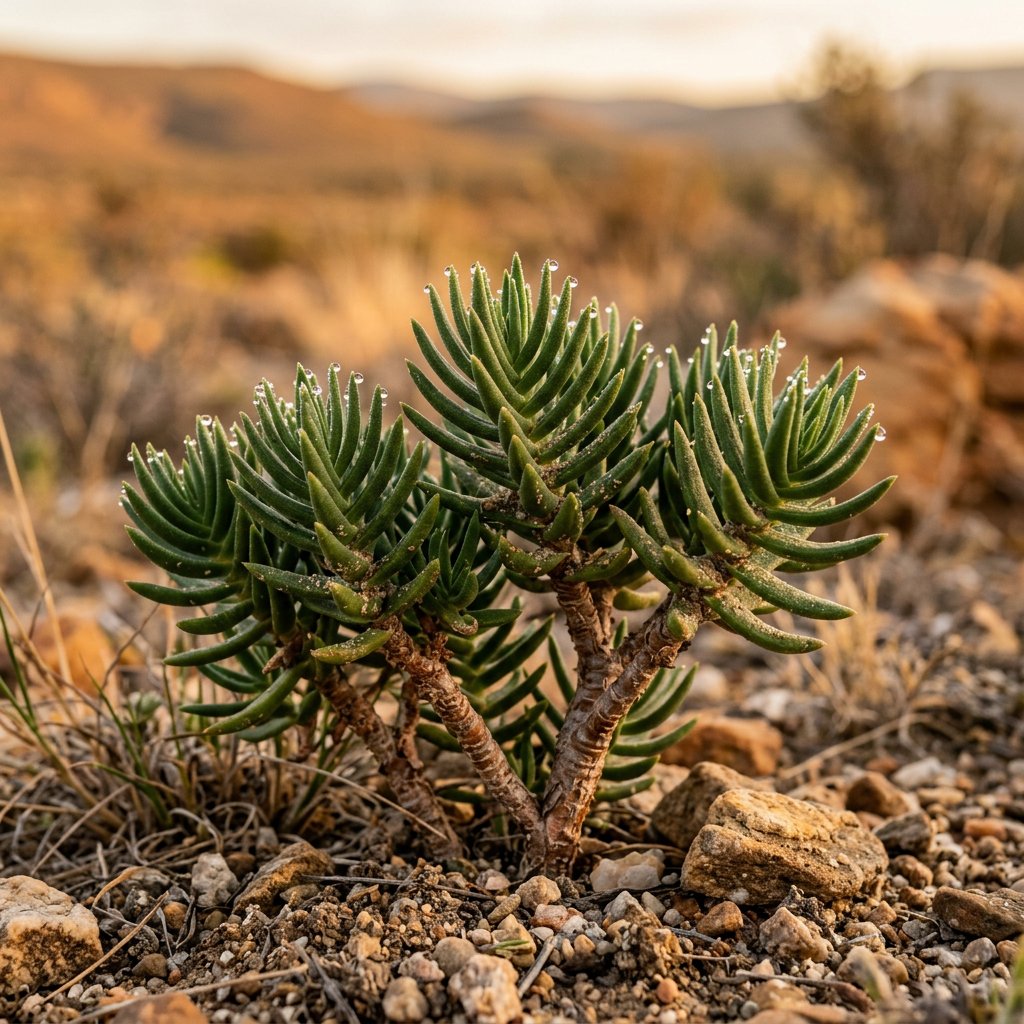
Plant Overview
Often called the "Miniature Pine Tree," Crassula tetragona is the master of disguise in the succulent world. Though it looks like a tiny evergreen from a foggy mountain range, it actually hails from the arid, sun-drenched landscapes of South Africa. It is a favorite for "instant bonsai" enthusiasts because it naturally develops a woody-looking trunk and a forest-like canopy with almost zero effort.
🔍 How to Identify
- 🌲 Pine-Like Foliage: The leaves are narrow, pointed, and fleshy. They mimic the look of classic pine needles but have a soft, succulent texture rather than a sharp poke.
- 🪵 Faux-Wood Stems: As the plant matures, the lower stems turn brown and "corky." This gives the appearance of a sturdy, ancient tree trunk even when the plant is only a few inches tall.
- ➕ Geometric Growth: If you look at the stems from directly above, the leaves are arranged in perfect opposite pairs, creating a distinct "X" or square shape known as a decussate pattern.
🏡 In Your Garden
- ☀️ Light Seeker: This plant is a dedicated sun-worshipper. If kept in a dim corner, the stems will stretch out and lose their dense, "pine tree" look, becoming floppy and weak.
- ✂️ The Pruning Advantage: Unlike many succulents that grow in messy clumps, this species is naturally architectural. You can pinch off the growing tips to encourage the plant to branch out, allowing you to "style" your mini-forest however you like.
- 💧 Drainage is Key: Because it stores so much water in its needle-like leaves, it is highly susceptible to root rot. Always use a gritty cactus mix and containers with large drainage holes.
⚠️ Safety & Toxicity
- 🐾 Toxic to Pets: Like many members of the Crassula family, this plant is considered toxic to dogs and cats.
- 🤢 Side Effects: Ingestion can lead to vomiting, lethargy, and coordination issues. While rarely life-threatening, it’s best kept on a high shelf away from curious nibblers.
✨ Fun Fact
The name "Tetragona" is derived from the Greek words for "four" and "angle." This refers to the mathematical precision of the leaf arrangement; if you slice a stem horizontally, the leaf positions form a near-perfect square!

Detailed Care Instructions
| Humidity | Dry |
| Lighting | Full Sun |
| Toxicity | Non-Toxic |
| Soil Type | Porous, Rocky, And Sandy |
| Bloom Time | Spring And Summer |
| Difficulty | Easy |
| Plant Type | Angiosperm (Flowering Seed) |
| Mature Size | Up To 2-4 Feet Tall And 1-2 Feet In Spread |
| Native Area | South Africa |
| Temperature | 15°C - 30°C |
| Sun Exposure | Full Sun To Partial Sun |
| Hardiness Zones | 9B - 11B |
To grow Crassula Tetragona, also known as the Mini Pine Tree or the Toyon, follow these steps:
- Choose the right location: Crassula Tetragona prefers bright, indirect sunlight. It can also tolerate partial shade.
- Use well-draining soil: Use a well-draining succulent or cactus mix soil. You can also create your own mix by combining regular potting soil, perlite, and sand.
- Watering: Allow the soil to dry out completely between waterings. Overwatering can lead to root rot, so it's better to underwater than overwater. Reduce watering in winter when the growth slows down.
- Container: Choose a container with drainage holes to avoid waterlogged roots.
- Propagation: You can propagate Crassula Tetragona from stem cuttings. Take a healthy stem cutting, let it dry for a few days to callus, and then plant it in well-draining soil. Keep the soil lightly moist until roots develop.
- Fertilizer: Crassula Tetragona doesn't require frequent fertilization. Use a balanced, water-soluble houseplant fertilizer every 2-4 weeks during the growing season (spring and summer) at half the recommended strength.
- Pruning: Prune Crassula Tetragona to maintain the desired shape and size. You can also pinch off the tips to encourage bushier growth.
- Pests and diseases: Crassula Tetragona is generally resistant to pests and diseases. However, watch out for mealybugs, scale insects, and aphids. If you notice any infestation, treat it with insecticidal soap or neem oil.
- Winter care: Crassula Tetragona is not very cold-hardy and prefers temperatures above 50°F (10°C). It's best to bring it indoors or protect it from frost during the winter months.
By following these guidelines, you should be able to successfully grow Crassula Tetragona and enjoy its unique appearance in your home or garden.

Place in a bright room that is sun drenched almost all day. Or directly in a south-facing window.

To water this plant, it is important to check the soil moisture level before proceeding. Insert your finger into the soil up to about 2 inches. If it feels dry, it is time to water. You should avoid watering the plant too frequently as this can cause root rot. Instead, wait until the soil is completely dry before watering. Use room temperature water and water the soil directly, making sure not to water the leaves. After watering, let excess water drain out of the pot to prevent waterlogging. It is important to note that this plant prefers well-draining soil, and overwatering can harm its health.
To ensure healthy growth of the Crassula Tetragona plant, fertilize it during its active growing season, which occurs in the spring and summer months. Use a balanced liquid fertilizer diluted to half strength and apply it every two weeks. Avoid fertilizing during the dormant season in fall and winter. Additionally, make sure the plant is watered properly and receives enough sunlight as these are also crucial factors in its growth and development.
Crassula Tetragona plant prefers a well-draining soil mix that is rich in nutrients. The ideal soil should be a blend of organic matter, such as peat moss or compost, and inorganic materials, such as perlite or sand, to help with drainage. It should have a slightly acidic to neutral pH level, ranging from 6 to 7 on the pH scale. Avoid using heavy clay or dense soils, as they can lead to waterlogging and root rot. A soil mix that is specifically designed for succulent plants is an excellent option for Crassula Tetragona as it provides the perfect balance of nutrients, moisture retention, and drainage for healthy growth.
To propagate this plant, you will need to take stem cuttings from the mature, healthy plant. Choose a stem that is free from damage or disease and cut it at a 45-degree angle using a sharp, clean knife or scissors. Make the cutting about 4-6 inches long and remove any leaves from the bottom 2 inches of the stem.
Allow the cutting to dry and callus over for a few days. Once it has callused over, plant the cutting in a well-draining soil mix. Water the cutting lightly and place it in a bright, indirect light location. Avoid direct sunlight, as it can damage the cutting.
Keep the soil lightly moist, but not overly wet. It is important to avoid overwatering, as this can lead to the cutting rotting. Within a few weeks, you should see new growth emerging from the cutting. Once the cutting has developed a strong root system and a few new leaves, it can be transplanted into its own pot.
Common pests of the karkai include Mealybugs. Make a habit of checking your karkai frequently for pests so that any infestations can be caught and managed early.








