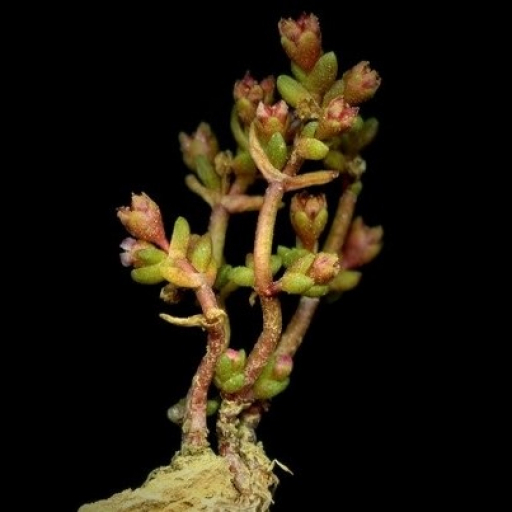
Plant Overview
Often referred to as the Grassland Pigmyweed or Moss Pygmyweed, this tiny succulent is a master of the miniature. While many of its Crassula cousins are famous for being sturdy houseplants, Crassula vaillantii is a delicate, moss-like traveler found near seasonal pools and damp crevices across Europe and Africa. It is the perfect plant for those who appreciate the beauty in the smallest details of the natural world.
🔍 How to Identify
- 🌿 Leaf Structure: Features very small, fleshy, cylindrical leaves that grow opposite each other. They are typically bright green but often blush a deep reddish-maroon when exposed to intense sunlight or dry conditions.
- 🌸 Micro-Flowers: Produces tiny, four-petaled flowers that are white to pale pink. These are so small they can easily be mistaken for tiny dots of dew on the stems.
- 📏 Growth Habit: This is a low-growing, sprawling plant that rarely exceeds a few inches in height, often forming dense, colorful mats that look like a "succulent carpet."
🏡 In Your Garden
- 💧 Moisture Paradox: Unlike desert succulents that crave dry sand, this species is a "vernal pool" specialist. It thrives in mud or very damp soil during its growing phase but can survive drying out as the season changes. If you grow it at home, think of it as a "wetland succulent" rather than a cactus.
- 🌱 Delicate Foundations: It has a very fine, shallow root system. Because of this, it is highly sensitive to being moved. Once you find a spot for it—ideally in a shallow terracotta dish or a rocky crevice—it is best to leave it undisturbed to avoid damaging its fragile "anchor" roots.
⚠️ Safety & Toxicity
- 🐾 Pet Caution: While specific data on Crassula vaillantii is limited, many members of the Crassula family (like the common Jade plant) are known to be mildly toxic to cats and dogs if ingested.
- 👶 Human Safety: It is generally considered non-hazardous to humans, but its tiny size makes it a potential choking hazard for curious toddlers. It’s always best to keep "micro-plants" out of reach of very small children.
✨ Fun Fact
- ⏳ The Time Traveler: Crassula vaillantii is an expert at surviving in "ephemeral" habitats. It can complete its entire life cycle—germinating, flowering, and dropping seeds—in just a few weeks while a temporary rain puddle lasts, ensuring the next generation survives before the water vanishes!

Detailed Care Instructions
To grow Crassula vaillantii successfully, follow these steps:
- Choosing the right pot and soil: Select a well-draining pot or container with a drainage hole. Fill the pot with well-draining succulent or cactus soil mix, which is available at most gardening stores.
- Planting: Insert the Crassula vaillantii plant into the soil, ensuring that the roots are covered but leaving some space at the top. Avoid burying the leaves as this can lead to rot.
- Providing appropriate light: Place the plant in a location that receives bright, indirect sunlight. Avoid direct sunlight, especially during the noon hours, as it can scorch the leaves. Crassula vaillantii can also grow indoors with adequate light.
- Watering: Water the plant thoroughly once the top inch of soil has dried out. Do not overwater as it can cause root rot. Allow excess water to drain out of the pot, and don't let the plant sit in standing water.
- Fertilizing: Apply a balanced liquid succulent fertilizer once every two to three months during the growing season (spring and summer). Follow the manufacturer's instructions for proper application.
- Pruning: Crassula vaillantii may require occasional pruning to maintain a neat shape and prevent legginess. You can trim overgrown branches or remove any diseased or damaged parts.
- Propagation: The plant can be propagated through stem cuttings or leaf cuttings. Allow the cut ends to dry for a day or two before placing them in well-draining soil. Keep the cuttings slightly moist until they root.
- Winter care: During winter, reduce watering frequency as the plant becomes dormant. Ensure that the temperature does not drop below 50°F (10°C) as it can negatively affect the plant.
- Pests and diseases: Crassula vaillantii is generally resistant to pests and diseases. However, watch out for signs of mealybugs or scale insects. If noticed, treat the plant with an appropriate insecticide or wipe them off using a cotton swab dipped in rubbing alcohol.
By following these steps and providing the right conditions, you can successfully grow and care for your Crassula vaillantii plant.

Place in a bright room that is sun drenched almost all day. Or directly in a south-facing window.

To water this plant, you should first check the soil moisture level with your finger or a moisture meter. If the soil feels dry to the touch, you should give the plant a thorough watering until water begins to drain out of the bottom of the container. However, you should be careful not to overwater the plant, as this can lead to root rot and other issues. It is best to allow the soil to dry out slightly between watering sessions, as this will help prevent overwatering. Additionally, you may want to consider using a well-draining soil mix and a container with drainage holes to help ensure adequate drainage. Finally, you should avoid getting water on the leaves or stem of the Crassula Vaillantii plant, as this can increase the risk of fungal or bacterial diseases.
To fertilize this plant, use a balanced liquid fertilizer diluted to half strength, once a month during the growing season (spring and summer). Water the plant thoroughly before fertilizing to avoid any root burn. Avoid fertilizing during the dormant season (fall and winter).
When potting a Crassula Vaillantii plant, it is important to use a well-draining soil mix. This can be achieved by using a combination of gritty sand, perlite, and peat moss or coconut coir. The soil should be kept slightly moist, but not overly wet as this can lead to root rot. Additionally, fertilizer can be added to the soil mix during the growing season to promote healthy growth. It is important to avoid over-fertilization, as this can also harm the plant. Overall, a well-draining, slightly moist soil mix with added nutrients is ideal for growing a healthy Crassula Vaillantii plant.
Propagation of this plant can be achieved through stem cuttings. Select a healthy stem and cut it with a sterilized knife or scissors. Allow the cutting to dry for a few days in a shaded area to promote callus formation. Prepare a well-draining soil mix and plant the cutting in the soil, covering about half its length. Water the cutting sparingly until roots develop, and then gradually increase watering. Keep the cutting in a bright, indirect light and out of direct sunlight until it establishes itself.








