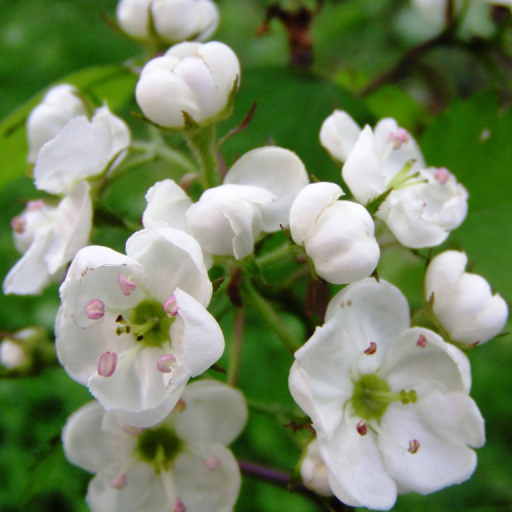
Plant Overview
Known as the Scarlet Hawthorn, this North American native is a four-season showstopper that bridges the gap between wild woodland and curated landscapes. Often called the "White Thorn" due to its snowy spring display, it is a sturdy, long-lived species that has been used for centuries as both a living fence and a provider of winter food for local wildlife.
🔍 How to Identify
- 🍃 The Foliage: Look for broadly ovate leaves with jagged, double-toothed edges. In autumn, these turn a brilliant, fiery orange or deep red.
- 🌸 The Blooms: In late spring, the tree is smothered in clusters of white, five-petaled flowers that often feature striking pink or purple anthers.
- 🍒 The Fruit: It produces small, round, apple-like "haws" that turn a vivid scarlet red in late summer and often persist well into the winter.
- ⚔️ The Thorns: The branches are armed with smooth, sharp thorns that can reach up to 2 inches in length, giving the tree a formidable, "craggy" silhouette.
🏡 In Your Garden
- 🐦 A Living Fortress: Because of its dense branch structure and sharp thorns, this plant is one of the best choices for attracting nesting birds, as it provides a natural defense against predators like cats or hawks.
- 💪 Urban Resilience: The Scarlet Hawthorn is exceptionally "tough." It handles wind, road salt, and varying soil types with ease, making it a favorite for transition zones between wilder areas and manicured lawns.
- ✂️ Pruning Patience: While it takes well to shaping, it grows slowly. If you are using it for a hedge, be patient—it focuses its energy on building strong, dense wood rather than rapid vertical height.
⚠️ Safety & Toxicity
- 📍 Physical Hazard: The primary danger of this plant is its thorns. They are incredibly sharp and can cause deep puncture wounds; always wear heavy-duty leather gloves when pruning.
- 🐕 Pet & Human Safety: While the red fruit (haws) is used in some traditional jellies, the seeds inside contain cyanogenic glycosides. If ingested in large quantities by curious pets or children, they can cause stomach upset or more serious distress.
✨ Fun Fact
The wood of the Hawthorn is famously dense and rot-resistant. In the past, it was the preferred material for making tool handles, mallet heads, and even the "teeth" of wooden rakes because it rarely splinters under pressure.

Detailed Care Instructions
To grow Crataegus Coccinea, commonly known as the Scarlet Hawthorn, you can follow these general steps:
- Select the right location: Choose a spot with full sun exposure where the soil is well-draining. Hawthorns can tolerate a wide range of soil types, but they prefer slightly acidic to neutral soil.
- Obtain seeds or saplings: You can either collect seeds from existing hawthorn berries or purchase saplings from a reputable nursery.
- Seed germination (if using seeds): If starting from seeds, soak them in water for 24 hours to soften the hard seed coat. Then, place them in a plastic bag with some moist soil or vermiculite and refrigerate for 2-3 months in a process called stratification. After this cold period, sow the seeds in pots with well-draining soil, keeping them moist but not waterlogged. Germination can take anywhere from a few weeks to a few months.
- Planting saplings: If using saplings, dig a hole in the prepared location, making it wide and deep enough to accommodate the root ball. Gently remove the sapling from its container and place it in the hole, ensuring that it sits at the same depth as it was in the container. Backfill the hole with soil, firm it gently, and water thoroughly.
- Watering and maintenance: Keep the soil evenly moist but not waterlogged during the first year of growth. Afterward, the Scarlet Hawthorn is relatively drought-tolerant but can benefit from occasional watering during dry spells. Apply a layer of mulch around the base of the plant to retain moisture and suppress weeds.
- Pruning: Prune the tree during its dormant season, typically in late winter or early spring. Remove any dead, damaged, or crossing branches to promote healthy growth and maintain an open center for good air circulation.
- Fertilization: Hawthorns generally do not require regular fertilization. However, if your soil lacks nutrients, you can apply a balanced fertilizer in the spring before new growth begins. Follow the package instructions for proper dosage.
- Pest and disease management: Monitor for any signs of pests, such as aphids, mites, or scale insects, and treat them accordingly using organic or chemical controls. The Scarlet Hawthorn is generally resistant to many diseases, but it can occasionally be affected by leaf spots or fire blight. Proper sanitation, including removing infected plant material, can help reduce the risk.
Remember that growing plants can vary depending on your specific climate and conditions. It is always a good idea to research and consult horticultural experts or local gardening resources for more specific guidance.

Place in a bright room that is sun drenched almost all day. Or directly in a south-facing window.

Crataegus coccinea is a species of flowering plant that belongs to the Rosaceae family. It is a deciduous shrub or small tree native to North America. When it comes to watering this plant, you need to consider a few factors to ensure its proper growth and health.
1. Watering Schedule: Crataegus coccinea requires regular watering, especially during the initial growth stages and hot summer months. However, it is important to avoid overwatering, as this can lead to root rot. Aim for a consistent watering schedule rather than frequent, shallow watering.
2. Well-Draining Soil: Ensure that the plant is potted or planted in well-draining soil. This helps prevent water from being retained around the roots for extended periods, which can cause root rot. The soil should allow excess water to drain away while retaining enough moisture for the plant to absorb.
3. Consider the Climate: The watering needs of Crataegus coccinea can vary based on the climate in which it is grown. In areas with high rainfall, you may not need to water it as frequently, whereas in dry and arid regions, more frequent watering might be necessary.
4. Soil Moisture: Before watering, check the moisture level of the soil. Stick your finger about an inch into the soil to see if it feels dry. If it does, it is an indication that it's time to water the plant. However, if it still feels slightly moist, you can hold off watering until the soil dries out a bit more.
5. Watering Technique: When watering Crataegus coccinea, it is best to do it slowly and deeply. This encourages the roots to grow deeper in search of water and promotes a stronger, more established plant. Avoid watering the foliage as much as possible, as wet leaves can make the plant susceptible to diseases or fungal infections.
6. Mulching: Applying a layer of organic mulch around the base of the plant can help retain moisture in the soil while keeping the roots cool. This reduces water evaporation and the frequency of watering.
Remember that each plant's watering requirements may vary slightly depending on factors such as age, size, and environmental conditions. It is always best to monitor the plant closely, observe any signs of stress or wilt, and adjust the watering as needed.
To properly fertilize the Crataegus Coccinea plant, follow these instructions:
- Choose a balanced, slow-release fertilizer with an NPK ratio of around 10-10-10 or similar. This ratio signifies the percentage of essential nutrients: nitrogen (N), phosphorus (P), and potassium (K).
- Apply the fertilizer in early spring, just before new growth starts. Scatter the granules evenly around the base of the plant, taking care not to let them touch the stems or leaves.
- Water the area thoroughly after fertilizing to help the nutrients penetrate the soil and reach the plant's root system.
- Throughout the growing season, repeat the fertilizer application every four to six weeks. Ensure that you follow the manufacturer's instructions for dosage and timing.
- Avoid over-fertilizing, as it can cause excessive growth and weaken the plant's overall health. Monitor the plant closely and adjust the fertilizer schedule as needed.
Remember, it is crucial to read and follow the specific instructions provided by the fertilizer manufacturer, as different products may have slightly different guidelines.
Crataegus Coccinea, also known as the red hawthorn or scarlet hawthorn, belongs to the Crataegus genus in the Rosaceae family. The preferred soil conditions for this plant are as follows:
- Soil Type: Crataegus Coccinea prefers well-draining soil that is fertile and loamy. Loamy soils contain a balanced mixture of sand, silt, and clay, providing good drainage while retaining moisture and nutrients.
- pH Level: The ideal pH range for this plant is between 6.0 and 7.5. It thrives best in slightly acidic to slightly alkaline soil conditions.
- Soil Texture: A slightly sandy or loamy texture allows for proper water drainage and aeration, preventing waterlogging. This ensures that the roots have access to oxygen and prevents rotting.
- Organic Matter: Crataegus Coccinea benefits from soil enriched with organic matter, such as compost or well-rotted manure. Organic matter improves soil structure, fertility, water-holding capacity, and nutrient availability.
- Moisture: Although Crataegus Coccinea prefers well-draining soil, it still requires consistent moisture. The plant should be watered regularly, especially during periods of drought, to ensure proper growth and establishment.
It is important to note that the specific soil requirements may vary slightly depending on the location and climate where the plant is being cultivated. However, by following these general guidelines, you can provide optimal soil conditions for Crataegus Coccinea to flourish.
Crataegus coccinea is a deciduous woody shrub or small tree native to North America. It is a member of the Rosaceae family and is commonly propagated through various methods such as seed germination, softwood cuttings, and grafting. Here is a detailed description of each propagation method:
- Seed propagation:
- Collect mature berries from the plant as they ripen in late summer or fall.
- Remove the fleshy pulp from the berries by soaking them in water and gently rubbing them to separate the seeds.
- Wash the seeds thoroughly and allow them to air dry.
- Stratify the seeds by placing them in a plastic bag with moist sand or vermiculite and storing them in the refrigerator at about 4°C (39°F) for 60-90 days. This cold stratification mimics the natural winter conditions and promotes germination.
- After stratification, sow the seeds in a well-draining potting mix, covering them lightly with soil.
- Keep the soil consistently moist, but not waterlogged.
- Provide a warm and bright location for germination, such as placing the pots under grow lights or in a greenhouse.
- Germination usually takes 3-6 weeks, but it can vary depending on the temperature and seed freshness.
- Once the seedlings have developed a few true leaves, they can be transplanted into individual pots or directly into the ground.
- Collect mature berries from the plant as they ripen in late summer or fall.
- Softwood cuttings:
- Take softwood cuttings during the active growth period, typically in late spring or early summer.
- Select healthy, non-flowering shoots that are semi-hardened and have not yet become too woody.
- Cut 4-6 inch long sections of the stem, just below a leaf node, using clean and sharp pruning shears or a knife.
- Remove the lower leaves, leaving only a few leaves at the top.
- Dip the cut end of the cutting in a rooting hormone to encourage root formation.
- Plant the cuttings in a well-draining rooting medium like perlite or vermiculite, keeping the soil consistently moist.
- Place the cuttings in a propagator or cover them with a plastic bag to create a humid environment.
- Put the cuttings in a warm location with bright, indirect light, avoiding direct sunlight.
- It usually takes 4-8 weeks for the cuttings to develop roots.
- Once the roots have formed, transplant the rooted cuttings into individual pots or directly into the garden.
- Take softwood cuttings during the active growth period, typically in late spring or early summer.
- Grafting:
- Choose a suitable rootstock that is compatible with Crataegus coccinea, such as other Crataegus species or related genera like Sorbus or Malus.
- Select a scion (a vegetative shoot or bud) from a healthy, desired Crataegus coccinea plant.
- Make a clean, diagonal cut on both the rootstock and the scion to create matching surfaces.
- Join the two plant parts together by aligning the cambium layers (the thin layer just beneath the bark), ensuring they fit snuggly.
- Secure the graft union using grafting tape or a grafting compound to prevent air and moisture loss.
- Place the grafted plant in a cool, shaded area to allow the union to heal and enable the graft to grow together.
- After the union has healed, the grafted plant can be transplanted into a suitable growing area.
Please note that the success of each propagation method may vary, and it is recommended to experiment with different techniques to find the most successful one for your specific conditions.
- Choose a suitable rootstock that is compatible with Crataegus coccinea, such as other Crataegus species or related genera like Sorbus or Malus.








