Plant Overview
Known as Holmes's Hawthorn, this resilient small tree is a hallmark of the Northeastern American landscape. Named in honor of the famed botanist E.M. Holmes, it belongs to the legendary Hawthorn family—often called "May-trees" because their spectacular blossoms signal the true arrival of spring. It is a tree of contradictions, pairing delicate, rose-like flowers with formidable, protective thorns.
🔍 How to Identify
- 🍃 The Foliage: Look for broad, egg-shaped (ovate) leaves with sharp, double-toothed edges and shallow lobes. They have a rugged, "ruffled" appearance and turn a lovely bronze-gold in the autumn.
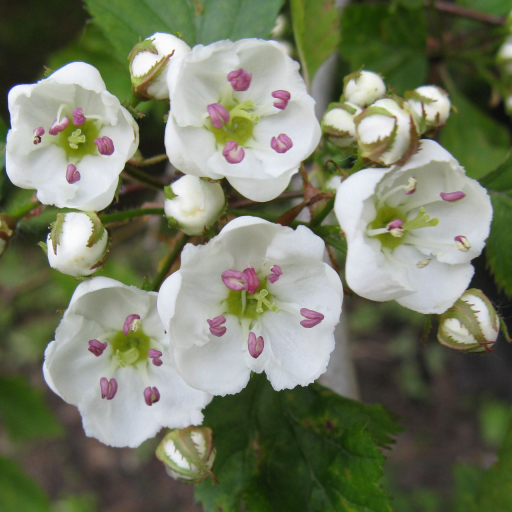
- 🌸 Spring Blossoms: In late May, the tree erupts in clusters of white flowers. Each flower features a small ring of pink or purple-tipped centers (anthers), usually appearing in groups of five to ten.
- ⚔️ The Thorns: The branches are armed with straight, sturdy thorns that can grow up to 2 inches long. These thorns are often glossy and a dark mahogany color when young, fading to grey with age.
🏡 In Your Garden
- 🌳 The "Living Fence": Because of its dense branching and sharp thorns, Holmes's Hawthorn was historically used as a natural barrier. In a modern landscape, it makes an excellent "security" hedge that provides privacy while keeping unwanted visitors out.
- 🐦 A Wildlife Sanctuary: This tree is a five-star hotel for songbirds. The thorny thicket protects nests from predators like cats and hawks, while the bright red fruits (called "haws") provide essential sugar for birds during the lean winter months.
- 🌞 Tough as Nails: Unlike more delicate ornamental trees, this species is highly resistant to urban pollution and can handle a variety of soil types, provided it has good drainage and plenty of sunlight.
⚠️ Safety & Toxicity
- 🌵 Physical Hazard: Use extreme caution when pruning. The thorns are sharp enough to puncture heavy clothing and even lawnmower tires. Always wear thick, puncture-resistant leather gloves.
- 🐾 Fruit and Seeds: While the fleshy part of the red fruit is technically edible (often used in traditional jellies), the seeds contain naturally occurring cyanide compounds. Ensure children and pets do not swallow the pits.
✨ Fun Fact
In ancient folklore, Hawthorns were considered "Fairy Trees." It was said that if you sat under a Hawthorn on May Day, you might be whisked away to the spirit realm—but you were warned never to cut one down, or you would face the "ill luck" of the forest guardians!

Detailed Care Instructions

Place in a bright room that is sun drenched almost all day. Or directly in a south-facing window.

Water-loving plants flourish in wet or sloppy soil and near ponds. The extensive root system enables these plants to absorb plenty of water. The surface of the soil should be kept moist at all times. Place your pot in a container filled with water to guarantee that plants get enough water. If the ground becomes dry, it is recommended that you water it well. Plants in smaller pots will need to be watered more frequently. Water the soil in which the plant is standing thoroughly using a watering can.








