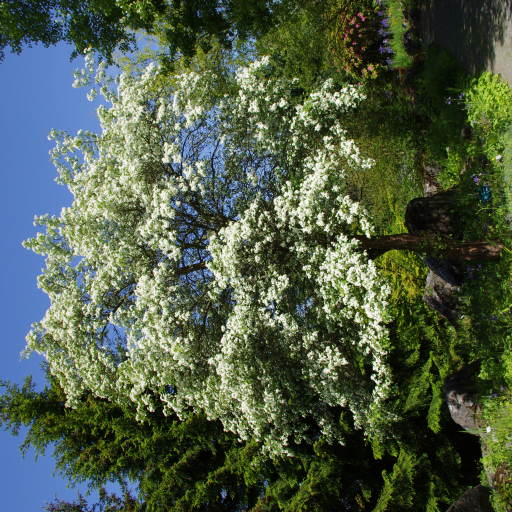
Plant Overview
Commonly known as Maximowicz's Hawthorn, this resilient shrub or small tree hails from the rugged landscapes of Eastern Siberia, Northern China, and Korea. Named after the famed Russian botanist Carl Maximowicz, it is a quintessential "four-season" plant, offering delicate white spring blooms, lush summer foliage, vibrant red autumn fruit, and a dramatic thorny silhouette in winter. In its native range, it is celebrated for its extreme hardiness and its ability to withstand bitter continental winters.
🔍 How to Identify
- 🍃 The "Hairy" Leaves: Unlike many other hawthorns, the leaves of this species are distinctively soft and fuzzy (pubescent) on both sides, which helps the plant retain moisture and deter certain insects.
- 🌸 Cluster Blooms: In late spring, it produces dense, flat-topped clusters of creamy white flowers. Look closely, and you’ll see delicate pinkish-purple anthers at the center of each blossom.
- 🍒 Ruby Fruits: The fruit, known as "haws," are small, round, and bright red. When young, even the berries carry a fine layer of downy hair, a key identifying trait of this specific species.
🏡 In Your Garden
- 🛡️ Natural Security: Due to its sharp, slender thorns and dense branching habit, it makes an impenetrable "living fence" or hedge. It provides a safe sanctuary for small songbirds who nest deep within the thorns to hide from predators.
- ❄️ Cold Weather Specialist: This is an ideal choice for high-altitude or northern gardens. It isn't fussy about soil pH and can handle wind and frost that would damage more delicate ornamental trees.
- 🐝 Pollinator Hub: During its blooming phase, it is a primary nectar source for honeybees and emerging butterflies, making it a cornerstone for any biodiversity-focused landscape.
⚠️ Safety & Toxicity
- ⚔️ Physical Hazard: The thorns are long, stiff, and very sharp. They can easily pierce gardening gloves and even thin-soled shoes. Exercise extreme caution when pruning.
- 🍎 Seed Caution: While the red fruit (flesh) is technically edible and often used in traditional jellies, the seeds contain cyanogenic glycosides. They should never be chewed or swallowed in large quantities.
- 🐾 Pet Safety: The thorns pose a risk of eye or paw injury to curious dogs and cats.
✨ Fun Fact
Hawthorns are known as "The May-Tree" in various folklore. It was once believed that bringing Hawthorn blossoms into the house would lead to a change in the family's luck, as the scent of the flowers was thought to be a bridge between the human world and the realm of the fairies.

Detailed Care Instructions

Place in a bright room that is sun drenched almost all day. Or directly in a south-facing window.

Water-loving plants flourish in wet or sloppy soil and near ponds. The extensive root system enables these plants to absorb plenty of water. The surface of the soil should be kept moist at all times. Place your pot in a container filled with water to guarantee that plants get enough water. If the ground becomes dry, it is recommended that you water it well. Plants in smaller pots will need to be watered more frequently. Water the soil in which the plant is standing thoroughly using a watering can.








