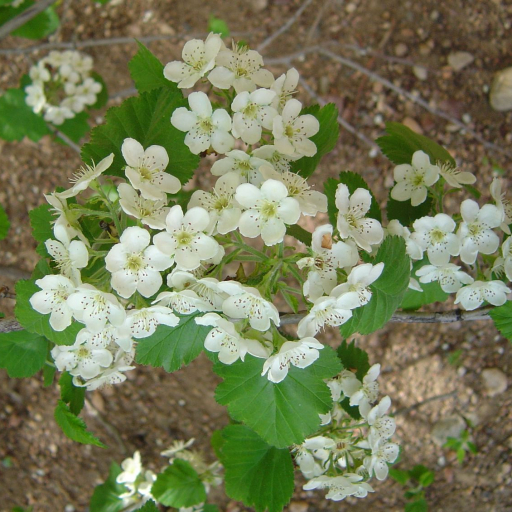
Plant Overview
Known affectionately as the Downy Hawthorn or "Red Haw," this tree is a rugged beauty of the North American landscape. It greets the spring with a snowy explosion of white blossoms and ends the year draped in bright, apple-like crimson fruits. While it looks delicate in bloom, its sturdy thorns and dense wood have earned it a reputation as a formidable natural barrier in rural folklore.
🔍 How to Identify
- 🍃 The Foliage: Broad, egg-shaped leaves with distinct serrated edges. The "Downy" name comes from the soft, velvety hairs found on the undersides of the leaves and young twigs.
- 🌸 The Blooms: Showy clusters of five-petaled white flowers that emerge in late spring, often featuring small pink or yellow centers.
- 🍎 The Fruit: Large, fleshy red pomes (haws) that resemble tiny crabapples. Unlike many other hawthorns, the fruit of the Mollis is notably larger and matures earlier in the season.
- ⚔️ The Armor: The branches are armed with straight, sharp thorns that can grow up to two inches long, providing a "keep away" sign to larger intruders.
🏡 In Your Garden
- 🕊️ Wildlife Sanctuary: This tree is a five-star hotel for local biodiversity. The dense, thorny interior provides a safe haven for songbirds to nest away from predators, while the nectar-rich flowers are a favorite for early-season bees.
- 💪 Resilient Nature: The Downy Hawthorn is famously "tough as nails." It can tolerate urban pollution, clay soils, and occasional drought, though it prefers a sunny spot with well-drained soil to produce the best fruit crop.
- 🌳 Space Requirements: Give it room to spread! Because of its horizontal branching habit and protective thorns, it is best used as a specimen tree or a privacy screen rather than placed directly next to a walkway or patio.
⚠️ Safety & Toxicity
- 🌵 Mechanical Hazard: The primary danger of the Downy Hawthorn is its thorns. They are sharp enough to puncture heavy clothing or bicycle tires, so use caution when pruning or mowing near the base.
- 🐾 Pet & Human Safety: While the fruit flesh is technically edible and often used in traditional jellies, the seeds contain amygdalin (a cyanide precursor). Do not allow pets or children to chew or ingest the seeds in large quantities.
✨ Fun Fact
The species name mollis is Latin for "soft." This refers to the fine, downy fuzz on the leaves—a clever evolutionary trait that helps the tree retain moisture and discourages certain insects from crawling on its surface!

Detailed Care Instructions
To grow Crataegus mollis, also known as Downy Hawthorn, you can follow these steps:
- Choose a suitable planting location: Crataegus mollis prefers full sun to partial shade and moist, well-draining soil. It can tolerate various soil types but prefers slightly acidic to neutral soil.
- Obtain the plant: You can purchase a young Crataegus mollis plant from a local nursery or online. Make sure to choose healthy, disease-free specimens.
- Prepare the soil: Prior to planting, prepare the soil by removing any weeds, rocks, or debris. Loosen the soil to a depth of around 12 inches and amend it if necessary by adding organic matter, such as compost or well-rotted manure, to improve drainage and fertility.
- Dig the planting hole: Dig a hole that is slightly larger and deeper than the root ball of the plant.
- Plant the Crataegus mollis: Place the plant in the hole, ensuring that the top of the root ball is level with the soil surface. Backfill the hole with soil, gently firming it around the roots to remove air pockets.
- Water thoroughly: After planting, water the Crataegus mollis thoroughly to settle the soil around the roots. Subsequent watering should be done regularly, especially during dry periods, to keep the soil evenly moist but not waterlogged.
- Mulch the plant: Apply a layer of organic mulch around the base of the plant, leaving a gap around the stem to prevent moisture-related issues. Mulching helps retain soil moisture, suppresses weed growth, and regulates soil temperature.
- Prune as needed: While Crataegus mollis generally requires minimal pruning, you can remove any dead, damaged, or crossing branches to promote healthy growth and maintain an attractive shape. Pruning is best done during the dormant season in late winter or early spring.
- Provide ongoing care: Regularly monitor the plant for any signs of pests or diseases. Apply organic insecticides or fungicides as necessary. Also, consider fertilizing the Crataegus mollis once a year in early spring using a balanced, slow-release fertilizer according to package instructions.
- Be patient and enjoy: Growing a Crataegus mollis plant requires time and patience, but with proper care, it will establish and grow into a beautiful addition to your garden. Enjoy the beautiful white flowers, the glossy green foliage, and the small red berries that attract birds in autumn.

Place in a bright room that is sun drenched almost all day. Or directly in a south-facing window.

Crataegus mollis plants require regular watering to thrive. To water them properly, you need to follow the below steps:
1. Check the soil moisture level: Before watering crataegus mollis plants, check the soil moisture level. Insert your finger into the soil to check if it feels dry or moist.
2. Watering frequency: These plants need to be watered regularly, especially during the growing season. Water the plant once a week, or when the soil feels dry to the touch.
3. Amount of water: When watering crataegus mollis plants, make sure you provide enough water to soak the soil to a depth of 6-8 inches. Water until the soil feels moist but not waterlogged.
4. Watering technique: It's best to water crataegus mollis plants slowly and deeply. Use a watering can or a hose with a gentle, steady stream to avoid damaging the plant.
5. Avoid overhead watering: Try to avoid overhead watering as it can promote foliage diseases. Instead, water at the base of the plant.
6. Adjust watering during different times of year: During the summer months, crataegus mollis plants may need more frequent watering, while in the winter, they may only require occasional watering.
Overall, by following these steps you can ensure your crataegus mollis plants get the right amount of water they need to stay healthy and beautiful.
To fertilize this plant, apply a balanced fertilizer with equal amounts of nitrogen, phosphorus, and potassium in early spring before new growth appears. Use a slow-release fertilizer to avoid excess nutrients which may burn the plant's roots. Apply the fertilizer at the edge of the plant's canopy and water thoroughly after application. Repeat the process once in mid-summer to encourage healthy growth and flowering. Avoid fertilizing in late summer or fall as this may encourage new growth that won't have enough time to harden off before winter.
Crataegus Mollis is a plant that requires a well-draining soil mix that is high in nutrients. The soil should be slightly acidic, with a pH range of 6.0 to 7.0. It is best to use a mixture of peat moss, perlite, and sand to ensure that the soil is well-draining and aerated. The plant should be watered regularly, but not over-watered, as it does not tolerate waterlogged conditions. Fertilizer should also be applied regularly during the growing season to ensure the plant receives the necessary nutrients to thrive.
To propagate this particular plant, you will need to take cuttings from healthy, mature stems during the dormant season (late fall to early spring). Select stems that are at least 6-8 inches in length and have a diameter of about a pencil. Make a clean, angled cut just below a node (where a leaf or bud attaches to the stem) using a sharp, sterilized knife or pruning shears.
Remove any leaves or buds from the bottom half of the cutting, leaving only a few leaves near the top. Dip the bottom of the cutting in rooting hormone powder or liquid to encourage root growth, tapping off excess powder.
Prepare a pot or container with moistened, well-draining soil mix. Use a dibber or pencil to make a hole in the soil, insert the cutting into the hole and gently firm the soil around it.
Cover the pot with a clear plastic bag or cloche to create a humid environment and place it in a bright, warm spot out of direct sunlight. Check the soil moisture regularly and water as needed to keep it evenly moist but not waterlogged.
After several weeks, check for rooting by gently tugging on the cutting. If there is resistance, it has likely rooted. Once roots have formed, gradually acclimate the new plant to less humid conditions by gradually reducing the cover over a week or two.
Transplant the new plant into a larger container or in a prepared garden bed once it has grown to a suitable size.








