Plant Overview
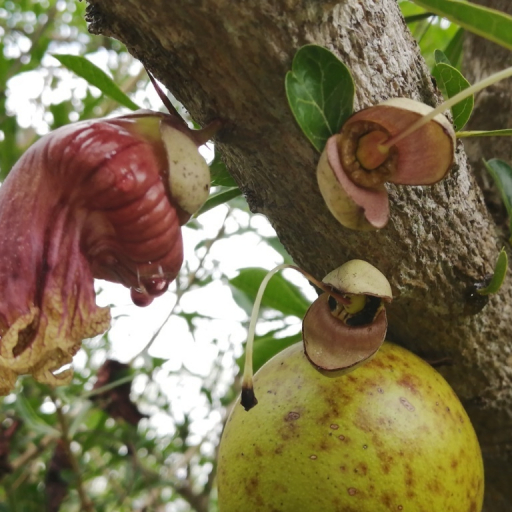
Commonly known as the Mexican Calabash or Jícaro, the Crescentia alata is a living piece of Central American history. This peculiar tree is famous for its "cauliflory"—the rare ability to grow large, cannonball-like fruits directly out of its trunk and main branches. In ancient Mayan culture, these hard-shelled fruits were the original sustainable Tupperware, used for centuries to craft bowls, cups, and musical instruments.
🔍 How to Identify
- 🌿 The Winged Foliage: The species name alata means "winged," referring to the distinct leaves that grow in groups of three. They form a perfect cross shape, which led early explorers to associate the tree with religious symbols.
- 🌸 Night-Blooming Flowers: The flowers are bell-shaped, waxy, and a brownish-maroon color. They emit a slightly pungent, musky scent specifically designed to attract its primary pollinators: nectar-feeding bats.
- 🍈 The "Stone" Fruit: You cannot miss the heavy, spherical green fruits. Unlike soft fruits, these have a woody, hard shell that doesn't crack even when falling from the tree.
🏡 In Your Garden
- ☀️ Sun and Space: This is a sun-worshipper that thrives in tropical and subtropical climates. Because it develops a deep, sturdy taproot, it is incredibly drought-tolerant once established, but it resents being moved—pick its forever-home carefully!
- 🌳 A Low-Maintenance Marvel: It is surprisingly resilient to poor soil and "tough love." If you live in a dry climate, it makes an excellent ornamental shade tree that requires very little supplemental watering compared to lush tropicals.
- 🦇 Ecological Role: If you plant this, you are supporting local bat populations. While the flowers might smell a bit "earthy" at night, they are a vital food source for the nocturnal ecosystem.
⚠️ Safety & Toxicity
- 🟢 Generally Safe: The Crescentia alata is not considered a toxic plant for humans or common pets.
- 🥣 Dietary Caution: While the seeds are highly nutritious and used in traditional drinks like Horchata de Morro, the raw pulp of the fruit is often used as a strong medicinal laxative. It is best to avoid eating the raw interior unless you know exactly how to prepare it.
- 🤕 Physical Hazard: A mature fruit is heavy and as hard as a coconut. If the tree is large, be cautious of sitting directly under heavy fruiting branches during a windy day!
✨ Fun Fact
In the Popol Vuh (the sacred text of the Maya), the Jícaro tree plays a starring role. After the hero twins were defeated in the underworld, their heads were placed in a calabash tree, which immediately burst into fruit to hide them. This myth explains why the tree’s fruit looks so much like a human skull!

Detailed Care Instructions
To grow Crescentia alata, also known as Calabash tree or Mexican gourd tree, you can follow these steps:
- Climate: Crescentia alata prefers warm tropical or subtropical climates. It can be grown outdoors in USDA hardiness zones 10-12 or can be grown in containers and brought indoors in colder climates.
- Lighting: Ensure that the plant receives full sun exposure for at least 6-8 hours a day. Place it in a location that gets ample sunlight.
- Soil: The plant prefers well-draining and loamy soil. Prepare the soil by mixing in organic matter such as compost or well-rotted manure to enhance the fertility and drainage capability.
- Planting: If planting from seeds, soak them in water for 24 hours before sowing. Sow the seeds directly into the prepared soil or into biodegradable pots. Keep the soil slightly moist until germination, which can take around 1-2 weeks.
- Watering: Crescentia alata prefers moderate watering. Allow the top inch of the soil to dry out before watering again. Ensure the soil remains slightly moist but not waterlogged.
- Fertilization: Feed the plant with a balanced liquid fertilizer once a month during the growing season (spring and summer). Follow the package instructions for proper dilution and application.
- Pruning: Prune the plant to maintain its shape and remove any dead or damaged branches. Pruning can be done in early spring before the new growth starts.
- Pests and Diseases: While Crescentia alata is generally resistant to pests and diseases, monitor the plant for common issues like aphids, mealybugs, or powdery mildew. Watering the plant correctly and providing adequate ventilation will help prevent fungal problems.
- Support: As Crescentia alata grows, you may need to provide support to the main stem or branches to prevent them from bending or breaking.
- Container Growing: If growing in containers, choose a large pot with drainage holes. Use a well-draining potting mix and ensure the pot is placed in a location that receives ample sunlight. Bring the plant indoors before the first frost in colder climates.
By following these guidelines, you can successfully grow Crescentia alata and enjoy its unique gourd-like fruits and beautiful flowers.

Place in a bright room that is sun drenched almost all day. Or directly in a south-facing window.

To water this plant, you should first determine the soil moisture. Insert your finger into the soil about two inches deep. If the soil feels dry, it is time to water. Use a watering can or a hose with a gentle flow to water the plant thoroughly. Make sure the water reaches the root zone. Avoid splashing water on the foliage. Allow excess water to drain away from the pot or container. Water the plant sparingly in winters or during the dormant season. Overwatering can lead to root rot, while underwatering can cause the leaves to wilt and eventually fall off.
To fertilize this plant, use a balanced fertilizer with equal parts nitrogen, phosphorus, and potassium. Apply the fertilizer once every two months during the growing season, which usually falls between spring and fall. Dilute the fertilizer according to the package instructions and apply it directly to the soil around the plant. Avoid fertilizing during the dormant season when the plant is not actively growing. Too much fertilizer can cause the plant to become leggy and weak, so be sure to follow the recommended application rates closely.
Crescentia Alata is a tropical plant that prefers well-draining soil that is rich in nutrients. The soil should be slightly acidic, with a pH range of 5.5 to 6.5. It is recommended to use a soil mixture that contains a blend of peat moss, perlite, vermiculite, and sand. The peat moss provides organic matter and retains moisture, while the perlite and vermiculite improve soil aeration and drainage. Sand also aids in drainage and prevents the soil from becoming too compact. The use of a quality potting mix that is specifically formulated for tropical plants can also help provide the necessary nutrients for productive growth. To ensure optimal conditions for your Crescentia Alata plant, make sure to regularly fertilize with a balanced fertilizer and keep the soil consistently moist but not waterlogged.
To propagate this plant, you will need to take stem cuttings. First, select a healthy stem of the plant that is at least 6 inches long and has several leaves. Use a sharp, clean pair of scissors or pruning shears to make a clean, angled cut at a 45-degree angle just below a leaf node.
Remove any leaves from the bottom two-thirds of the stem. Dip the cut end of the stem into rooting hormone and gently tap off any excess. Place the stem cutting into a pot filled with well-draining, moist potting mix. Water the cutting well and cover the top of the pot with a clear plastic bag or a propagation dome to create a humid environment.
Place the pot in a bright, warm location but out of direct sunlight to prevent the cutting from drying out. Mist the cutting regularly to keep the soil moist and to maintain humidity. After a few weeks, you should see new growth on the stem cutting, indicating that roots have been formed. At this point, you can remove the plastic bag or propagation dome and gradually acclimate the new plant to normal growing conditions.
Once the new plant has established itself, you can repot it into a larger pot with fresh potting mix or plant it outside in a suitable location.








