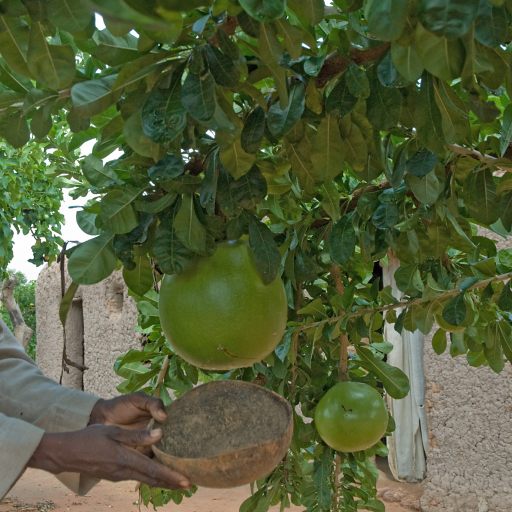
Plant Overview
Known widely as the Calabash Tree, the Crescentia cujete is a botanical marvel that looks like it stepped straight out of a prehistoric landscape. Indigenous to Central and South America, it is famous for its massive, spherical fruits that grow directly from its trunk and main branches—a rare botanical trait known as "cauliflory." For centuries, these hard-shelled "gourds" have been dried and used by indigenous cultures to create everything from drinking bowls to musical instruments.
🔍 How to Identify
- 🌳 Growth Habit: A small to medium-sized evergreen tree with a broad, irregular crown and long, spreading branches that often arch toward the ground.
- 🍃 Leaf Arrangement: The dark green, spatulate (spoon-shaped) leaves grow in unique "fascicles" or clusters of 3 to 5 along the branches, rather than being evenly spaced.
- 🌸 Trunk Flowers: The bell-shaped, yellowish-purple flowers emerge directly from the bark of the trunk and older branches. They bloom at night and have a somewhat musky scent.
- ⚽ The Fruit: The most iconic feature is the smooth, green, cannonball-like fruit. These can grow up to 10 inches in diameter and have a woody, indestructible outer shell when mature.
🏡 In Your Garden
- 🦇 Nighttime Visitors: Because the flowers open at night and produce a heavy scent, they are primarily pollinated by bats. If you see movement around the tree at dusk, you’re witnessing a fascinating ecological partnership.
- ☀️ Sun & Space: While it is a slow grower, it requires plenty of horizontal space because of its wide-reaching branches. It thrives in full sun and is remarkably drought-tolerant once established, making it a "tough-as-nails" specimen for tropical landscapes.
- 🪵 The "Bowl" Harvest: If you intend to use the gourds, wait until they turn slightly yellow or the stem dries out. Once harvested, the pulp must be removed and the shell dried to create a durable, natural container.
⚠️ Safety & Toxicity
- 🚫 Status: Non-edible / Mildly Toxic.
- 🐾 Details: While the hard shell is harmless, the soft internal pulp of the fruit contains hydrocyanic acid and is considered toxic to humans and most pets. Ingesting the raw pulp can cause severe stomach upset and irritation. Always keep fallen, cracked fruit away from curious dogs or children.
✨ Fun Fact
The Crescentia cujete is the "soul" of Latin American percussion! The dried, hollowed-out shells of these fruits are the traditional material used to make maracas and the güiro. When you hear the rhythmic rattle of a maraca, you are likely listening to the dried seeds of a Calabash tree hitting its own woody shell.

Detailed Care Instructions
| Lighting | Full Sun |
To grow a Crescentia cujete plant, also known as a calabash tree or gourd tree, you can follow these steps:
- Choose a location: Crescentia cujete thrives in warm tropical climates. Select a spot with plenty of sunlight, as it requires around 6-8 hours of direct sunlight daily.
- Soil preparation: The plant prefers well-draining soil. Amend the soil with organic matter to improve its drainage and nutrient content. A loamy soil mixture that retains some moisture while draining excess water is ideal.
- Seed selection and preparation: Obtain fresh seeds from a reputable source. Soak the seeds in water for 24-48 hours to soften the tough outer shell and enhance germination. You can also gently file or nick the seed coat to help with water absorption.
- Planting the seeds: Fill a pot or container with the prepared soil mixture. Plant the seeds about 1 inch deep into the soil, placing them on their sides. Ensure the soil is consistently moist but not waterlogged. Germination should occur within 2-3 weeks.
- Regular watering: Water the plant regularly to keep the soil evenly moist, particularly during the growing season. However, avoid overwatering, as it can lead to root rot. Allow the top inch of soil to dry before watering again.
- Fertilization: Use a balanced, slow-release fertilizer during the growing season to provide nutrients to the plant. Follow the manufacturer's instructions for application rates and frequency.
- Pruning: Trim any dead, damaged, or overcrowded branches to promote healthy growth and improve air circulation. Pruning can be done in late winter or early spring.
- Pests and diseases: Monitor the plant for common pests like aphids, mealybugs, or scale insects. Treat any infestations promptly using organic insecticides or horticultural oils. Root rot can be a concern, so ensure proper drainage and avoid overwatering.
- Transplanting: Once the plant has grown to a suitable size, you can transplant it into a larger pot or in the ground if you live in a suitable climate. Ensure the new location has similar conditions to the original planting spot.
- Patience: Crescentia cujete can take several years to bear fruit, so be patient in waiting for your plant to mature.
Remember to research and consider the specific growing conditions for Crescentia cujete in your region to ensure optimal growth and care.

Place in a bright room that is sun drenched almost all day. Or directly in a south-facing window.

The best way to water this plant is to ensure that the soil is completely dry before watering it again, as it prefers a well-draining environment. You can use a water meter to determine the moisture level of the soil or just stick a finger into the soil to feel for moisture. Water the plant at the base, avoiding getting water on the leaves which can cause them to rot. It's also essential to provide good drainage so that the water doesn't sit in the pot for too long. Watering frequency may vary depending on the environmental conditions, so it's best to monitor the soil moisture regularly to determine the most appropriate watering schedule.
To fertilize this plant, use a balanced fertilizer with equal parts nitrogen, phosphorus, and potassium. Apply the fertilizer once every two weeks during the growing season. Don't over-fertilize as it can damage the plant's roots. Use a diluted solution (1/4 strength) and apply it to the soil around the plant. Water the plant thoroughly after fertilizing.
Crescentia cujete plants thrive in well-draining soil that is slightly acidic to neutral in pH. A soil mix that is rich in organic matter and nutrients is ideal for these plants. A combination of sandy loam, perlite, and compost is recommended for optimal growth.
It is important to ensure that the soil is not waterlogged, as this can lead to root rot and other issues. Regularly check the moisture level of the soil and adjust watering accordingly to keep it consistently moist but not soggy.
Adding a layer of mulch on top of the soil can help retain moisture and regulate temperature fluctuations. Additionally, fertilizing the soil with a balanced fertilizer specifically formulated for tropical plants can help promote healthy growth and blooming.
Overall, providing well-draining, nutrient-rich soil with proper moisture levels is key to successfully growing Crescentia cujete plants.
There are several methods to propagate the Crescentia Cujete plant. Here are some ways to do it:
- Seeds: Harvested seeds from mature fruits can be used for propagation. Soak the seeds in water for 24 hours before planting them in a well-draining potting mix. Keep the soil moist and warm until the seeds germinate, which usually takes 2-3 weeks.
- Cuttings: Take stem cuttings from healthy plants during the growing season. Cut just below a leaf node, remove the lower leaves, and dip the stem in rooting hormone. Plant the cutting in a potting mix, keep it moist and warm, and provide filtered light until new growth appears.
- Layering: You can encourage roots to develop on a stem by bending it down to soil level and making a wound in the bark. Cover the wound with soil, anchor the stem in place, and keep it moist. After a few weeks, new roots should appear, and you can cut the stem from the parent plant and pot it up.
- Grafting: The Crescentia Cujete plant can be grafted onto rootstock of a related species. This method requires specialized equipment and expertise and is usually done by professional growers.
Regardless of which propagation method you choose, it's important to keep newly propagated plants in a warm and humid environment until they are well-established.








