Plant Overview
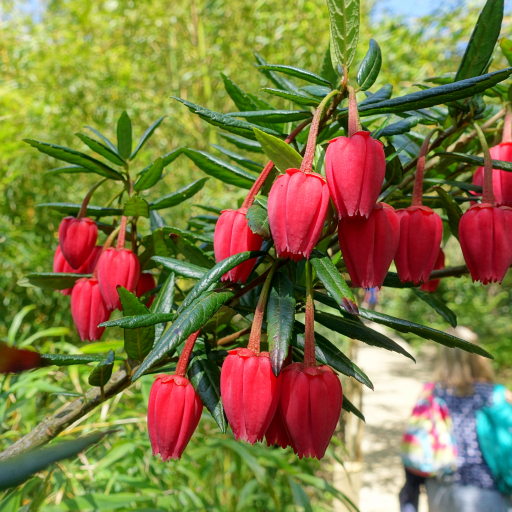
The Crinodendron hookerianum, more famously known as the Chilean Lantern Tree, is a show-stopping evergreen that looks like it stepped out of a Victorian storybook. Native to the cool, temperate rainforests of Chile, it is prized for its dramatic, pendulous crimson blooms that hang like festive ornaments. In its natural habitat, it thrives near streams and shaded valleys, making it a "drama queen" of the garden that demands specific conditions to perform its spectacular floral show.
🔍 How to Identify
- 🏮 The "Lanterns": Its most striking feature is the fleshy, urn-shaped flowers. These waxy, deep-red bells hang individually from long, slender stalks, appearing in late spring and early summer.
- 🍃 Leathery Foliage: The leaves are narrow, dark green, and have a tough, leathery texture with finely serrated (toothed) edges. They provide a dense, dark backdrop that makes the red flowers "pop."
- 🏗️ Growth Habit: It typically grows as a large shrub or a small, upright tree. It has a somewhat stiff, bushy architecture that can reach up to 15-20 feet if left unpruned in ideal conditions.
🏡 In Your Garden
- 🥣 The Acid Test: This plant is strictly ericaceous, meaning it must have acidic soil. If planted in alkaline or chalky soil, the leaves will yellow and the plant will eventually fail. Think of it as a companion to Rhododendrons and Camellias.
- 🌧️ Rainforest Roots: Because it originates in temperate rainforests, it hates "dry feet." It requires consistently moist, well-drained soil and high humidity. It is best suited for a sheltered spot where it is protected from drying, cold winds which can scorch the foliage.
- 🌥️ Cool Shadows: It prefers "sun in the head, shade at the feet." Ideally, plant it where the roots stay cool and mulched, but the upper branches can reach toward the light, though it thrives best in partial or dappled shade.
⚠️ Safety & Toxicity
- 🐾 Pet Safety: There are no widely recorded reports of the Chilean Lantern Tree being toxic to cats, dogs, or horses. It is generally considered a safe choice for pet-friendly landscapes.
- 👶 Human Safety: The plant is not edible, but it is not considered poisonous. However, as with many ornamental shrubs, the leathery leaves could cause mild stomach upset if ingested by curious toddlers.
✨ Fun Fact
The genus name Crinodendron comes from the Greek words krinon (lily) and dendron (tree), while the species name hookerianum honors Sir William Jackson Hooker, a former Director of the Royal Botanic Gardens, Kew, who was instrumental in documenting the flora of the southern hemisphere.

Detailed Care Instructions
To grow a Crinodendron Hookerianum plant, also known as the Chilean Lantern Tree, you can follow these steps:
- Choose the right location: Select a spot in your garden that receives partial shade to full shade. The plant prefers protection from direct sunlight, especially during hot afternoons. It also needs a sheltered spot to shield it from strong winds.
- Soil preparation: Crinodendron Hookerianum prefers well-draining soil with a slightly acidic to neutral pH. Amend the soil with organic matter like compost or aged manure to improve its fertility and drainage.
- Planting: Dig a hole in the prepared soil that is slightly larger than the plant's root ball. Place the plant in the hole, ensuring that the top of the root ball is level with the surrounding soil. Backfill the hole with soil, gently firming it around the roots.
- Watering: Keep the soil consistently moist but not waterlogged in the first few months after planting. Once established, the plant is moderately drought-tolerant but may appreciate regular watering during dry spells.
- Mulching: Apply a layer of mulch, such as wood chips or shredded bark, around the base of the plant. This will help retain soil moisture, suppress weed growth, and protect the roots from extreme temperatures.
- Pruning: Prune the Crinodendron Hookerianum plant in late winter or early spring to maintain its shape and remove any dead, damaged, or crossing branches. This plant responds well to pruning, and regular shaping can promote a more compact and tidy appearance.
- Fertilizing: Feed the plant with a balanced, slow-release fertilizer in spring before new growth appears. Follow the package instructions for application rates. Additionally, you can use a liquid fertilizer formulated for acid-loving plants, such as rhododendrons or azaleas, during the growing season.
- Pests and diseases: Crinodendron Hookerianum is generally pest and disease-resistant. However, it may occasionally face issues like aphid infestations or root rot. Monitor the plant regularly for signs of pests or diseases and take appropriate measures if necessary, such as using insecticidal soap or seeking professional advice.
By following these guidelines, you can successfully grow and enjoy a healthy Crinodendron Hookerianum plant in your garden. Remember to provide proper care, and your plant will reward you with its elegant blooms and glossy foliage.

Place in a bright room that is sun drenched almost all day. Or directly in a south-facing window.

To water this plant adequately, it is essential to consider its unique water requirements. One must ensure that the soil never dries out completely, and the roots are not sitting in overly soggy soil. A good practice is to water the plant thoroughly, allowing the water to saturate the entire root zone. Afterward, wait until the topsoil feels slightly dry before watering again.
It is also advisable to use water at room temperature to avoid shocking the plant and causing damage. The use of excessive cold or hot water can cause significant harm to this plant's root system. Additionally, it is essential to water the plant in the morning or early evening when the temperature is cooler to avoid water evaporation.
In some instances, the plant may appear droopy, indicating that it may need water. However, it is also crucial not to overwater this plant, which can cause root rot and other problems. It is wise to pay close attention to the plant's overall appearance and adjust watering accordingly.
To fertilize this plant, apply a balanced, slow-release fertilizer in early spring before new growth begins. Use a fertilizer with an N-P-K ratio of 10-10-10 or 14-14-14. Be cautious not to over-fertilize as this can lead to fertilizer burn or salt burn. Water the plant thoroughly after fertilizing to help distribute the nutrients properly. Repeat fertilization every 6-8 weeks during the growing season. Avoid fertilizing in late fall and winter as the plant goes dormant during this time.
Crinodendron Hookerianum prefers well-draining soil that is rich in organic material and slightly acidic in pH. A mix of peat moss, perlite, and a high-quality potting soil blended together in equal parts can create the perfect soil composition for the plant. Additionally, adding a layer of mulch around the base of the plant can help maintain moisture levels and promote healthy root growth. It is important to avoid using heavy clay soils or those containing large amounts of sand, as these can cause drainage issues and impact the overall health of the plant.
To propagate this particular plant, first take a cutting from a healthy parent plant. Using sterile pruning shears, cut a 4-6 inch section of stem just below a node. Remove the leaves from the bottom half of the stem, leaving a few at the top. Dip the cut end of the stem in rooting hormone powder and plant it in a container filled with a well-draining soil mix. Water thoroughly and place in a bright, but shaded location. In about 3-4 weeks, the cutting should start to root and new growth should appear. Once the new plant is established, it can be transplanted into a larger pot or planted in the ground.








