Plant Overview
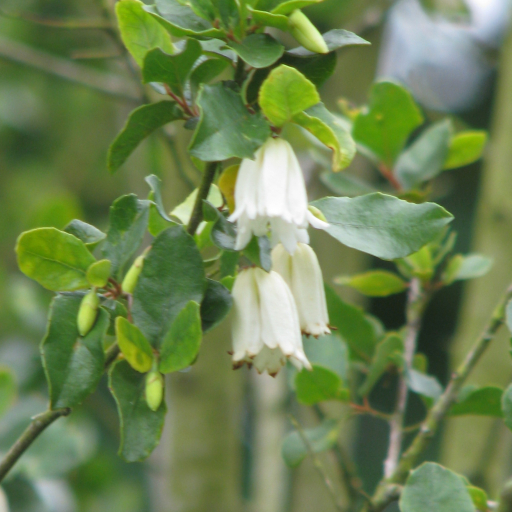
Known as the "Lily of the Valley Tree" or simply the "Patagua," this Chilean native is a hidden gem for temperate gardens. In late summer, it transforms into a spectacular display of hanging white lanterns that look as though they belong in a Victorian fairytale. It is a moisture-loving evergreen that brings a touch of the misty Andean rainforest to any landscape.
🔍 How to Identify
- 🔔 The Flowers: Its most striking feature is the pendulous, bell-shaped white flowers. Each bloom has unique, delicate fringed edges that resemble shredded silk.
- 🍃 The Foliage: Leaves are narrow, leathery, and dark green with distinct serrated (toothed) edges. They provide a dense, glossy backdrop all year round.
- 🌳 Growth Habit: It typically grows as a large, upright shrub or a small tree. The bark is smooth and greyish-brown, becoming slightly fissured as it matures.
🏡 In Your Garden
- 💧 The "Cool Feet" Rule: The Patagua hates drying out. It thrives in moisture-retentive, acidic soil. Think of it as a plant that loves a "cool head and wet toes"—it enjoys sun on its leaves but needs mulch to keep its roots damp and chilled.
- 🛡️ Wind Protection: Because it naturally grows in sheltered forest valleys, it can be sensitive to harsh, drying winds. Planting it near a wall or within a group of other shrubs helps maintain the humidity it craves.
- ✂️ Low Maintenance: It generally keeps its shape well and doesn't require heavy pruning, making it an excellent choice for a "set and forget" ornamental specimen once established.
⚠️ Safety & Toxicity
- ✅ Status: Generally considered non-toxic.
- 🐾 Details: There are no common reports of the Crinodendron patagua being poisonous to cats, dogs, or humans. However, as with any ornamental plant, it is best to discourage pets or children from chewing on the foliage to avoid minor stomach upset.
✨ Fun Fact
While its cousin, Crinodendron hookerianum, is famous for its bright red "Lantern" flowers, the Patagua is specifically prized by honey producers. Bees are highly attracted to its nectar, and in its native Chile, it is a significant source for high-quality, forest-flavored honey.

Detailed Care Instructions
To grow a Crinodendron Patagua plant, you can follow these steps:
- Purchase seeds or young plants from a nursery or reputable online source. Make sure the plant is suitable for your climate and growing conditions.
- Choose a suitable location for planting. Crinodendron Patagua plants prefer partial shade to full sun and well-draining soil. They can tolerate a variety of soil types but do best in acidic to neutral soil.
- Prepare the planting hole by loosening the soil and adding organic matter, such as compost, to improve drainage and fertility.
- Plant the Crinodendron Patagua at the same level it was previously growing. Gently loosen the roots if the plant is rootbound before planting.
- Water the plant thoroughly after planting and continue to water regularly to keep the soil moist but not waterlogged. Crinodendron Patagua plants prefer consistent moisture but can tolerate short periods of drought.
- Mulch around the base of the plant to retain moisture, suppress weeds, and protect the roots from temperature fluctuations.
- Fertilize the plant with a balanced, slow-release fertilizer in early spring and again in mid-summer to promote healthy growth. Follow the manufacturer's instructions for application rates.
- Prune the plant to maintain its desired shape and remove any dead or damaged branches. Late winter or early spring is the best time to prune.
- Protect the plant from extreme temperatures, especially during winter. If you live in a colder climate, consider covering the plant with a frost blanket or moving it to a sheltered location.
- Monitor the plant for any signs of pests or diseases. If necessary, treat with appropriate organic or chemical treatments.
By following these steps, you should be able to grow a healthy Crinodendron Patagua plant. Remember to regularly water, fertilize, and prune to ensure its optimal growth and development.

Place in a bright room that is sun drenched almost all day. Or directly in a south-facing window.

Crinodendron Patagua is a fascinating plant that requires specific care, particularly regarding its watering requirements. This plant is native to certain regions of South America and is known for its striking red flowers and attractive, glossy foliage. To properly care for Crinodendron Patagua, you must understand the plant's watering needs.
First and foremost, it is critical to remember that overwatering this plant can be detrimental to its health. Crinodendron Patagua prefers well-draining soil, so it is best to plant it in a pot or location that allows excess water to drain away quickly. When watering this plant, it is essential to ensure that the soil is dry to the touch. A reliable way to test this is by sticking your finger an inch or two into the soil to see if it is damp.
When you do water your Crinodendron Patagua plant, do so thoroughly. This means that you should water the plant until water drains from the bottom of the container or the ground beneath it. Allow the plant to absorb the water gradually, avoiding watering it again until the soil has dried out.
During the first few months after planting a Crinodendron Patagua plant, you should water it more frequently, about twice a week. As the plant matures, you can reduce the frequency of watering. Always pay attention to signs that the plant may be receiving too little or too much water. Wilting or yellowing leaves could indicate that the plant is thirsty, while brown spots or mold could indicate that the soil is too wet.
In summary, to water Crinodendron Patagua properly, always be sure that the soil is dry to the touch before watering. Water the plant completely, but avoid watering it again until the soil is dry. With proper watering, this beautiful plant can thrive and provide a striking addition to your garden or home.
To fertilize this plant, use a balanced fertilizer with equal amounts of nitrogen, phosphorus, and potassium. Apply the fertilizer in the spring and summer months, following the package instructions for the recommended amount. Be careful not to over-fertilize, as this can damage the plant's roots. Water the plant well after fertilizing.
Crinodendron Patagua plants prefer well-draining soil that is rich in organic matter. The ideal soil pH for this plant is slightly acidic, between 5.5 and 6.5. A mix of soil, compost, and peat moss can provide the right texture and nutrients for the plant to thrive. Avoid using heavy clay soil or soil that retains too much moisture, as this can lead to root rot and other issues. It is also recommended to add perlite or sand to the soil mix to improve drainage.
To propagate this plant, you will need to take semi-ripe cuttings from the parent plant during the summer months. Select a healthy shoot that is around 15-20 cm long and remove any leaves from the bottom half of the cutting. Dip the cut end into rooting hormone powder and plant into a pot filled with well-draining soil. Water the cutting well and place it in a bright but shaded area, making sure to keep the soil moist. After a few weeks, new growth should start to appear, which is a sign that the plant has taken root. Once the plant has established itself, it can be transplanted into a larger pot or directly into the garden.








