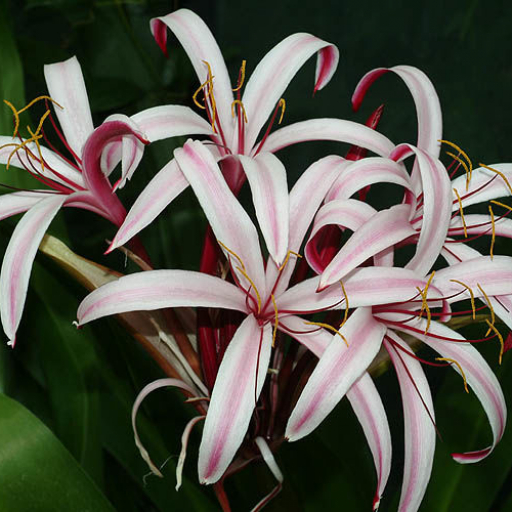
Plant Overview
Known by the regal nickname "Queen Emma Lily" or the dramatic "Giant Spider Lily," this hybrid is the undisputed crown jewel of the tropical landscape. A cross between Crinum asiaticum and Crinum erubescens, it creates a massive architectural statement with its fountain-like foliage and fragrant, spindly blooms that look like they belong in a Victorian botanical illustration.
🔍 How to Identify
- 🌿 Strap-Like Foliage: The leaves are wide, lance-shaped, and can grow up to 4 feet long, often sporting a deep bronze or burgundy tint.
- 🌸 Ribbon Petals: The flowers feature six long, narrow petals that are white on the inside and stained a deep, wine-red or pink on the outside.
- 🐘 The "Neck": Unlike many lilies that stay underground, this Crinum develops a thick, trunk-like "pseudobulb" that rises above the soil line as it ages.
🏡 In Your Garden
- 📍 Commitment is Key: This plant develops an enormous root system and a massive bulb; it famously hates being transplanted. Choose its "forever home" carefully to avoid a literal back-breaking move later.
- ☀️ Light & Color: To get the richest maroon color in the leaves, provide plenty of sunlight. In scorching inland climates, however, some dappled afternoon shade prevents the leaf tips from crisping.
- 💧 Thirsty Giant: While it is surprisingly drought-tolerant once established, it looks its best with consistent moisture—think of it as a swamp-dweller at heart.
⚠️ Safety & Toxicity
- 🚫 Toxic if Ingested: Like most members of the Amaryllis family, all parts of the plant contain lycorine, an alkaloid that causes severe stomach upset.
- 🐾 Pet Warning: This plant is toxic to cats and dogs. Ingestion can lead to vomiting, diarrhea, and heart palpitations. It is best placed in areas where pets don't forage.
✨ Fun Fact
This plant is named in honor of Queen Emma of Hawaii, who was a passionate horticulturalist. She grew these lilies extensively in her gardens at the summer palace in Hanaiakamalama, where they are still celebrated today.

Detailed Care Instructions
To grow a Crinum × Amabile plant, follow these steps:
- Choose a suitable location: Crinum × Amabile plants prefer a sunny spot with partial shade. Ensure the location provides well-draining soil and is protected from strong winds.
- Prepare the soil: Before planting, prepare the soil by loosening it with a garden fork or tiller. Remove any weeds or rocks from the area.
- Planting: Dig a hole that is slightly larger than the root ball of the plant. Place the Crinum × Amabile in the hole, ensuring that the crown is level with or slightly above the ground surface. Backfill the hole with soil and gently firm it around the plant.
- Watering: Crinum × Amabile plants require regular watering. Water the plant thoroughly after planting and keep the soil slightly moist at all times. Avoid overwatering, as it may cause root rot.
- Mulching: Apply a layer of organic mulch around the base of the plant to help retain moisture and suppress weed growth. Leave a small gap around the stem to prevent rotting.
- Fertilizing: Crinum × Amabile plants benefit from regular fertilization. Apply a balanced slow-release fertilizer according to the package instructions during the growing season.
- Pruning: Remove any dead or yellowing leaves to promote new growth and keep the plant looking neat. Additionally, cut off spent flower stems to encourage more blooms.
- Protecting against cold: Crinum × Amabile plants are not frost-tolerant. If you live in a colder climate, consider growing them in pots or containers that can be moved indoors during the winter months.
- Dividing: As the plant grows, it may become crowded. To rejuvenate the Crinum × Amabile and promote better growth, you can divide it every 3-5 years. Dig up the plant carefully, separate the bulbs, and replant them in new locations.
- Pest and disease control: Crinum × Amabile plants are relatively resistant to pests and diseases. However, keep an eye out for common garden pests such as aphids or snails. Use organic pest control methods or suitable pesticides if needed.
By following these steps, you can successfully grow and maintain a Crinum × Amabile plant.

Place in a bright room that is sun drenched almost all day. Or directly in a south-facing window.

To water this plant, you should provide enough water to keep the soil consistently moist but not waterlogged. It is important to not let the soil dry out completely, as this can cause stress and damage to the roots. Additionally, avoid getting water on the leaves or flowers to prevent fungal growth. Using a watering can or hose with a gentle spray nozzle can help control the amount of water applied. It is also helpful to mulch around the plant to conserve moisture and prevent weeds from competing for water.
To properly fertilize this plant, you should use a slow-release granular fertilizer with a balanced NPK ratio (such as 10-10-10 or 14-14-14) that is specifically designed for flowering plants. Apply the fertilizer evenly around the base of the plant, making sure not to get any on the foliage or flowers. Water the plant well after fertilizing to ensure that the nutrients are absorbed by the roots. Repeat the fertilization process every 2-3 months during the growing season (spring and summer). During the dormant season (fall and winter), reduce fertilization to once every 4-6 months or stop altogether.
Crinum × Amabile plants prefer loamy soil that is well-draining and has a slightly acidic to neutral pH. The soil should be rich in organic matter and well-aerated to support healthy root growth. The addition of peat moss, compost, or aged manure can improve soil quality. Heavy clay soils, which can be poorly drained and compacted, should be avoided. It is also important to ensure that the soil does not become waterlogged, as Crinum × Amabile plants prefer consistently moist but not waterlogged soil.
To propagate this plant, you will need to carefully remove the offsets (smaller plants growing from the main one) from the parent plant using a sharp, sterilized knife. Gently separate the offsets from the main plant, trying not to damage the roots. Then, plant the offsets in a pot filled with well-draining soil and keep it moist. The plant will take several weeks to establish new roots and should be kept in a warm, bright area. Once the plant has become established, it can be transplanted to its permanent location in the garden.








