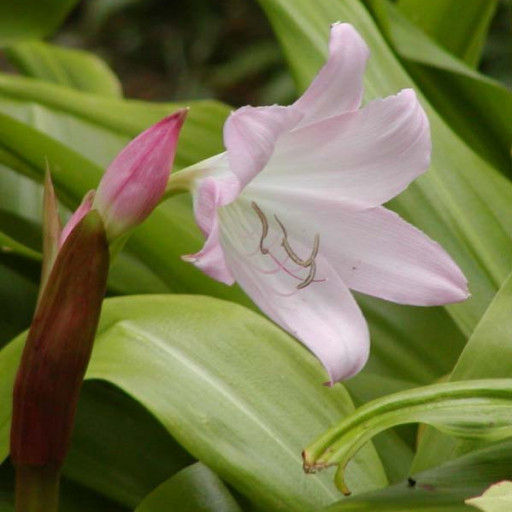
Plant Overview
Often called the "Forest Lily" or "Moore's Crinum," this South African native is a true aristocrat of the shade garden. With its massive, trumpet-shaped blooms that look like they belong in a Victorian conservatory, it brings a touch of old-world elegance to damp, leafy corners. Unlike many lilies that crave the spotlight of the sun, this beauty is happiest tucked away in the dappled light of a woodland setting.
🔍 How to Identify
- 🍃 Large, Wavy Leaves: The foliage is bright green, broad, and strap-shaped, often featuring a distinctively "rippled" or undulated edge that fans out from a central neck.
- 🌸 Trumpet Blooms: Large, nodding flowers appear in clusters of 5 to 10 atop tall stalks; they are usually a delicate pale pink or snowy white with a sweet, heavy fragrance that intensifies at night.
- 🦒 The "False Stem": The leaves emerge from a long, succulent-like neck (pseudostem) that rises from a massive underground bulb, giving the plant a structural, palm-like appearance before it even flowers.
🏡 In Your Garden
- 💧 Moisture Seeker: This plant thrives in "feet-wet" conditions. It is the perfect solution for those tricky, damp spots in your yard where other plants might struggle, provided the soil is rich in leaf mold or compost.
- 🏠 The Homebody: Crinum moorei is famously "transplant-shy." It possesses a deep taproot and a massive bulb that dislikes being disturbed. If you move it, be prepared for it to "pout" and refuse to bloom for a year or two while it settles back in.
- ⛅ Shade Lover: Unlike its cousins that bake in the veld, this species loses its lush green color and scorches if left in the afternoon sun. It is one of the few large-flowering bulbs that truly prefers deep to partial shade.
⚠️ Safety & Toxicity
- 🚫 Toxic Status: Highly Toxic. Every part of the plant, especially the massive bulb, contains lycorine and other bitter alkaloids.
- 🐾 Pets & Kids: Ingestion can cause severe stomach upset, vomiting, and tremors in dogs and cats. The sap can also cause mild skin irritation in sensitive individuals, so wearing gloves during pruning is a smart move.
✨ Fun Fact
The bulb of a mature Moore’s Crinum can grow to be as large as a human head! Because of this massive energy reserve, these plants are incredibly long-lived; some specimens in historic gardens are documented to be over 50 years old.

Detailed Care Instructions
To grow Crinum Moorei plants, you can follow these steps:
- Choose a suitable location: Crinum Moorei plants prefer full sun to partial shade. Select a spot in your garden where they will receive at least 6 hours of direct sunlight each day.
- Prepare the soil: Crinum Moorei plants prefer well-draining soil. Amend the soil with organic matter such as compost or well-rotted manure to improve its drainage and fertility. Avoid heavy clay soils.
- Plant the bulbs: Crinum Moorei is typically propagated from bulbs. Dig a hole that is deep enough to accommodate the bulb but leave the neck above the soil surface. Place the bulb in the hole and cover it with soil, gently firming it around the bulb.
- Water adequately: Crinum Moorei plants require regular watering, especially during hot and dry periods. Water deeply and allow the soil to dry between waterings. Be cautious not to overwater, as this can cause the bulbs to rot.
- Mulch: Apply a layer of mulch around the base of the plant to help retain moisture in the soil and suppress weed growth. Use organic mulch, such as wood chips or straw, to regulate soil temperature and reduce evaporation.
- Fertilize: In early spring, apply a balanced slow-release fertilizer according to the package instructions. This will provide the necessary nutrients for healthy growth. Avoid over-fertilizing, as it may lead to excessive foliage growth with reduced flowering.
- Prune as needed: Remove any dead or damaged leaves to maintain the plant's overall appearance and health. You can also remove spent flowers to encourage new blooms.
- Propagation: Crinum Moorei can be propagated by dividing the bulbs. Wait until the plant is dormant, typically during the late winter or early spring. Dig up the bulbs, divide them, and replant them in suitable locations.
- Pest and disease control: Crinum Moorei plants are generally resistant to pest and disease issues. However, keep an eye out for snails, slugs, and aphids, which may occasionally feed on the leaves. Use organic pest control methods if necessary.
With proper care and maintenance, your Crinum Moorei plant should grow and bloom beautifully.

Place in a window with dappled sun or a spot in the middle of a room. Or directly in a window facing west or east.

To water this type of plant, you should first determine the soil moisture level by inserting your finger a few inches into the soil. If the soil feels dry, it is time to water. Use a watering can or hose with a gentle stream to water the soil directly around the base of the plant. Avoid splashing water on the leaves and flowers. Water until you see the excess water draining out of the drainage holes at the bottom of the pot. It is important not to overwater and let the soil become waterlogged, which can lead to root rot. Watering frequency will depend on the environmental conditions and the size of the pot, but generally, it is better to underwater than overwater.
To fertilize the plant, use a balanced fertilizer such as a 10-10-10 or 20-20-20. Apply the fertilizer every two weeks during the growing season, which is typically spring and summer. Be sure to dilute the fertilizer according to the instructions on the package, as applying too much fertilizer can burn the plant's roots. Additionally, give the plant a deep watering before and after fertilizing to ensure that the nutrients are fully absorbed by the roots.
When planting Crinum Moorei, it is recommended to use a well-draining soil mix that is rich in organic matter. The soil should have a neutral pH level between 6.5 to 7.5. A mix of peat moss, sand, and perlite or vermiculite can make a suitable soil mix. This will provide good drainage while retaining moisture and nutrients essential for the plant's growth. Avoid heavy clay soils or ones that have been contaminated with fertilizers or chemicals. It is also important to ensure that the plant is not overwatered and that the soil is allowed to dry out between watering sessions.
To propagate this particular plant, you can start by collecting the bulb offsets that naturally grow at the base of the parent plant. These should be removed from the parent plant using a sharp, sterile knife and potted individually in a well-draining soil mix. It is important to allow the cut areas to dry out before planting the offsets to avoid rotting.
Once the offsets are planted, they should be kept in a warm, humid location with bright, indirect sunlight. The soil should be kept moist but not waterlogged, and fertilization should be provided every few weeks with a balanced fertilizer.
Over time, the individual plants will grow and develop into their own mature plants, eventually producing their own offsets that can be propagated in the same way.
Common pests of the natal lily include Spider mites, thrips. Make a habit of checking your natal lily frequently for pests so that any infestations can be caught and managed early.








