Plant Overview
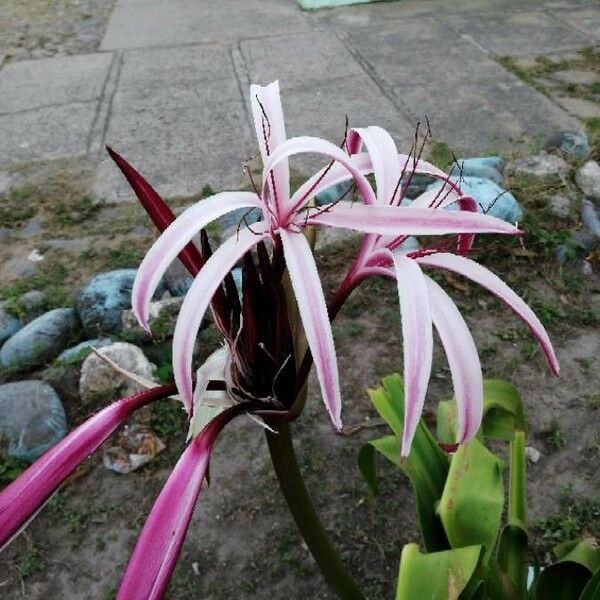
Known as the "Milk and Wine Lily," this striking perennial looks like it stepped right out of a Victorian-era botanical illustration. Native to the tropical stretches of Africa and Asia, it has become a beloved fixture in warm-climate gardens worldwide. Its dramatic, candy-striped blooms don't just catch the eye—they also release a heavy, sweet perfume that often intensifies as the sun begins to set.
🔍 How to Identify
- 🌸 The "Milk and Wine" Blooms: Large, trumpet-shaped flowers that are creamy white with a bold, wine-red or deep pink "racing stripe" running down the center of each petal.
- 🍃 Wavy Foliage: Long, strap-like green leaves that can grow up to three feet long. They often have slightly ruffled or wavy edges and grow in a lush, fountain-like rosette.
- 📏 Sturdy Scapes: The flowers sit atop thick, leafless stalks (scapes) that rise directly from the center of the plant, often carrying 5 to 12 blossoms at once.
🏡 In Your Garden
- 📍 The "Forever Home" Rule: This lily grows from a massive, deep-seated bulb and absolutely hates being moved. Once planted, its long taproots settle in for the long haul—transplanting it can cause the plant to refuse to bloom for a year or more.
- 💧 Seasonal Sleep: While it loves consistent moisture and humidity during the hot summer months, it appreciates a "dry sleep" in the winter. Reducing water during the dormant season mimics its native tropical cycle and encourages a spectacular flower show the following spring.
⚠️ Safety & Toxicity
- 🚫 Toxic Status: Highly toxic to humans and pets if ingested.
- 🐾 The Danger Zone: The entire plant contains various alkaloids, with the highest concentration in the bulb. If eaten by curious dogs or cats, it can cause severe vomiting, drooling, and abdominal pain. It is best kept in a spot where pets and toddlers won't be tempted to "taste test" the greenery.
✨ Fun Fact
Unlike many other lilies that bloom and fade quickly, a single Crinum zeylanicum bulb can live for several decades, often outliving the gardener who planted it. In some parts of the world, these "heirloom bulbs" are passed down through generations of families.

Detailed Care Instructions
To grow a Crinum Zeylanicum plant, also known as the Crinum Lily or the Red Crinum Lily, follow these steps:
- Location: Choose a suitable location for planting the Crinum Zeylanicum plant. It prefers full sun or partial shade, with 4-6 hours of direct sunlight each day.
- Soil: The Crinum Zeylanicum plant thrives in moist, well-draining soil. Loamy soil with organic matter is ideal for its growth. Ensure the soil pH is neutral to slightly acidic.
- Planting: Dig a hole that is twice the diameter of the plant's root ball. Place the plant in the hole, ensuring that the top of the root ball is level with the soil surface. Fill the hole with soil and gently firm it around the plant.
- Watering: Water the plant thoroughly after planting to settle the soil and remove any air pockets. The Crinum Zeylanicum plant requires regular watering to keep the soil moist but not waterlogged. Check the moisture level regularly and adjust watering accordingly.
- Fertilization: Apply a balanced slow-release fertilizer once every six months to promote healthy growth. Alternatively, you can use a water-soluble fertilizer diluted to half strength every 2-4 weeks during the growing season.
- Mulching: Apply a layer of organic mulch around the plant to help retain moisture, suppress weeds, and regulate soil temperature.
- Pruning: Remove any dead or yellowing leaves to keep the plant healthy and aesthetically pleasing. Remove spent flowers to encourage new blooms.
- Winter care: Crinum Zeylanicum is not frost-tolerant. If you live in a region with cold winters, you may need to dig up the bulbs before the first frost and store them indoors during the winter months. Replant them in spring after the danger of frost has passed.
- Propagation: The Crinum Zeylanicum plant can be propagated through seeds or division. Seeds need to be planted in a seed-starting mix and kept moist until they germinate. Division involves separating mature bulbs from the parent plant and replanting them.
With proper care and suitable conditions, the Crinum Zeylanicum plant should grow well and produce its beautiful red or pink flowers.

Place in a bright room that is sun drenched almost all day. Or directly in a south-facing window.

To water this plant, it is important to first check the soil moisture level before adding any additional water. Avoid overwatering and ensure the soil has proper drainage. When watering, it is recommended to water at the base of the plant rather than from above to prevent water from sitting on the foliage. Additionally, it may be beneficial to use room temperature or slightly warm water to prevent shocking the roots. Overall, ensure the plant is receiving adequate moisture, but avoid excessive watering.
- Choose a balanced fertilizer with equal amounts of nitrogen, phosphorus, and potassium.
- During the growing season, fertilize once a month.
- Dilute the fertilizer with water according to the instructions on the package.
- Water the soil thoroughly before and after fertilizing to avoid burning the roots.
- Apply the fertilizer around the base of the plant, avoiding the leaves and stems.
- Use a fork or rake to lightly work the fertilizer into the top inch of soil.
- Avoid over-fertilizing, which can lead to weak growth, yellowing leaves, and fewer flowers.
The ideal soil for Crinum Zeylanicum plant should be a well-draining mixture that is rich in organic matter. It should be moist but not waterlogged, and should have a pH range of 6.5 to 7.5. The soil should also be deep enough to accommodate the plant's bulbous roots. The plant prefers soil that is sandy, loamy or clay. Additionally, a layer of mulch can be added on top of the soil to help with water retention and soil temperature regulation.
To propagate this plant, begin by selecting a mature and healthy individual. Take a sharp, sterile knife or scissors and cut off a few leaves from the base of the plant. Make sure to remove any damaged or diseased leaves.
Next, dip the cuttings in rooting hormone powder to encourage root growth. You can also choose to dip the cuttings in honey, which has natural rooting properties.
Prepare a pot with a well-draining soil mix and make a hole in the center of the soil. Place the cuttings in the hole, making sure to cover the bottom third of the cutting with soil. Water the soil thoroughly, but be careful not to overwater.
Place the pot in a warm and humid area, ideally with indirect sunlight. Keep the soil moist but not waterlogged, and mist the leaves regularly to maintain humidity.
After a few weeks, you should start to see new growth from the cutting. Once the new growth has become established, you can transplant the young plant into a larger pot or an outdoor garden.








