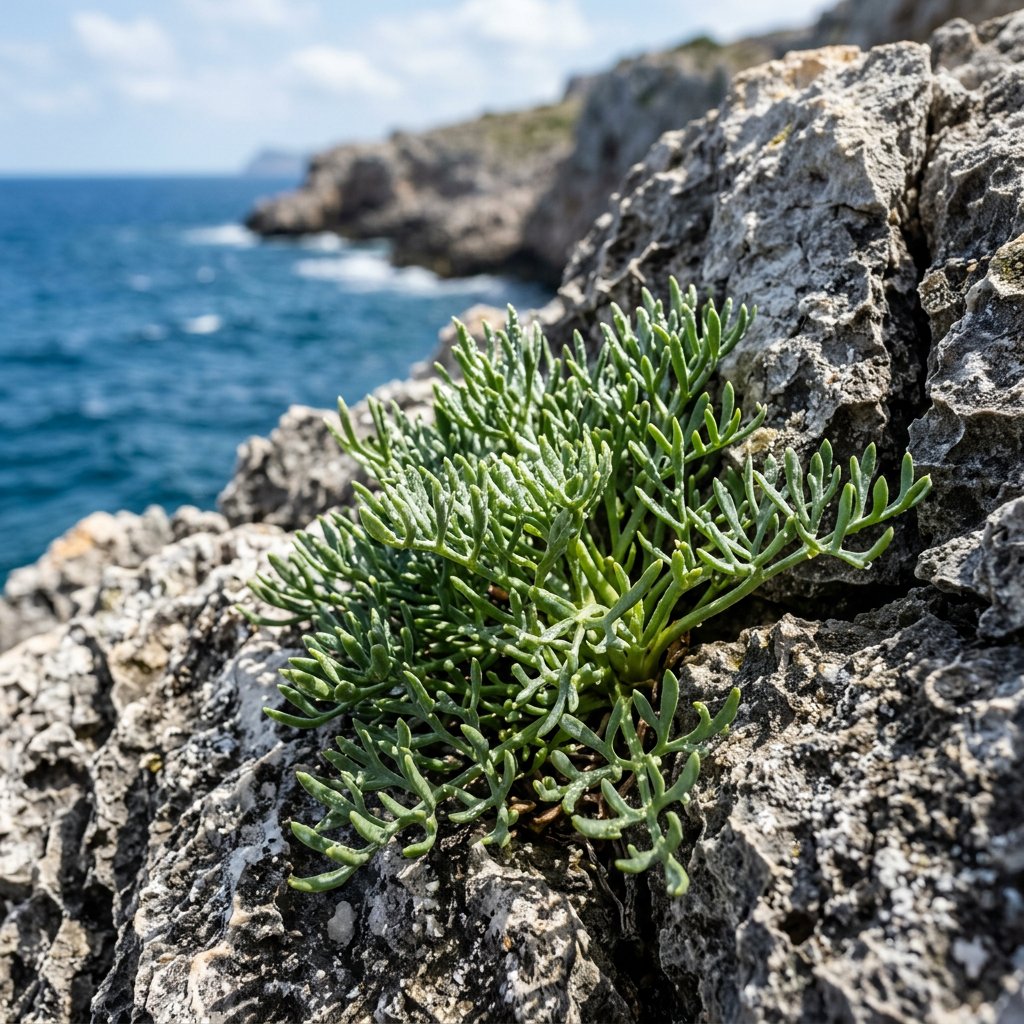
Plant Overview
Often called "Sea Fennel" or "Rock Samphire," this hardy survivor clings to the salt-sprayed cliffs of the Mediterranean and Atlantic coasts. Once a prized delicacy mentioned by Shakespeare, it has a distinct salty, aromatic flavor that tastes like a mix of fennel, celery, and lemon. It is the ultimate coastal rebel, thriving where most plants would wither from the brine and wind.
🔍 How to Identify
- 🍃 Fleshy Foliage: The leaves are thick, succulent, and blue-green (glaucous), specifically designed to store water against the drying ocean breeze.
- 🌼 Umbel Blooms: In late summer, it produces flat-topped clusters of tiny, yellowish-green flowers that look like miniature umbrellas.
- 🧂 Aromatic Scent: If you crush a leaf, it releases a potent, spicy scent that many describe as a blend of citrus, carrot, and sea spray.
🏡 In Your Garden
- 🪨 Rock Specialist: As its name suggests, this plant demands perfect drainage. It thrives in gravelly soil or rock crevices rather than rich, loamy garden beds. If its "feet" stay wet, it will quickly succumb to rot.
- 🌊 Salt & Wind Resistance: It is one of the few plants that actually enjoys salt spray. While it can grow inland, it requires a sunny, exposed spot that mimics the harsh, bright conditions of a cliffside.
⚠️ Safety & Toxicity
- 🥗 Edible Status: Rock Samphire is edible and was historically pickled to prevent scurvy due to its high Vitamin C content. However, never harvest it from areas with high water pollution or heavy maritime traffic.
- 🐾 Pet Safety: There are no known toxicities for cats or dogs. Its strong essential oils usually act as a natural deterrent, making it unlikely that pets will try to snack on it.
✨ Fun Fact
- 🎭 The Dreadful Trade: In the play King Lear, William Shakespeare describes the harvest of this plant as a "dreadful trade." This refers to the historical practice of "samphire gatherers" who would hang by precarious ropes over high cliffs just to reach the best specimens for the London markets.

Detailed Care Instructions

Place in a bright room that is sun drenched almost all day. Or directly in a south-facing window.

The plant in question is a type of perennial succulent plant that thrives in coastal regions with good sunlight and well-drained soil. To water the plant, you should first check the surrounding soil to make sure that it is dry to the touch. Once you have confirmed that the soil is dry, you should slowly pour water around the base of the plant, taking care not to splash water onto the leaves. It is important to give the plant a deep watering to encourage root growth, but you should avoid over-watering as this can cause root rot. As a general guideline, you should water the plant once a week during the growing season, and reduce watering during the winter months when the plant is dormant. Finally, it is recommended to mulch around the base of the plant to help regulate soil moisture and prevent weed growth.
Without the need of fertilizer, these plants can thrive and bloom. If a plant requires fertilization, it will display indicators of nutrient insufficiency, such as yellowing leaves. It is safe to apply slightly diluted fertilizers in these circumstances. Over fertilizing, on the other hand, should be avoided because excess nutrients might cause plant mortality. Slow-release fertilizers are therefore advised for these plants.
You may use Vegetable Plant Food for your Rock Samphire
Crithmum Maritimum plant thrives in a well-draining soil that is rich in nutrients. The soil should be slightly alkaline with a pH of around 7.5. It should also have good drainage to prevent waterlogging and root rot. Adding organic matter like compost or well-rotted manure to the soil will help improve its fertility and texture. Additionally, it is important to make sure that the soil is not too sandy as it may not hold enough moisture or too clayey as it may retain too much water. A sandy loam or a well-draining loamy soil with good moisture retention capacity would be ideal for growing Crithmum Maritimum plant.








