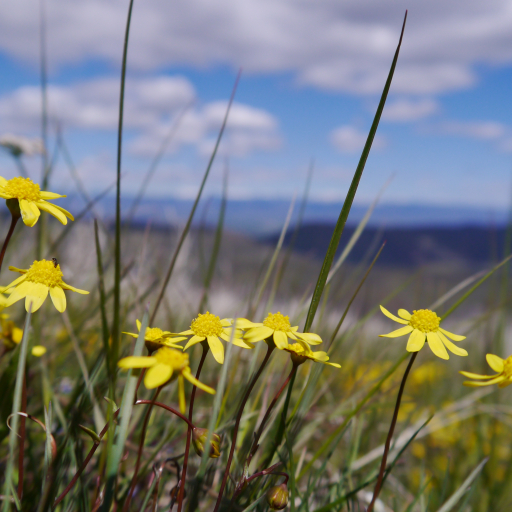
Plant Overview
Often called Spring Gold, this cheery little wildflower acts as nature's alarm clock for the Pacific Northwest and coastal regions. Appearing as bright yellow carpets when the ground is still waking up from winter, it has earned a reputation as a symbol of resilience and the literal "return of the sun." It is one of the earliest bloomers, often braving the tail end of frost to signal the changing season.
🔍 How to Identify
- 🌼 Golden Blooms: Tiny, star-like yellow flowers about an inch wide, featuring both ray and disk florets that resemble miniature daisies.
- 🌿 Slender Stems: Multiple delicate, reddish-green stems (hence the name multicaule, meaning "many stems") that rise from a central base.
- 🍃 Fleshy Foliage: Small, slightly succulent leaves clustered at the bottom in a basal rosette; you might notice tiny tufts of white "wool" where the leaves meet the stem.
🏡 In Your Garden
- ☀️ The Pollinator's First Meal: Because it blooms so early (February to May), it is a vital lifeline for early-emerging bees and butterflies when few other nectar sources are available.
- 🪨 Poor Soil Specialist: This plant hates "rich" garden soil. It thrives in rocky outcrops, sandy slopes, and well-draining spots where other plants struggle to take hold.
- 🌱 Short but Sweet: As an ephemeral annual, it completes its life cycle quickly. Once the summer heat hits, it will set seed and disappear until the following spring.
⚠️ Safety & Toxicity
- ✅ Non-Toxic: Spring Gold is generally considered safe and non-toxic for humans, cats, and dogs.
- 🐾 Delicate Nature: While safe to touch and smell, the plant is extremely fragile. Its thin stems are easily crushed by foot traffic or curious pets, so it’s best enjoyed from the edge of the trail or garden path.
✨ Fun Fact
The genus name Crocidium comes from the Greek word krokys, which means "loose threads" or "wool." This refers to the tiny, cobweb-like hairs that protect the base of the plant from cold spring nights!

Detailed Care Instructions
To grow Crocidium Multicaule, also known as woolly crocidium or many-stem crocidium, follow these steps:
- Climate and location: These plants are native to Western Australia, so they are best suited for warm, dry climates. They require full sun exposure, so choose a spot that receives at least 6-8 hours of direct sunlight each day.
- Soil preparation: Crocidium Multicaule prefers well-draining sandy or gravelly soils. If your soil is heavy or clayey, improve it by adding organic matter like compost or well-rotted manure. This will enhance drainage and nutrient availability.
- Planting: The ideal time to plant Crocidium Multicaule is in early spring, after the last frost has passed. Sow the seeds directly into the prepared soil by scattering them lightly on the surface. Press them gently into the soil, but do not cover them completely as they require light to germinate. Space the seeds about 2-3 inches apart.
- Watering: Water the planted area gently with a fine mist or spray bottle to avoid displacing the seeds. Keep the soil moist but not saturated, as excessive water can cause the seeds to rot. Water the seeds regularly until they germinate, which usually takes around 14-21 days.
- Care and maintenance: Once the plants start growing, reduce the frequency of watering. Crocidium Multicaule is drought-tolerant and does not require much water. Allow the soil to dry out slightly between watering to prevent overhydration. Avoid overhead watering, as this can cause fungal diseases.
- Weeding: Remove any weeds that compete with the Crocidium Multicaule plants for nutrients and sunlight to ensure their healthy growth. Regularly inspect the planting area and remove any weeds that pop up.
- Mulching: Apply a layer of organic mulch, such as straw or bark chips, around the base of the plants. This will help conserve moisture, suppress weed growth, and maintain a more stable soil temperature.
- Propagation: If you want to propagate Crocidium Multicaule, you can collect seeds from mature plants and sow them following the same steps mentioned above.
- Pruning: Crocidium Multicaule does not require pruning, as it naturally maintains a compact, low-growing habit. However, you can trim back any dead or damaged foliage to keep the plants looking tidy.
By following these steps, you can successfully grow Crocidium Multicaule in your garden or landscape. Remember to provide proper care, adequate sunlight, and well-draining soil to ensure their optimal growth and blooming.

Place in a bright room that is sun drenched almost all day. Or directly in a south-facing window.

Crocidium Multicaule plant requires regular watering to thrive. The best way to water this plant is to give it a deep watering once a week or whenever the soil appears dry. When watering, avoid getting water on the leaves and focus on soaking the soil around the base of the plant. This will allow the roots to absorb water more efficiently. It is important not to overwater this plant as it can lead to root rot. Additionally, it is recommended to use room temperature water and allow it to drain out of the pot's bottom to avoid any standing water.
- Choose a balanced fertilizer with equal amounts of nitrogen, phosphorus, and potassium.
- Apply the fertilizer once a month during the growing season, which is typically spring and summer.
- Dilute the fertilizer according to the manufacturer's instructions.
- Water the plant before applying the fertilizer to prevent root burn.
- Use a watering can or sprayer to distribute the fertilizer evenly over the soil and avoid getting it on the leaves.
- Avoid fertilizing during the dormant season in fall and winter.
- Monitor the plant for any signs of stress and adjust the fertilizer application if necessary.
Crocidium Multicaule prefers a well-draining soil with a slightly acidic to neutral pH range. The ideal soil type is loamy soil composed of sand, silt, and clay in balanced proportions. It should be rich in organic matter, which can improve soil moisture retention and nutrient availability. Waterlogged soil should be avoided as it can lead to root rot and other diseases. The plant can also tolerate dry soil conditions but it's important to keep the soil moist during the growing season. Fertilization is recommended during the growing season with a balanced fertilizer, high in nitrogen. While the plant can tolerate nutrient-poor soil, it will benefit from regular feeding to promote healthy growth and flowering.
Crocidium Multicaule can be propagated by division. First, carefully dig up the mature plant and gently separate the root clump into smaller sections. Each section should have some roots and at least one shoot or bud. Next, plant each division in a well-draining soil mix and water thoroughly. Keep the newly divided plants in a semi-shaded location and keep the soil consistently moist until new growth emerges. Once established, the plant can be moved to a sunnier location.








