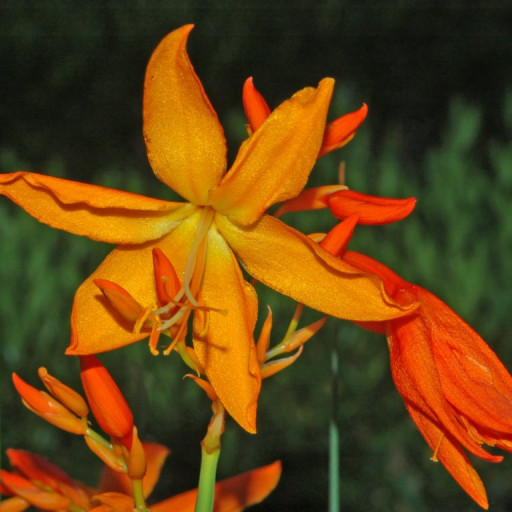
Plant Overview
Known as "Falling Stars" or "Montbretia," the Crocosmia is a fiery showstopper that brings the heat of the South African grasslands to your backyard. This member of the Iris family is beloved for its arching wands of brilliant orange, red, and yellow blooms. Whether it’s the famous blood-red "Lucifer" variety or the delicate gold of "George Davison," these plants are a favorite for gardeners looking to attract hummingbirds and create dramatic floral displays.
🔍 How to Identify
- 🗡️ Sword-Shaped Foliage: The leaves are long, upright, and pleated, resembling the blades of an Iris or a Gladiolus. They form dense, elegant clumps.
- 🎣 Arching Flower Spikes: The blooms grow on unique, zig-zagging stems that arch gracefully toward the ground, with flowers opening sequentially along the branch.
- trumpet Funnel Flowers: Each individual flower is shaped like a small trumpet or funnel, typically featuring six petals that flare outward to reveal prominent, dangling stamens.
🏡 In Your Garden
- 🌱 The Corm Connection: Unlike plants that grow from true bulbs, Crocosmia grows from "corms" (swollen underground stems). They are heavy feeders and appreciate rich soil, but they hate "wet feet" during the winter, which can cause the corms to rot.
- 🐦 Pollinator Magnet: Because of their tubular shape and vibrant colors, they are high-priority targets for hummingbirds and butterflies. Planting them in large drifts creates a "runway" that pollinators can't miss.
- ✂️ Divide to Conquer: Over time, these plants can become so crowded that they stop flowering. Every few years, you’ll want to dig them up and separate the corms—this "tough love" actually rejuvenates the plant and gives you free babies to plant elsewhere.
⚠️ Safety & Toxicity
- ✅ General Status: Crocosmia is generally considered non-toxic to humans, dogs, and cats.
- 🐾 Pet Precautions: While not poisonous like true Lilies, the fibrous leaves and corms can cause mild stomach upset if ingested in large quantities by curious pets. It is always best to discourage chewing on garden ornamentals.
✨ Fun Fact
The name Crocosmia comes from the Greek words krokos (saffron) and osme (smell). If you take the dried flowers and dip them in warm water, they emit a distinct, spicy scent that strongly resembles expensive saffron!

Detailed Care Instructions
To grow Crocosmia plants, you can follow these steps:
- Choose a location: Crocosmia plants prefer full sun or partial shade. Select a location with well-draining soil that is rich in organic matter.
- Prepare the soil: Dig up the soil and remove any weeds or debris. Add compost or well-rotted manure to improve the soil's fertility and drainage.
- Plant the bulbs/corms: Crocosmia is typically grown from corms or bulbs. Plant them in the soil, about 4 to 6 inches deep and 6 to 8 inches apart. Space the plants according to the specific variety you are growing.
- Water thoroughly: After planting, water the soil thoroughly to settle the bulbs and encourage root growth. Make sure the soil is evenly moist but not waterlogged.
- Mulch: Apply a layer of organic mulch around the plants to help retain soil moisture, suppress weeds, and protect the bulbs during winter.
- Provide regular water: Crocosmia plants require regular watering, especially during dry spells. Keep the soil consistently moist but not overly saturated.
- Fertilize: Apply a balanced fertilizer, such as a 10-10-10 formula, to the soil in early spring, just before new growth emerges. Follow the package instructions for the correct dosage.
- Support taller varieties: Some Crocosmia varieties can grow quite tall and may benefit from staking or support. Insert a plant stake or place a support ring around the stems to prevent bending or falling over.
- Deadhead spent blooms: Remove faded flowers to encourage continuous blooming and tidy appearance. This also helps promote energy towards bulb formation.
- Divide the clumps: Every three to five years, divide the clumps of Crocosmia plants to rejuvenate them and prevent overcrowding. Dig up the clumps, divide them into smaller sections, and replant them in suitable locations.
- Protect from frost: In colder regions, protect the bulbs from freezing temperatures by covering them with a layer of mulch or relocating potted plants indoors over winter.
By providing proper care, watering, fertilization, and division, your Crocosmia plants should grow and blossom beautifully.

Place in a window with dappled sun or a spot in the middle of a room. Or directly in a window facing west or east.

To properly water this plant, it is important to first consider the soil and environment it is planted in. It is recommended to water the plant thoroughly and deeply, but only when the soil feels dry to the touch. When watering, avoid getting water on the leaves or flowers, and instead aim for the soil around the base of the plant. It is important to not overwater, as this can lead to root rot and other issues. During periods of drought or hot weather, the plant may require more frequent watering. Additionally, it is recommended to mulch around the base of the plant to help retain moisture in the soil.
To properly fertilize the Crocosmia plant, follow these instructions:
- Timing: Apply fertilizer in early spring, just as new growth emerges. Then, repeat every 4-6 weeks during the growing season, which typically lasts from spring to early fall.
- Choose the right fertilizer: Use a balanced, water-soluble fertilizer with equal proportions of nitrogen (N), phosphorus (P), and potassium (K). Look for a fertilizer with an NPK ratio of 10-10-10 or similar.
- Dilute the fertilizer: Dissolve the fertilizer in water according to the package instructions. Avoid using a concentrated solution to prevent burning the plant's roots.
- Application method: Apply the diluted fertilizer directly to the soil around the base of the Crocosmia plant. Avoid getting any fertilizer on the plant's foliage as it may cause burns.
- Amount of fertilizer: Use approximately 1 tablespoon of the diluted fertilizer per square foot of planting beds or pots. Adjust the amount based on the size of the plant and its surrounding soil.
- Watering after fertilizing: After applying the fertilizer, water the plant thoroughly. This helps to ensure the nutrients are absorbed into the soil and reach the plant's roots.
- Avoid over-fertilizing: Remember that too much fertilizer can harm the plant. Always follow the recommended dosage and frequency mentioned on the fertilizer packaging.
- Soil testing: Occasionally, perform a soil test to check nutrient levels in the soil. This helps to determine if any additional amendments or adjustments are needed.
Following these fertilizing instructions should support the healthy growth and blooming of your Crocosmia plant.
Crocosmia plants prefer to be grown in well-draining, fertile soil. The soil should be rich in organic matter and have a pH level between 6.0-7.5. It is important to ensure that the soil is not too heavy or clay-like, as this can cause drainage issues and lead to root rot. It is recommended to mix in compost or other organic matter to improve soil structure and add nutrients. In addition, it is important to make sure the soil is moist but not waterlogged, as Crocosmia plants do not thrive in wet conditions.
Crocosmia is a perennial plant that belongs to the iris family, Iridaceae. It is native to South Africa but is widely cultivated in various regions around the world for its beautiful flowers and ornamental value. Here is a detailed guide on how to propagate Crocosmia:
- Division: The most common and effective method of propagating Crocosmia is through division. This process is best done during the plant's dormant season in late winter or early spring.
a. Start by digging up the mature Crocosmia plant from the ground using a garden fork or a shovel, being careful not to damage the rhizome.
b. Gently separate the rhizomes from each other, ensuring that each division has healthy roots and shoots attached to it. You can do this by carefully pulling or cutting the rhizomes apart with a sharp, sterilized knife.
c. Trim the foliage back to a more manageable size to reduce water loss through transpiration.
d. Prepare the new planting locations by creating holes approximately twice the size of the divided rhizomes and incorporating compost or well-rotted manure into the soil.
e. Plant the divided rhizomes in the prepared holes, ensuring that the top of the rhizome is above the soil surface.
f. Water the newly planted divisions thoroughly to provide essential moisture and promote root establishment.
- Seed Propagation: While division is the most common method, you can also propagate Crocosmia from seeds, although it takes longer and is less reliable than division.
a. Harvest ripe seed capsules from the plant once they have turned brown and started to split open.
b. Gently crush the seed capsules to release the small, black or brown seeds.
c. Fill seed trays or small pots with a well-draining potting mix and lightly press the seeds into the surface of the soil, leaving them uncovered.
d. Mist the soil lightly with water or use a fine spray to avoid dislodging the seeds.
e. Place the trays or pots in a warm location with filtered sunlight or use a propagation mat to maintain a soil temperature of around 70°F (21°C).
f. Keep the soil consistently moist but not waterlogged, misting the surface as needed.
g. Germination can take anywhere from a few weeks to a few months. Once the seedlings develop a few sets of true leaves, they can be transplanted into larger containers or directly into the garden.
Propagation of Crocosmia can be an exciting and rewarding process, as it allows you to create new plants and expand your garden. Following these steps will help ensure successful propagation, and soon, you'll have a collection of beautiful Crocosmia plants to enjoy.







