Plant Overview
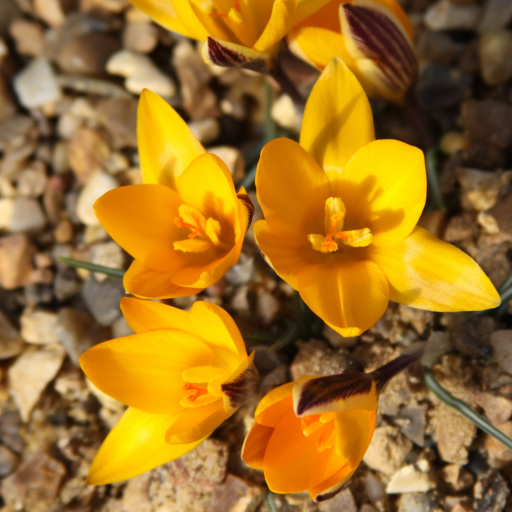
Often called the "Cloth of Gold Crocus," this vibrant little gem is one of the earliest signs that winter is losing its grip. Native to the sun-drenched slopes of Crimea and the Caucasus, it earns its nickname from its intense, radiant yellow petals that look like they’ve been dipped in molten gold. It is a resilient survivor, frequently pushing through frost to announce the arrival of spring.
🔍 How to Identify
- ☀️ Petal Patterns: The most striking feature is the brilliant yellow interior contrasted by three bold, deep mahogany or brownish-purple stripes on the outside of each petal.
- 🌿 Narrow Foliage: True to its name (angustifolius means "narrow-leaved"), the foliage consists of thin, grass-like leaves that are dark green with a distinct silvery-white stripe running down the center.
- 📏 Diminutive Stature: This is a low-growing plant, rarely exceeding 4 inches in height, making it look like a scattered collection of golden stars tucked into the lawn or soil.
🏡 In Your Garden
- 💧 The Drainage Rule: While it loves spring moisture, the "Cloth of Gold" hates having "wet feet" during its summer dormancy. It requires gritty, well-draining soil to prevent the bulbs (corms) from rotting.
- 🧚 Naturalizing Genius: This plant is excellent for "naturalizing"—it will slowly spread and form a golden carpet over the years if left undisturbed in a sunny spot or under deciduous trees.
- ☁️ The Sun Sensor: The flowers are highly sensitive to light; they will remain tightly closed like little striped spears on cloudy days and "pop" open only when the sun is bright enough to warm them.
⚠️ Safety & Toxicity
- 🐾 Mildly Toxic: While not as deadly as the "Autumn Crocus" (Colchicum), true Crocus species contain alkaloids that can cause stomach upset, vomiting, or diarrhea in cats, dogs, and horses if the corms are dug up and eaten.
- 👶 Child Safety: The bright colors are attractive to toddlers. While not typically fatal, ingestion can cause mouth irritation and nausea, so it is best planted in areas where curious little hands are supervised.
✨ Fun Fact
The specific epithet angustifolius is Latin for "narrow leaf," but in the Victorian "Language of Flowers," the crocus represented "cheerfulness" and "youthful gladness," likely because it was the first bit of color people saw after a long, grey winter.

Detailed Care Instructions
Here are some tips on how to grow Crocus angustifolius (also known as the Cloth of Gold crocus):
- Select a suitable location: Crocus angustifolius prefers full sun to partial shade. Choose a well-draining soil with a pH level between 6.0 and 7.5.
- Planting time: Plant the corms (bulbs) in late summer or early fall, around 4-6 weeks before the first frost. This will give the plant enough time to establish its roots before winter.
- Soil preparation: Before planting, prepare the soil by loosening it with a garden fork or shovel. Remove any weeds or debris from the area.
- Planting depth: Plant the corms about 4-5 inches (10-12 cm) deep, with the pointed side facing up. Space them 2-3 inches (5-8 cm) apart.
- Watering: After planting, water thoroughly to settle the soil and initiate root growth. Keep the soil moist but not waterlogged during the growing season. Reduce watering in late spring as the plant goes into dormancy.
- Fertilizer: Crocus angustifolius generally doesn't require much fertilizer. However, you can apply a balanced, slow-release fertilizer in early spring before the flowering period to provide nutrients for healthy growth.
- Mulching: Apply a layer of organic mulch around the plants to help retain moisture, suppress weed growth, and provide some insulation during winter.
- Winter care: Crocus angustifolius is hardy and can withstand cold temperatures. However, you can cover the planting area with a layer of straw or leaves to protect the bulbs during severe winter conditions.
- Propagation: Crocus angustifolius can be propagated by dividing the corms in late summer to early fall, once the foliage has withered. Dig up and separate the corms, then replant them in the desired location.
- Pest and disease control: These crocuses are generally resistant to pests and diseases. However, keeping the planting area clean and free from debris can help prevent issues.
Remember to consult local gardening resources or experts to ensure optimal care, as specific conditions may vary based on your location.

Place in a bright room that is sun drenched almost all day. Or directly in a south-facing window.

To properly water this plant, make sure to moisten the soil around the base of the plant without over-saturating it. It's important to avoid watering the leaves, as this can promote disease and mold growth. Water the plant deeply about once a week, or more frequently during dry periods. Check the top layer of soil regularly to ensure it's not completely dry before watering again. It's best to water in the morning or early evening to reduce evaporation and allow the plant to absorb the water before the heat of the day.
To properly fertilize this plant, you should apply a balanced slow-release fertilizer in early spring. The recommended ratio is 10-10-10, though other fertilizers may be suitable depending on soil nutrients. Follow the instructions on the packaging for dosage and application. Avoid applying fertilizer during hot weather or drought conditions, as this may cause the plant to become stressed. Additionally, watering the plant regularly and deeply can help to support its growth and overall health.
The ideal soil for the Crocus Angustifolius plant should have good drainage and be well-aerated. The soil should be slightly acidic, with a pH range between 6.0 and 7.5. A mix of sand, loam, and peat moss or leaf mold is recommended. The soil should be rich in organic matter, but not excessively fertile, as too much nitrogen can lead to lush foliage at the expense of flowers. The plant prefers a soil that is moist but not waterlogged, with a moderate level of moisture retention. A layer of mulch can help retain soil moisture and regulate soil temperature. It is best to avoid heavy clay soils, as well as shallow, rocky, or compacted soils that can obstruct root growth and drainage.
- Choose a healthy parent plant: To propagate the Crocus Angustifolius plant, select a healthy parent plant with strong roots and foliage. This will ensure that your propagated plants will be strong and healthy as well.
- Wait for an appropriate time: Wait until the end of the plant's growing season to propagate the plant. Usually, the best time to do this is during the summer.
- Select offsets: Look for offsets around the base of the parent plant. They will be small bulbs with tiny roots.
- Separate the offsets: Gently detach the offsets from the parent plant using a clean and sharp knife. You may need to dig up the plant to accurately see the offsets.
- Prepare planting sites: Preparing the planting site with soil amendments like compost or bone meal will aid the newly propagated plants.
- Plant them: Carefully plant the offsets about an inch deep and three inches apart in well-draining soil.
- Water as ususal: Water the newly planted offsets regularly, but avoid overwatering as this can cause rot.
- Wait and watch: The new Crocus Angustifolius plants should begin to sprout in a few weeks.
- Care for the new plants: Continue to water the new plants regularly, and protect them from extreme temperatures and pests.
With these steps, you can successfully propagate a healthy and vibrant Crocus Angustifolius plant!








