Plant Overview
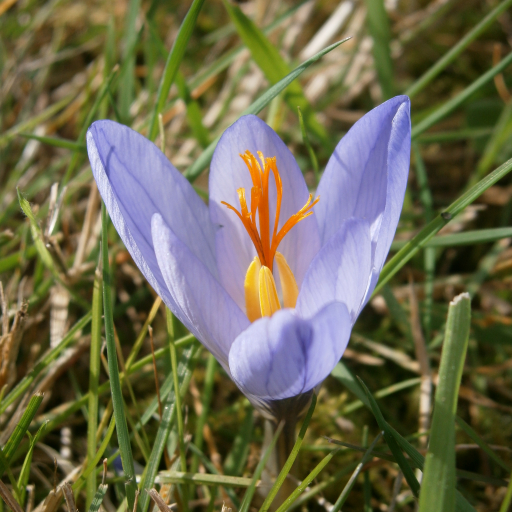
Often called the Lattice Crocus, this elegant autumn-bloomer defies the usual spring schedule of its cousins. While most of the garden is winding down for winter, Crocus cancellatus pushes through the soil to offer delicate, veined flowers that look like floating silk. Hailing from the sun-drenched, rocky landscapes of the Mediterranean and Western Asia, it brings a touch of wild, ancient beauty to any landscape.
🔍 How to Identify
- 🌸 Petal Pattern: The flowers are typically pale lilac, silvery-blue, or white, marked with intricate, darker purple veins that resemble fine embroidery.
- 🧶 Latticed Tunic: The "Cancellatus" name comes from the bulb’s (corm) outer skin, which is made of thick, net-like coarse fibers that look like a tiny woven basket.
- 🔥 Vibrant Center: When the sun opens the petals wide, you’ll see a brilliant, deeply-divided orange style and yellow anthers standing out against the cool-toned petals.
🏡 In Your Garden
- ☀️ The Summer Bake: Unlike many garden plants, this crocus thrives on neglect during the summer. It requires a "dry rest" period where the soil stays hot and parched to mimic its native hillsides.
- 🏔️ Drainage is Key: It "hates wet feet." If the soil stays soggy during its dormancy, the reticulated bulb will rot quickly. Plant it in gritty soil or a dedicated rock garden to keep it happy.
⚠️ Safety & Toxicity
- 🐾 Toxic to Pets: Most ornamental crocus species contain alkaloids that are toxic to dogs, cats, and horses. Ingestion can lead to vomiting or digestive distress.
- 🚫 Not for Harvest: While some Crocus species produce saffron, Crocus cancellatus is strictly ornamental. Do not attempt to use its orange styles for cooking, as it is not the edible variety.
✨ Fun Fact
- 📜 Ancient Architecture: The specific epithet cancellatus is derived from the Latin word for "latticed" or "grated," the same root word used for "chancel" in architecture. It refers to the unique protective mesh that grows around its bulb!

Detailed Care Instructions

Place in a bright room that is sun drenched almost all day. Or directly in a south-facing window.

Some plants require more regular watering than others, which should be done every few days. It's critical to maintain the soil moist all of the time. The water requirements of the same plant placed in pots with varying sizes will differ. Because the water in the smaller pot evaporates faster than the water in the larger pot, it will require more watering. Regardless of pot size, the surface should constantly be maintained moist.








