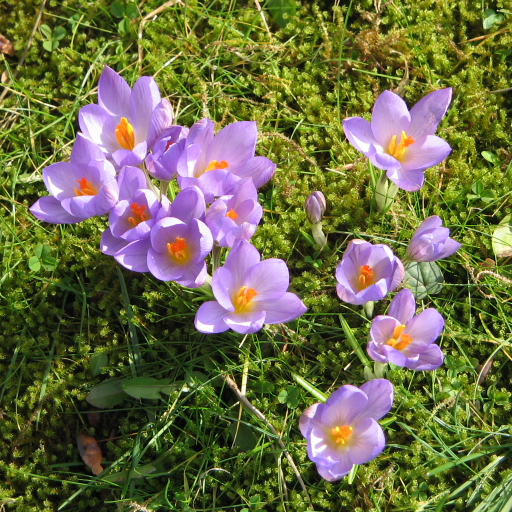
Plant Overview
The Crocus etruscus, affectionately known as the Tuscan Crocus, is a charming herald of spring that originates from the sun-drenched woodlands and hillsides of Italy. Unlike the larger, chunkier Dutch hybrids, this species offers a delicate, refined elegance that feels like a piece of the Mediterranean landscape has arrived in your yard. It is one of the first splashes of color to brave the tail-end of winter, often blooming while the ground is still waking up.
🔍 How to Identify
- 💜 The Bloom: Petals are typically a soft lilac or silvery-blue, often featuring darker violet "feathering" or veins on the exterior of the petals.
- 🔥 The Center: Look for a brilliant, contrasting shock of orange or reddish-orange stigmata (the pollen-catching part) tucked inside the cup.
- 🌿 The Foliage: Very narrow, grass-like leaves that are dark green but feature a distinct, bright white stripe running down the center of each blade.
🏡 In Your Garden
- 🌱 Drainage is Key: Because these grow from "corms" (fleshy underground stems), they are highly susceptible to rot. They need "gritty" soil where water moves away quickly, especially during their summer dormancy.
- ⏳ Naturalizing: This plant is a "set it and forget it" favorite. If left undisturbed in a sunny spot, it will slowly form a carpet of color over the years, peeking through your lawn or rock garden before most other plants even show leaves.
⚠️ Safety & Toxicity
- 🐾 Status: Toxic to pets.
- 🤢 Details: While not as deadly as the Autumn Crocus (Colchicum), the Tuscan Crocus contains alkaloids that can cause vomiting, diarrhea, and drooling in dogs and cats if they dig up and ingest the corms. It is best kept away from curious "diggers."
✨ Fun Fact
The name "etruscus" is a direct tribute to the Etruscans, the ancient civilization that lived in Italy long before the rise of the Roman Empire, in the very same regions where this flower still grows wild today.

Detailed Care Instructions
To grow Crocus Etruscus, you can follow these steps:
- Select a suitable location: Crocus Etruscus prefers well-drained soil and full sun to partial shade. Choose a spot in your garden or a container that receives at least 4-6 hours of direct sunlight per day.
- Prepare the soil: Ensure the soil is loose, well-draining, and enriched with organic matter like compost. Avoid heavy clay soils that may retain excessive moisture.
- Planting: Plant the Crocus Etruscus bulbs in early autumn, around 4-6 weeks before the ground freezes. Dig holes approximately 2-3 inches deep and space them about 3-4 inches apart. Place the bulb in each hole with the pointed side up and cover it with soil. Gently press down the soil to secure the bulb.
- Watering: After planting, water the bulbs thoroughly to settle the soil and initiate root growth. Keep the soil consistently moist but not waterlogged during the growing season, especially in spring when active growth occurs. Reduce watering in summer when the plant goes dormant.
- Fertilizer: Crocus Etruscus generally doesn't require much fertilization. However, you can apply a balanced slow-release fertilizer during the growing season or incorporate some compost into the soil before planting.
- Mulching: Applying a layer of mulch around the bulbs can help retain moisture and suppress weed growth. Use an organic mulch like straw, wood chips, or shredded leaves.
- Care: Crocus Etruscus is a low-maintenance plant. Remove any spent flowers to encourage more blooms. Once the foliage starts to turn yellow and die back, you can cut it back.
- Protection: If your area experiences harsh winters, provide some protection to the Crocus Etruscus bulbs. Mulching the soil and covering the area with a layer of straw or leaves can insulate the bulbs against extreme cold temperatures.
By following these steps, you can successfully grow Crocus Etruscus and enjoy its beautiful blooms in early spring.
To water this plant, it is important to first determine the soil moisture level by feeling the top inch of the soil with your finger. If it feels dry to the touch, it is time to water. Use a watering can or hose with a gentle nozzle attachment to water around the base of the plant, taking care not to splash water onto the foliage or flowers. Ensure the soil is thoroughly moist, but not waterlogged, as the plant prefers well-draining soil. Watering should be done in the morning or early afternoon to allow time for any excess moisture to evaporate before cooler temperatures in the evening. In hot or dry weather, more frequent watering may be needed. However, during the dormant period, watering should be reduced to prevent rot or fungus formation.
To fertilize this plant, apply a slow-release fertilizer at the beginning of its growing season in early spring. Use a balanced fertilizer with equal amounts of nitrogen, phosphorus, and potassium. The dosage should be one tablespoon per square foot of soil. Make sure to water the plant thoroughly after applying fertilizer. Avoid over-fertilizing as it can lead to burning of the roots and damage the plant.
Crocus Etruscus thrives in well-drained soil that is rich in organic matter. The soil should be slightly acidic to neutral and have a pH range of 6.0 to 7.0. Sandy loam soil that has good drainage is better for the plant's growth. Avoid using clay soil as it retains too much moisture, which can lead to root rot. The soil should also have good aeration and water retention capacity. Adding a layer of compost or well-rotted manure to the topsoil can improve the soil quality and provide nutrients for the plant.
To propagate this plant, follow these steps:
- Choose the healthiest specimen from which to take cuttings.
- Using a clean, sharp pair of scissors or pruning shears, cut a stem that is at least 3 inches in length. Make the cut at a 45-degree angle to ensure that the plant can take in water and nutrients easily.
- Remove the leaves from the bottom half of the stem, leaving only the top few leaves intact.
- Dip the cut end of the stem in rooting hormone powder to stimulate root growth.
- Fill a small pot with well-draining soil and make a hole in the center.
- Insert the stem into the hole and gently press the soil around the stem to hold it in place.
- Water the cutting thoroughly, being careful not to wash away the rooting hormone powder.
- Cover the pot with a clear plastic bag to retain moisture and create a humid environment for the cutting.
- Place the pot in a warm, bright location that is out of direct sunlight.
- Check the cutting regularly to make sure the soil remains moist, but not waterlogged. In about 2-4 weeks, the cutting should have formed roots and new growth should be visible. At this point, it can be transplanted to a larger pot or planted in the garden.








