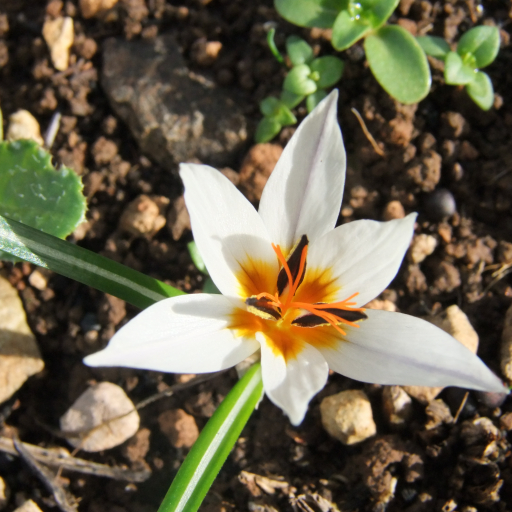
Plant Overview
Known as the "Winter Crocus," Crocus hyemalis is a courageous little gem that braves the coldest months to bring a splash of white to the sleeping landscape. Native to the rocky hillsides of the Eastern Mediterranean, this bulbous perennial is celebrated for its defiance of the seasons, often blooming when most other plants are still in deep hibernation. In its homeland, it is a poetic herald of the rainy season, signaling that life continues even in the heart of winter.
🔍 How to Identify
- ❄️ The Blooms: Features delicate, star-shaped white flowers, often marked with faint, feathery purple veins on the exterior of the petals.
- 🖤 Dark Anthers: Unlike many other crocuses, this species is famous for its striking black or very dark purple anthers, which contrast beautifully against its yellow throat.
- 🌱 Foliage: The leaves are narrow and grass-like, usually appearing alongside or just after the flowers, and are distinguished by a crisp silvery-white stripe running down the center.
- 📏 Stature: A true "ground-hugger," rarely reaching more than 3-4 inches in height, making it a subtle treasure for those who look closely.
🏡 In Your Garden
- ☀️ The Dry Nap: Because it originates from Mediterranean climates, this plant requires a "summer bake." It needs to stay completely dry during its dormant summer period; otherwise, the corms are prone to rotting.
- 🪨 Rock Garden Specialist: Due to its small size and specific drainage needs, it thrives best in rock gardens or raised alpine troughs where it won't be overshadowed by larger, aggressive perennials.
- 🐝 Early Pollinators: It provides a vital, rare food source for bees or insects that might wake up during an unseasonably warm winter day.
⚠️ Safety & Toxicity
- 🚫 Status: Toxic to ingest.
- 🐾 Details: Like most members of the Iridaceae family, the corms contain alkaloids that can cause stomach upset, vomiting, or lethargy in cats, dogs, and horses. It is also not safe for human consumption.
- 🧤 Skin Sensitivity: Some gardeners experience mild skin irritation when handling the corms; wearing gloves during planting is a good precaution.
✨ Fun Fact
The Latin specific epithet hyemalis literally translates to "of the winter." While most crocuses are associated with the arrival of spring, this species is one of the few that consistently blooms around the Winter Solstice, earning it the nickname "The Christmas Crocus" in some regions.

Detailed Care Instructions
To grow Crocus Hyemalis (Autumn Crocus) plants, follow these guidelines:
- Planting time: The best time to plant Crocus Hyemalis bulbs is in late summer or early autumn, just before the first frost. This allows the bulbs to establish roots before the dormant period.
- Site selection: Choose a location that receives full sunlight or partial shade. Crocus Hyemalis prefers well-drained soil, so make sure the planting area has good drainage.
- Soil preparation: Before planting, amend the soil with compost or well-rotted manure to improve its fertility and drainage. The pH should be slightly acidic to neutral, around 5.8-7.0.
- Bulb planting: Dig holes that are about 4-6 inches deep and place the bulbs in the holes with the pointed side facing upwards. Space the bulbs about 3-4 inches apart to allow room for growth. Cover the bulbs with soil and gently firm it down.
- Watering: After planting, water the bulbs thoroughly to settle the soil around them. Keep the soil evenly moist during the growing season, but avoid overwatering to prevent rotting.
- Fertilization: Apply a balanced fertilizer in early spring before the foliage emerges. Follow the recommended dosage on the fertilizer package to avoid overfeeding.
- Mulching: Mulch around the plants with a layer of organic mulch, such as wood chips or straw, to help retain soil moisture, suppress weed growth, and insulate the bulbs during winter.
- Dormancy: In late spring, the foliage of Crocus Hyemalis will start to die back. Allow the leaves to turn yellow and wither naturally. Do not remove the foliage prematurely, as it provides nutrients for the bulb during dormancy.
- Division: After a few years, Crocus Hyemalis bulbs may become crowded. Dig up the bulbs during their dormant period (summer), and separate the smaller bulbs from the larger ones. Replant the bulbs at the desired spacing.
- Pest and disease control: Crocus Hyemalis is generally resistant to pests and diseases. However, you should watch out for squirrels or deer that may dig up the bulbs. You can use fencing or repellents to protect the plants.
By following these steps and providing proper care, you can successfully grow Crocus Hyemalis plants and enjoy their beautiful blooms in the early spring.
To water the plant, first, ensure that the soil is moderately moist before watering. Use room temperature water to avoid shocking the roots. Allow the water to soak into the soil, and avoid dumping water directly on the plant. Watering should be done once a week, but during hot, dry weather, watering may need to be more frequent. Remember to keep the soil moist but not soggy and to avoid letting the soil dry out completely.
To fertilize this plant, use a slow-release granular fertilizer in early spring before new growth appears. Apply the fertilizer evenly over the soil around the base of the plant, and then water thoroughly. Be sure to follow the instructions on the fertilizer packaging for the correct amount to use. Avoid getting the fertilizer on the leaves or flowers, as it can cause burning.
For optimal growth, Crocus Hyemalis plant requires well-draining soil that is neither too heavy nor too light. It prefers a pH range of 6.0-7.0 and slightly alkaline soil. The soil should be enriched with organic matter and nutrients to ensure healthy growth and blooming. Additionally, the plant prefers soil that is moist but not waterlogged, and it should be kept well-drained to prevent rotting. It is advisable to plant the bulbs in a location with full to partial sunlight exposure and provide regular watering during the growing season. Avoid over-fertilizing, as this may cause the leaves to grow at the expense of the flowers.
To propagate this plant, the underground corms should be dug up in summer after the foliage has died back. These corms can be divided into smaller pieces and re-planted in the desired location. The new corms should be planted at a depth of approximately twice their height and spaced evenly apart. The soil should be well-draining and rich in organic matter. Water newly planted corms regularly until they become established, and be sure to avoid over-watering as this can lead to rot. In the following seasons, the corms will sprout new foliage and flowers, and the cycle can be repeated for continued propagation.








