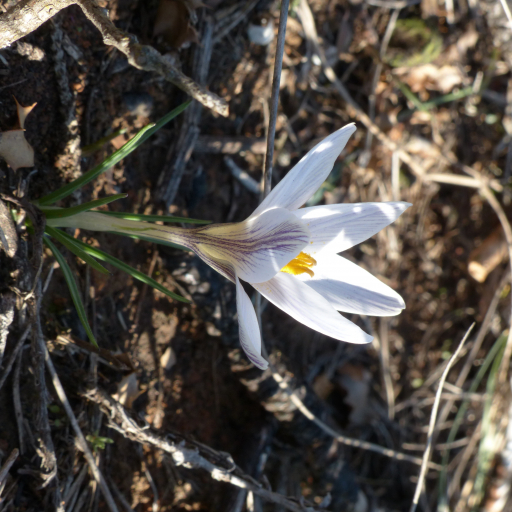
Plant Overview
Known as the Sierra Nevada Crocus, this delicate herald of spring is a wild mountain gem native to the high ridges of Spain and North Africa. Often found pushing its way through the very edges of receding snowbanks, it signals the end of winter with its ethereal, translucent blooms. Unlike its chunky garden cousins, this species has a slender, elegant grace that makes it a favorite for alpine enthusiasts.
🔍 How to Identify
- ❄️ Petal Color: The star-shaped flowers are typically icy white or very pale lilac, featuring intricate, feathery purple veins on the outer petals.
- 🖋️ The Foliage: Look for very narrow, grass-like leaves that are dark green with a striking, silvery-white stripe running down the center.
- 🌼 The Center: The throat of the flower is usually a soft yellow, housing prominent orange stigmas that contrast beautifully against the pale petals.
🏡 In Your Garden
- ☀️ Summer Bake: This plant follows a Mediterranean cycle; it requires a dry "summer bake" while it is dormant. If the soil remains too wet and cool during the summer, the corms are likely to rot.
- 🏔️ Rock Garden Star: Because of its small stature and need for perfect drainage, it performs best in rock gardens, gravel screes, or alpine troughs where it won't be overshadowed by larger perennials.
⚠️ Safety & Toxicity
- 🟢 Status: Generally low toxicity, but often confused with dangerous look-alikes.
- 🐾 Details: While Crocus nevadensis is not considered deadly, it should not be ingested by pets or children as it can cause digestive upset. Crucial Note: Never confuse "True Crocus" with "Autumn Crocus" (Colchicum), which is highly toxic; the two look similar but bloom at opposite ends of the year.
✨ Fun Fact
The name Nevadensis doesn’t refer to the state of Nevada in the US! It comes from the Latin for "snowy," specifically referencing the Sierra Nevada mountain range in Andalusia, Spain, where this flower was first documented blanketed in mountain mist.

Detailed Care Instructions








