Plant Overview
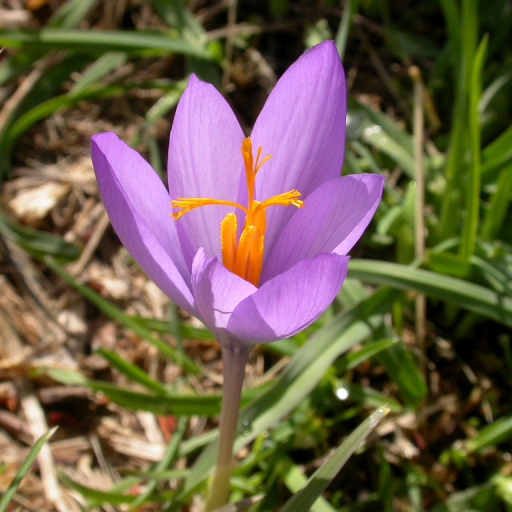
Often called the "Naked Lady" or the Autumn Crocus, Crocus nudiflorus is a late-season marvel that performs a bit of botanical magic. While most plants are preparing for winter dormancy, this hardy perennial bursts from the soil with vibrant purple blooms, completely unencumbered by foliage. It provides a hauntingly beautiful sight in damp meadows and woodland edges during the cooling days of September and October.
🔍 How to Identify
- 🌸 The Flower: Large, goblet-shaped blooms that range from a deep violet to a soft lilac-purple. They stand tall on translucent, tube-like stems.
- 🔥 The Stigma: Look inside the "cup" for brilliant, orange-red stigmas that are deeply divided and feathery—a striking contrast to the purple petals.
- 🍂 The "Naked" Habit: True to its name (nudiflorus meaning "naked flower"), the blooms emerge solo. The thin, grass-like leaves with a silver central stripe won't appear until the following spring.
🏡 In Your Garden
- 🏃 A Creeping Habit: Unlike many bulbous plants that stay in tidy clumps, this species spreads via long underground runners called stolons. It will "walk" across your lawn or garden over several years, creating a beautifully naturalized, scattered look.
- 🌿 Meadow Life: It thrives best in areas where the grass is kept short in late summer but left undisturbed during its spring leafing phase. It hates being waterlogged in the summer, preferring a "baked" but cool soil while it rests underground.
⚠️ Safety & Toxicity
- 🐾 Pet & Human Safety: While true Crocus species are generally considered low-toxicity, they can still cause digestive upset, vomiting, or lethargy in cats and dogs if the corms (bulbs) are dug up and eaten.
- 🛑 The Deadly Double: Never confuse this with Colchicum autumnale (also called Autumn Crocus). While they look similar, Colchicum contains colchicine, which is deadly toxic. Always identify by counting the stamens: a true Crocus has 3, while the toxic Colchicum has 6.
✨ Fun Fact
📜 The Monastic Traveler: It is widely believed that Crocus nudiflorus was introduced to the UK by the Knights Templar or medieval monks. To this day, the largest wild populations are often found growing near the ruins of old priories and monastic granges.

Detailed Care Instructions
| Humidity | Normal |
| Lighting | Part Sun |
| Toxicity | Poisonous |
| Difficulty | Easy |
| Hibernation | Cold Period |
| Hardiness Zones | 4 - 8 |
To grow Crocus nudiflorus (also known as the naked crocus or the wood crocus), follow these steps:
- Choose a sunny location: Crocus nudiflorus prefers full sun or partial shade. Make sure the location receives at least 6 hours of direct sunlight each day.
- Prepare the soil: The soil should be well-draining and rich in organic matter. If your soil is heavy or clayey, amend it with compost or well-rotted manure to improve drainage.
- Plant the bulbs: Crocus nudiflorus bulbs should be planted in the fall, around 4-6 weeks prior to the first frost. Dig holes that are approximately 3-4 inches deep and space the bulbs 3-4 inches apart. Place the bulbs with the pointy end facing upward and cover them with soil, gently pressing it down.
- Watering: After planting, water the bulbs thoroughly to help settle the soil and promote root development. Thereafter, keep the soil slightly moist but not waterlogged. During dry spells, provide supplemental watering.
- Mulching: Apply a layer of mulch, such as straw or shredded leaves, to insulate the bulbs and protect them from extreme temperatures during winter.
- Fertilization: Crocus nudiflorus bulbs do not require heavy fertilization. However, you can apply a balanced, slow-release fertilizer in the spring as new growth emerges.
- Maintenance: Crocus nudiflorus is a low-maintenance plant. Remove any weeds that may compete with the bulbs for nutrients and water. After flowering, allow the foliage to die back naturally, as this helps store energy for next year's growth.
- Propagation: Crocus nudiflorus can be propagated by bulb offsets or seeds. After a few years, the original bulbs may produce small bulblets around their base. These can be separated and planted to grow new plants. Additionally, the plant may produce seed heads after flowering. Collect the seeds and sow them in a separate container or directly in the garden.
- Division: Over time, the clumps of Crocus nudiflorus may become crowded. To ensure healthy growth, dig up the clumps in late summer or early fall, gently separate the bulbs, and replant them with adequate spacing.
With proper care and maintenance, Crocus nudiflorus should thrive and provide beautiful early spring blooms.

Place in a window with dappled sun or a spot in the middle of a room. Or directly in a window facing west or east.

The best way to water this particular plant is to ensure that the soil is slightly moist but not waterlogged. It is important to avoid over-watering as this may lead to root rot and other issues. Watering should be done in a way that allows the soil to absorb the water evenly, and any excess water should be drained off. The frequency of watering will depend on the climate and the soil type, but it is generally recommended to water Crocus Nudiflorus plant once a week or whenever the top inch of soil feels dry to the touch. It is also advisable to water the plant early in the morning or late in the evening to prevent evaporation and minimize water loss.
For optimal growth and flowering, apply a balanced, slow-release fertilizer in the early spring when growth begins. Apply the fertilizer according to the instructions on the packaging, making sure to water the plant afterwards. To avoid over-fertilizing, do not apply more than the recommended amount. Additionally, consider adding organic matter, such as compost or well-decomposed manure, to help improve soil fertility. It is important to note that fertilizing should be done sparingly, as excessive fertilizer can lead to plant stress and damage.
Crocus Nudiflorus is a type of plant that requires specific soil requirements to thrive. The ideal soil for this plant should provide good drainage and aeration to prevent waterlogging, which can cause root rot. It should have a sandy loam texture, with a pH level between 5.5 to 6.5. The soil should also be rich in organic matter and fertile. This can be achieved by adding compost, leaf mold, or well-rotted manure to the soil. Additionally, the soil should not be too compact, as this can restrict the growth of the plant's roots and make it more prone to disease. Overall, a loose, well-draining, and nutrient-rich soil is essential for the healthy growth of Crocus Nudiflorus.
To propagate this plant, you will need to carefully dig up the mature bulbs during the dormant phase, usually in late summer. Separate the smaller bulbs from the main clump and replant them immediately in well-draining soil. Water thoroughly and keep the area moist until new shoots appear, which may take several weeks. It is important to fertilize the newly planted bulbs with a high phosphorous fertilizer to encourage root growth. This plant can also be propagated by sowing seeds in the fall or early winter. The seeds should be planted in well-draining soil, kept moist, and placed in a cool, dark area until germination occurs.








