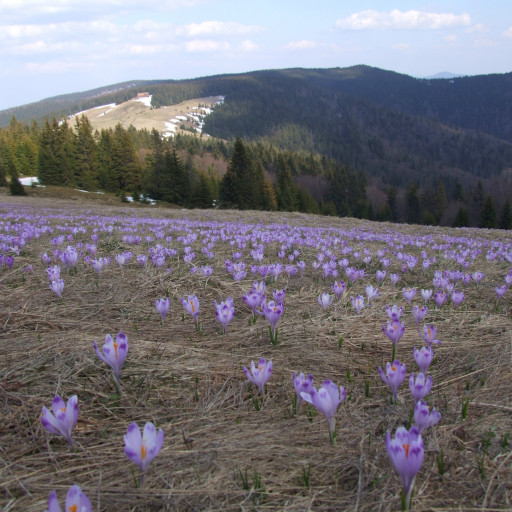
Plant Overview
Known as the "Spring Crocus" or "Giant Dutch Crocus," Crocus vernus is the vibrant alarm clock of the botanical world. One of the first flowers to poke its head through the melting snow, it has been celebrated for centuries as the definitive sign that winter is finally losing its grip. In Greek mythology, these flowers were said to have sprouted from the ground where the gods Zeus and Hera shared a bed, coating the earth in a carpet of purple and gold.
🔍 How to Identify
- 🌸 The Bloom: Large, upright, goblet-shaped flowers that come in shades of deep purple, lavender, pure white, or striped "Pickwick" patterns. They typically open wide in the sun and close tightly at night or on cloudy days.
- 🌿 The Foliage: Narrow, grass-like leaves that are dark green with a very distinct, luminous silver or white stripe running down the center of each blade.
- 📏 Stature: These are low-profile plants, usually reaching only 4–6 inches in height, making them look like scattered jewels in a lawn or flower bed.
🏡 In Your Garden
- 🌱 Naturalizing Expert: This plant is famous for "naturalizing," meaning it will spread and multiply on its own over the years. Many gardeners plant them directly into their lawns to create a purple carpet in March, but you must wait until their leaves turn yellow before mowing your grass for the first time.
- ❄️ The Chill Factor: Crocus vernus relies on a period of cold dormancy to trigger its spring show. It grows from a "corm" (a bulb-like underground stem) that stores all the energy it needs to survive the frost. Because it stores its own food, it’s remarkably easy for beginners—just plant them in the fall and let nature do the work.
⚠️ Safety & Toxicity
- 🐾 Mildly Toxic: While not usually fatal, the corms can cause vomiting, diarrhea, and drooling in dogs and cats if dug up and eaten.
- 🚫 The Imposter Warning: Never confuse Crocus vernus with the "Autumn Crocus" (Colchicum autumnale). While the Spring Crocus is relatively safe, the Autumn Crocus contains colchicine and is extremely toxic to humans and pets. Always check the blooming season to be sure!
✨ Fun Fact
Although it looks very similar to its cousin Crocus sativus, the Spring Crocus does not produce saffron. If you tried to use the bright orange centers of this flower for cooking, you would be disappointed—and likely end up with a very bitter-tasting dish!

Detailed Care Instructions
| Color | Purple, Blue, Yellow, Orange, Pink, White |
| Humidity | Normal |
| Lighting | Full Sun |
| Toxicity | Poisonous |
| Soil Type | Any Well-Draining Soil |
| Difficulty | Medium |
| Plant Type | Perennial Bulb |
| Hibernation | Cold Period |
| Mature Size | 6 Inches Tall, 1- To 3-Inch Spread |
| Temperature | 5°C - 30°C |
| Sun Exposure | Full Sun To Part Sun |
| Hardiness Zones | 3-8 |
To grow Crocus vernus, also known as Dutch Crocus, you can follow these steps:
- Choose a suitable planting location: Crocus Vernus prefers well-drained soil and full sun, though they can also tolerate partial shade. Ensure the soil is not too wet, as they can rot in overly moist conditions.
- Timing: Plant the bulbs in autumn, about 4-6 weeks before the first frost. This allows for sufficient root development before winter.
- Prepare the soil: Loosen the soil to a depth of about 6-8 inches (15-20 cm), removing any weeds and rocks. Add organic matter, like compost, to improve soil fertility and drainage.
- Planting: Dig holes approximately 3-4 inches (7-10 cm) deep, spacing them about 3-4 inches (7-10 cm) apart. Place the bulb in the hole with the pointed end facing upward and cover with soil. Pat the soil gently to remove air pockets.
- Watering: After planting, give the bulbs a thorough watering. This helps to settle the soil around the bulbs and provide moisture for initial growth. However, avoid overwatering, as it can cause the bulbs to rot.
- Mulching: Applying a layer of organic mulch such as straw or wood chips can help conserve moisture, regulate soil temperature, and minimize weed growth. Mulching is particularly beneficial in colder regions, protecting the bulbs during winter.
- Maintenance: Once the crocus blooms in spring, you can remove the spent flowers to prevent seed production, allowing the plant to conserve energy for the next growing season. However, allow the foliage to wither naturally, as it provides nourishment to the bulb for future growth.
- Fertilizer: Crocus Vernus doesn't typically require heavy fertilizer. However, you can apply a slow-release bulb fertilizer or bone meal in late winter or early spring to provide nutrients for healthy growth.
- Pest and disease control: Generally, Crocus Vernus is not prone to severe pest or disease issues. However, watch out for squirrels, mice, and other rodents that may dig up and eat the bulbs. You can deter them by using wire mesh or planting the bulbs in containers.
By following these steps, you should be able to successfully grow Crocus Vernus and enjoy its beautiful spring blooms.

Place in a bright room that is sun drenched almost all day. Or directly in a south-facing window.

To properly water this plant, it is important to water only when the soil feels dry to the touch, and to avoid overwatering. Adequate drainage is also necessary to prevent waterlogging and root damage. During active growth periods, the plant may require more frequent watering, while during dormant periods, watering should be reduced. When watering, it is best to water the soil directly rather than the leaves or flowers, and to avoid splashing water onto the foliage, as this can lead to fungal diseases. Additionally, the plant should be watered early in the day or in the evening to minimize evaporation and allow the soil to absorb the water fully.
For best results, fertilize Crocus Vernus in the early spring when they are just beginning to emerge from the soil. Use a well-balanced fertilizer that is high in phosphorus and potassium and low in nitrogen. Apply the fertilizer according to the instructions on the package, being careful not to over-fertilize as this can damage the plant. Water thoroughly after fertilizing to help the nutrients reach the roots. Repeat the fertilization process once a year, preferably in the fall after the plant has finished flowering.
The ideal soil for the plant that belongs to the genus Crocus Vernus is well-draining, slightly acidic, and humus-rich. It should consist of a mix of sand, loam, and peat moss. The pH level of the soil should be between 6.0 and 7.0. The texture of the soil should be loose and friable, allowing for easy root penetration. The plant prefers a sunny location with at least 6 hours of direct sunlight in spring and a drier soil during summer. A good soil mixture for container gardening might include a mixture of compost, river sand, and pine bark.
There are several ways to propagate this plant. One method is by dividing the corms. First, dig up the plant in the fall or early spring when it is not actively growing. Separate the corms by gently pulling them apart or using a sharp knife to cut them. Make sure each corm has at least one healthy shoot and some roots. Plant the corms immediately in well-draining soil about 4 inches apart and 2-3 inches deep.
Another method of propagation is by seed. Collect the seeds in the late summer or early fall when the seed pods have dried and turned brown. Sow the seeds immediately in a seed tray or directly in the ground. Cover them with a thin layer of soil and keep the soil moist. The seeds will germinate in the spring or next fall.
Lastly, this plant can also be propagated through bulb chipping. This involves cutting the bulb into small pieces, each with a bud attached. Then, plant the small bulbs immediately in well-draining soil about 2-3 inches deep and 3-4 inches apart. Water the soil, but be careful to not overwater. The small bulbs will grow into full-size corms in about 2-3 years.








