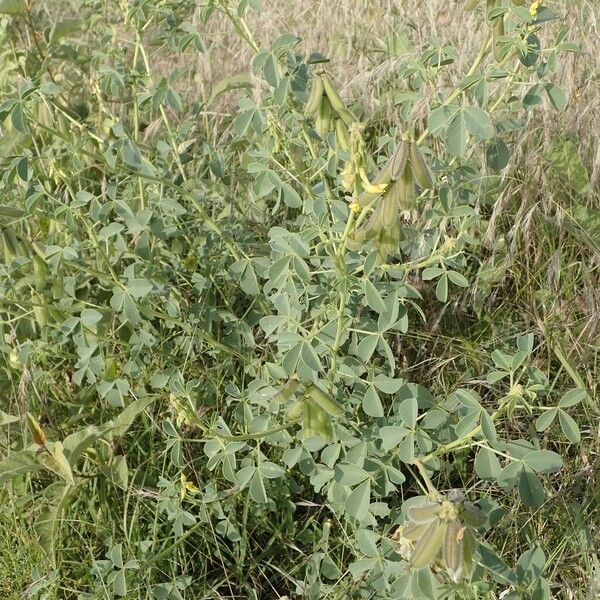
Plant Overview
Known as the Velvety Rattlebox or "Shack-shack," Crotalaria incana is a charismatic member of the pea family that literally makes its own music. Native to the tropical Americas but now found wandering across sun-drenched regions worldwide, this plant is famous for its inflated seed pods that turn into natural maracas when dry. While it looks soft and inviting, it hides a protective chemical defense within its tissues.
🔍 How to Identify
- 🟡 The Flowers: Look for bright yellow, pea-like blossoms that grow in upright clusters. If you look closely, you’ll often see delicate reddish-brown veins tracing patterns on the petals.
- 🍃 The Foliage: The leaves are "trifoliate," meaning they grow in groups of three leaflets, similar to a large clover. They are broadly egg-shaped and have a dusty, grayish-green hue.
- ☁️ The Texture: True to its name, the stems and seed pods are covered in a dense, velvety layer of fine white hairs, giving the plant a soft, shimmering appearance in the sunlight.
- 🥁 The Pods: The fruit is a distinctive, swollen pod about an inch long. When mature and dry, the small seeds inside break loose, creating a rhythmic rattling sound when the wind blows or the plant is shaken.
🏡 In Your Garden
- 🌱 Soil Improver: Like many legumes, the Rattlebox is a nitrogen-fixer. It partners with soil bacteria to pull nitrogen from the air and "pump" it into the earth, making it a popular choice for green manure in tropical farming.
- ☀️ Sun Seeker: This plant is a pioneer species that loves disturbed soil and maximum sunlight. It is incredibly drought-tolerant thanks to its deep taproot, but this same root makes it very difficult to move once it has settled into a spot.
- 🦋 Pollinator Magnet: It is a vital host plant for several butterfly species, particularly the Ceraunus Blue and the Ornate Bella Moth, which utilize the plant's toxins to make themselves unpalatable to birds.
⚠️ Safety & Toxicity
- 🚫 Status: Toxic if ingested.
- 🐾 Details: The plant contains pyrrolizidine alkaloids, which are harmful to the liver. It is particularly dangerous for horses, cattle, and goats if it hitches a ride into their hay. Keep this plant away from areas where pets or children might be tempted to "taste" the bean-like pods.
✨ Fun Fact
The genus name Crotalaria comes from the Greek word krotalon, which means "castanet" or "rattle." It shares this linguistic root with the Rattlesnake (Crotalus), both named for the unmistakable warning sound they produce!

Detailed Care Instructions
To grow Crotalaria Incana plant, follow these steps:
- Obtaining seeds: You can purchase Crotalaria Incana seeds from a local nursery or online seed suppliers. Make sure to choose healthy and viable seeds for better germination.
- Preparing the soil: Crotalaria Incana prefers well-drained soil with a slightly acidic pH between 6 and 7. Amend the soil with organic matter, such as compost, to improve its fertility and drainage. Remove any weeds or debris from the planting area.
- Germination: Crotalaria Incana seeds have a hard outer shell that needs to be scarified before sowing. Scarifying involves nicking or scratching the seed coat to promote water penetration. You can do this by gently rubbing the seeds with sandpaper or soaking them in warm water overnight.
- Sowing seeds: Plant the scarified seeds directly into the prepared soil, approximately 1/4 inch deep. Space the seeds at least 6-12 inches apart to allow for proper growth and airflow.
- Watering: After sowing the seeds, water the planting area thoroughly to ensure good moisture penetration. Keep the soil consistently moist but not waterlogged throughout the germination period, which usually takes 10-14 days.
- Sunlight and temperature: Crotalaria Incana thrives in full sun, so choose a location that receives at least 6-8 hours of direct sunlight per day. It also prefers warm temperatures, between 60-85°F (15-30°C).
- Maintenance: Once the seedlings emerge, thin them out if they are crowded to avoid overcrowding and competition for resources. Weed the area regularly to prevent unwanted plants from taking over. Water the plants regularly, especially during dry spells, and provide support if necessary.
- Harvesting: Crotalaria Incana produces vibrant yellow flowers, which eventually give rise to decorative seedpods. The seeds can be collected once they mature and turn brown. Harvesting can be done by cutting the seedpods from the plant and allowing them to dry in a well-ventilated area.
Remember, Crotalaria Incana is toxic to animals, so keep it out of reach from pets and livestock.

Place in a bright room that is sun drenched almost all day. Or directly in a south-facing window.

To properly water this plant, it is important to consider its specific needs. First, check the soil moisture level by inserting your finger about an inch into the soil. If it feels dry, it is time to water. Use room temperature water and pour it slowly at the base of the plant until water starts to drain out of the bottom of the container. Avoid getting water on the foliage as this can lead to fungal diseases. Overwatering can be harmful to this plant, so ensure the soil is allowed to dry out slightly before watering again. The frequency of watering depends on a variety of factors such as temperature, humidity, and soil type, so it is important to monitor the plant closely and adjust watering accordingly.
To fertilize this plant, you should first test the soil to determine its pH level. Based on the results, select a fertilizer that is appropriate for the soil type and pH level. Apply the fertilizer in the spring and summer months, following the manufacturer's instructions. Avoid over-fertilizing as it can damage the plant. Consider using an organic fertilizer, like compost or manure, for a healthier and more sustainable approach to fertilizing.
Crotalaria Incana plant prefers well-draining soil with a sandy or loamy texture that is rich in organic matter. The soil should be slightly acidic, with a pH range of 5.5-6.5. It should also be moist but not waterlogged, as the plant is susceptible to root rot. Clay soils should be avoided, as they are too dense and can retain too much moisture. Amending the soil with compost or other organic matter can improve the soil structure and fertility. The plant is tolerant of drought and poor soils, but a fertile and well-draining soil will promote better growth and flowering.
- Choose a healthy parent plant: Choose a mature, healthy Crotalaria Incana plant as the parent plant from which you will be propagating new plants.
- Collect seed pods: Crotalaria Incana plants produce small, brown, pea-sized seed pods that contain several seeds. Collect these seed pods from the parent plant once they turn brown and start to dry out.
- Dry seed pods: After collecting the seed pods, place them in a warm, dry area for a few days to allow them to fully dry out and become brittle.
- Extract seeds: Once the seed pods are fully dry, gently crack them open and extract the small seeds contained within.
- Pre-treat seeds: Some species of Crotalaria require pre-treatment before planting to help with germination. To do this, soak the seeds in room temperature water overnight or scarify the seeds with sandpaper before planting.
- Plant seeds: Fill a seed tray with well-draining soil. Plant the Crotalaria Incana seeds in the soil at a depth of about 2-3 times the seed size, spacing them about an inch apart.
- Water seeds: After planting, water the seeds thoroughly to moisten the soil.
- Provide light and heat: Crotalaria Incana seeds need plenty of warmth and light to germinate. Place the seed tray in a warm, sunny spot or under a grow light.
- Transplant seedlings: Once the seedlings are big enough to handle, usually after a few weeks, transplant them into individual pots or into the ground.
- Care for newly propagated plants: Water your new Crotalaria Incana plants regularly and provide them with plenty of sun. Once they become established, they should grow quickly and produce their own seed pods, allowing you to continue propagating more plants in the future.








