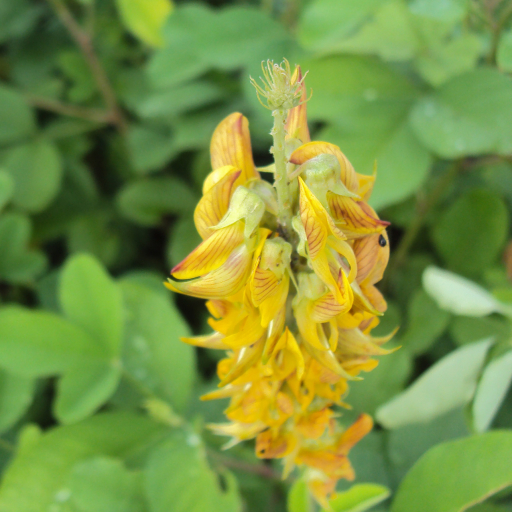
Plant Overview
Often called the Smooth Rattlebox, this vibrant member of the pea family is a master of rhythm and utility. Known for its bright yellow blooms that look like miniature suns, it earned its nickname from the dry, hollow seed pods that clatter like tiny castanets in the wind. While it’s often used in agriculture to breathe life back into tired soil, it hides a potent chemical defense that demands respect.
🔍 How to Identify
- 🍃 Trifoliate Leaves: Look for sets of three leaflets (like a large, elegant clover) that have a soft, matte green finish and a smooth texture.
- 🌻 Pin-Striped Flowers: The pea-like flowers are bright yellow, but if you look closely, you’ll see delicate, dark reddish-brown veins "painting" the petals.
- 🫛 Inflated Pods: It produces cylindrical, sausage-shaped pods that start out green and turn a dark, papery brown as they mature and begin their "rattling" phase.
🏡 In Your Garden
- 🌱 Soil Rejuvenator: This plant is a "green manure" champion. It has a symbiotic relationship with soil bacteria that allows it to pull nitrogen from the air and "fix" it into the earth, naturally fertilizing the area.
- ☀️ The Sun-Drenched Pioneer: It loves disturbed soil and full sun. If you find it in your garden, it’s likely because it’s trying to heal a patch of dry or nutrient-poor land.
- 🌾 Growth Habit: It grows upright and woody at the base, often reaching chest height, making it a prominent figure in wilder, meadow-style landscapes.
⚠️ Safety & Toxicity
- 🚫 Toxic Assessment: Dangerous if ingested. The entire plant contains pyrrolizidine alkaloids, which are cumulative toxins.
- 🐾 Livestock & Pets: It is particularly dangerous to horses, cattle, and dogs. Ingestion can lead to "Crotalaria poisoning," which causes slow but severe liver damage. Always keep this plant out of grazing areas or yards with curious pets.
✨ Fun Fact
The genus name Crotalaria is derived from the Greek word krotalon, which means "castanet." It shares this linguistic root with Crotalus, the scientific name for the Rattlesnake, both named for the distinct rattling sound they make when disturbed!

Detailed Care Instructions
| Humidity | Normal |
| Lighting | Full Sun |
| Toxicity | Poisonous |
| Difficulty | Easy |
| Hibernation | Cold Period |
| Temperature | 16°C - 26°C |
| Hardiness Zones | Min 9 |
To grow Crotalaria pallida, also known as showy crotalaria, follow these steps:
- Choose a suitable location: Crotalaria pallida prefers full sun but can tolerate partial shade. Select a location in your garden that receives at least 6 hours of direct sunlight per day.
- Prepare the soil: Crotalaria pallida prefers well-draining soil with a pH range of 5.5 to 7.5. If necessary, amend the soil by adding organic matter such as compost or aged manure to improve drainage and fertility.
- Sow the seeds: Crotalaria pallida can be grown from seeds. Start by scarifying the seeds, which means scratching or nicking the hard outer surface of the seed with a file or sandpaper to enhance germination. Soak the scarified seeds in warm water for 24 hours before sowing.
- Plant the seeds: After scarification, plant the seeds about 1/4 inch deep in the prepared soil. Space the seeds 12-18 inches apart to allow room for growth. If you are growing multiple plants, space rows about 2-3 feet apart.
- Watering: Keep the soil slightly moist but not waterlogged. Water the seeds and young plants regularly, especially during dry periods. Once established, Crotalaria pallida is quite drought-tolerant and generally doesn't require frequent watering.
- Care and maintenance: Ensure that the soil remains weed-free, as competition from weeds can inhibit the growth of Crotalaria pallida. Mulching around the plants can help suppress weeds and retain moisture. Avoid over-fertilizing as excessive nutrients can lead to leggy growth with reduced flowering.
- Pruning and deadheading: Prune back leggy or damaged growth to maintain a compact shape. Deadhead faded flowers to encourage additional blooms and prevent seed production.
- Pest and disease control: Crotalaria pallida is generally resistant to pests and diseases. However, occasional infestations of aphids, whiteflies, or spider mites can occur. Monitor your plants regularly and use organic pest control methods if necessary.
- Support: If Crotalaria pallida becomes top-heavy or starts sprawling, provide support such as stakes or cages to keep the plants upright and prevent damage.
- Harvesting seeds (optional): If you want to propagate Crotalaria pallida from your own seeds, allow the flowers to mature and develop seed pods. Harvest the pods when they turn brown and start to dry out. Remove the seeds from the pod, dry them thoroughly, and store them in a cool, dry place until ready for sowing.
By following these steps, you should be able to successfully grow Crotalaria pallida in your garden.

Place in a bright room that is sun drenched almost all day. Or directly in a south-facing window.

Crotalaria Pallida is a type of plant that requires regular watering to thrive. When watering, it's important to avoid overwatering as it can cause root rot. To water effectively, you should first determine the plant's water needs by checking the soil moisture level. To do this, stick your finger about an inch into the soil to feel the moisture level. If it feels dry, it's time to water.
When watering, use a watering can or hose with a nozzle to control the flow. Pour water around the base of the plant in a slow, steady stream, allowing the water to soak into the soil. Avoid getting water on the leaves as this can promote fungal growth.
It's best to water in the morning or evening to reduce evaporation and prevent the water from sitting on the plant overnight. During hot, dry weather, you may need to water more frequently to keep the soil moist.
Crotalaria Pallida also benefits from occasional deep watering. This involves soaking the soil around the plant deeply, which encourages the roots to grow deeper and become more drought tolerant. A good way to deep water is to place a hose on the base of the plant and let it run slowly for several minutes until the soil is saturated.
Overall, consistent watering is key to keeping Crotalaria Pallida healthy and thriving. By monitoring the soil moisture level and watering effectively, you can help ensure that your plant grows strong and beautiful.
To fertilize the Crotalaria Pallida plant, follow these instructions:
- Choose a balanced fertilizer with an NPK ratio of 10-10-10 or similar.
- Dilute the fertilizer according to package instructions, usually around 1 tablespoon per gallon of water.
- Water the plant thoroughly before applying the fertilizer to ensure the roots are moist.
- Apply the diluted fertilizer to the soil around the base of the plant, avoiding direct contact with the leaves.
- Use a watering can or a sprayer with a fine nozzle to distribute the fertilizer evenly.
- Repeat the fertilization process every 4-6 weeks during the growing season, which is typically spring and summer.
- Adjust the frequency and concentration of fertilization based on the plant's response. If the foliage turns yellow or the plant looks unhealthy, reduce the amount of fertilizer or apply it less frequently.
- Always follow the manufacturer's instructions on the fertilizer packaging for specific guidelines and safety precautions.
- Monitor the plant regularly for any signs of nutrient deficiencies or excesses, such as stunted growth or leaf discoloration. Adjust the fertilization accordingly.
- Remember to water the plant adequately and provide proper sunlight for optimal growth in addition to fertilizing.
Crotalaria Pallida plant prefers soil that is well-drained and slightly acidic. It can grow in a variety of soil types, but it thrives best in fertile loamy soil. The pH of the soil should be in the range of 5.5 to 7.5. It is recommended to mix organic matter such as compost or aged manure into the soil before planting. This will provide nutrients for the plant and improve soil structure. The soil should be kept moist but not waterlogged. It is important to avoid overwatering as this can cause root rot. Additionally, it is recommended to mulch the soil around the plant to retain moisture and suppress weeds.
Crotalaria pallida is a perennial plant that can be propagated through various methods such as seed propagation, stem cuttings, and division. Here is a detailed guide on each propagation method:
- Seed Propagation:
- Start by collecting mature seeds from the plant. These seeds will usually be found in seed pods that have turned brown and dried out.
- Before sowing, you can scarify the seeds (lightly nicking or scratching the hard outer surface) to enhance germination.
- Fill a tray or pot with well-draining potting mix. Moisten the soil slightly.
- Place the seeds evenly on the soil surface, ensuring they are not overcrowded.
- Gently press the seeds into the soil, covering them with a thin layer of soil or vermiculite.
- Cover the tray or pot with a clear plastic bag or a plastic lid to provide a humid environment for germination.
- Place the tray or pot in a warm location with indirect sunlight.
- Ensure the soil stays slightly moist, but avoid overwatering to prevent seed rot.
- Germination can take anywhere from 7 to 21 days. Once the seedlings have grown a few inches tall, they can be transplanted into individual pots or directly into the garden.
- Start by collecting mature seeds from the plant. These seeds will usually be found in seed pods that have turned brown and dried out.
- Stem Cuttings:
- Choose a healthy stem from the parent plant that has several nodes (the points on the stem where leaves emerge).
- Using a clean and sharp pair of pruning shears, cut a 4-6 inch section of the stem just below a node.
- Remove any leaves from the lower half of the cutting.
- Dip the cut end of the stem in rooting hormone powder to promote root development (optional but recommended).
- Prepare a pot filled with well-draining potting mix.
- Create a small hole in the soil using a pencil or your finger and insert the cutting into the hole, ensuring the leafless portion is below the soil surface.
- Firmly press the soil around the cutting to provide stability.
- Mist the cutting with water and cover it with a plastic bag or place it in a propagator to maintain high humidity.
- Place the pot in a warm location with indirect sunlight.
- Check regularly to ensure the soil remains slightly moist, but avoid overwatering.
- After a few weeks, gently tug on the cutting to check for resistance, indicating the development of roots.
- Once roots have formed, the cutting can be transplanted into a larger container or directly into the garden.
- Choose a healthy stem from the parent plant that has several nodes (the points on the stem where leaves emerge).
- Division:
- Dig up the mature Crotalaria pallida plant during its dormant period, preferably in early spring.
- Use a clean and sharp garden spade to carefully divide the plant by separating the clumps at the root level. Each division should have several shoots and a well-developed root system.
- Shake off excess soil and trim any damaged or excessively long roots.
- Plant each division immediately in well-draining soil, ensuring that the crown is at soil level or slightly above.
- Water the divisions thoroughly after planting to settle the soil.
- Place the newly divided plants in a location that receives partial shade until they establish their root systems.
- Water regularly, and provide necessary care such as fertilization and protection from extreme weather conditions.
Remember to label or keep track of the propagated plants to ensure proper identification and care.
- Dig up the mature Crotalaria pallida plant during its dormant period, preferably in early spring.








