Plant Overview
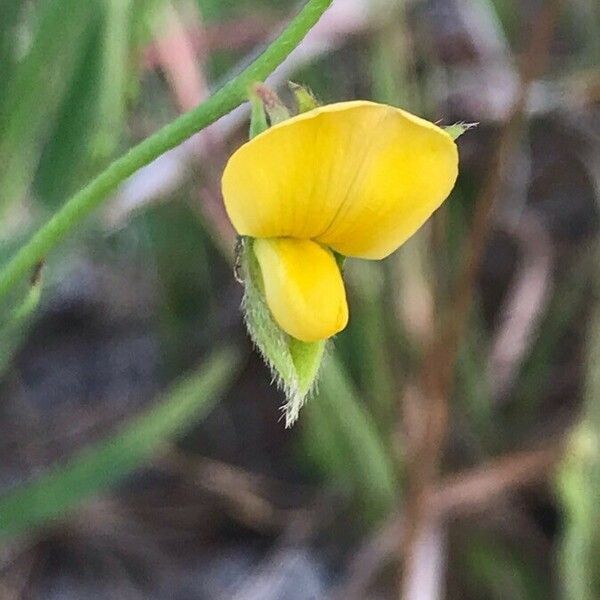
Known affectionately as Pursh’s Rattlebox, this resilient wildflower is a charming resident of the sandy coastal plains and pine barrens of the Southeastern United States. It earns its whimsical nickname from its hollow, inflated seed pods that dry out and "rattle" like a tiny percussion instrument when shaken by the wind. While it looks like a delicate garden pea, it is a hardy survivor designed for sun-drenched, nutrient-poor landscapes.
🔍 How to Identify
- 🌼 Sunny Blooms: Features classic, pea-like flowers that are bright canary yellow, often growing in small clusters at the top of the stems.
- 🌿 Silky Foliage: The leaves are simple, narrow (lance-shaped), and covered in fine, silvery hairs that give the plant a soft, slightly shimmering texture.
- 🔔 Musical Pods: Produces smooth, oblong seed pods that turn dark brown or black as they mature; the loose seeds inside create the signature "rattle."
🏡 In Your Garden & Nature
- 🏖️ Sand Specialist: This plant is a "pioneer species," meaning it is often the first to grow in sandy, disturbed soils or open pine savannas where other plants might wither.
- 🌱 Nitrogen Fixer: As a member of the legume family, it possesses a secret superpower: it hosts beneficial bacteria in its roots that pull nitrogen from the air and put it back into the soil, acting as a natural fertilizer.
- ☀️ Sun Seeker: It has a deep taproot that makes it very drought-tolerant, but this also means it hates being moved—once you plant it, it’s best to let it stay put.
⚠️ Safety & Toxicity
- 🚫 Toxic if Ingested: All parts of the Rattlebox contain pyrrolizidine alkaloids, which are chemically designed to deter herbivores from eating the plant.
- 🐾 Pet & Livestock Warning: These toxins can cause cumulative liver damage in horses, cattle, and curious dogs. It is generally avoided by wildlife, but it should not be grown in or near grazing pastures.
✨ Fun Fact
Pursh’s Rattlebox plays a starring role in the "chemical warfare" of the insect world. The Bella Moth caterpillar eats the seeds specifically to soak up the plant's toxins. This makes the moth taste terrible to birds and spiders, effectively turning a poisonous plant into a suit of biological armor!

Detailed Care Instructions

Place in a bright room that is sun drenched almost all day. Or directly in a south-facing window.

Some plants require more regular watering than others, which should be done every few days. It's critical to maintain the soil moist all of the time. The water requirements of the same plant placed in pots with varying sizes will differ. Because the water in the smaller pot evaporates faster than the water in the larger pot, it will require more watering. Regardless of pot size, the surface should constantly be maintained moist.








