Plant Overview
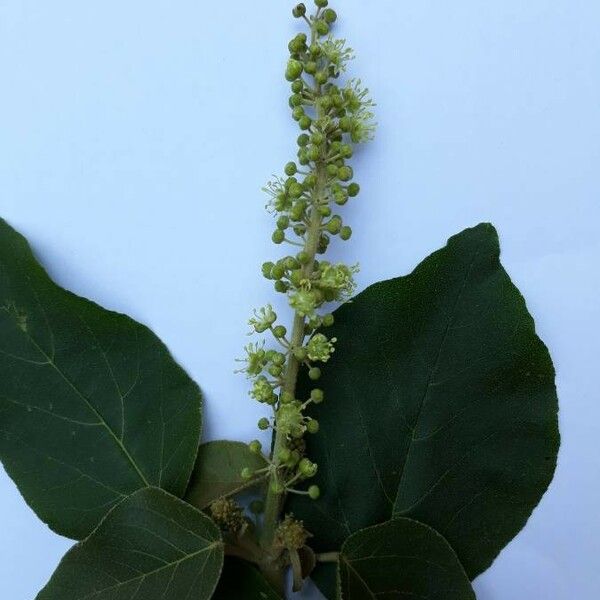
Known throughout East Africa as the "Broad-leaved Croton" or "Russet Forest Croton," this resilient tree is a cornerstone of forest restoration and traditional medicine. It is often celebrated for its rapid growth and its ability to transform a barren patch of land into a shaded sanctuary in just a few seasons. In many local cultures, it is respected as a tree of protection, standing tall with its distinctive "spiky" flower towers and broad, sheltering canopy.
🔍 How to Identify
- 🍃 Large, Heart-Shaped Leaves: The leaves are broad and ovate, often feeling slightly rough or "sandpapery" to the touch due to a coating of fine, star-shaped hairs.
- 🍦 Creamy Flower Spikes: Long, drooping clusters (racemes) of pale yellow or white flowers emerge from the branch tips, looking like fuzzy tails hanging in the breeze.
- 🟢 Trilobed Fruit Capsules: The tree produces small, green, three-lobed fruits that eventually turn a woody greyish-brown before splitting open to launch their seeds.
🏡 In Your Garden
- 🌳 The Pioneer Specialist: This tree is what botanists call a "pioneer species." It is perfect for large gardens or restoration projects because it thrives in disturbed soil, helping to improve soil fertility for surrounding plants.
- ☀️ Sun-Loving Shade: While it grows quickly to provide shade, it requires a position in full sun. It is a deciduous tree, meaning it may drop its leaves during the dry season to conserve energy, revealing a beautiful, rugged bark structure.
⚠️ Safety & Toxicity
- 🚫 Irritating Sap: Like many members of the Spurge family, the milky sap of the Croton macrostachyus can cause contact dermatitis or skin rashes if handled without gloves.
- 🐾 Ingestion Risk: The seeds and bark contain powerful compounds used historically as strong purgatives. They should be kept away from curious pets and children, as ingestion can lead to severe stomach upset.
✨ Fun Fact
✨ The Living Pharmacy: In various African traditional medicines, almost every part of this tree is utilized; the bark is famously used to treat everything from malaria to skin ailments, earning it a reputation as a "living drugstore."

Detailed Care Instructions
Croton Macrostachyus plant needs a moderate amount of water. To water this plant, fill a container with water and allow it to sit for a few hours to reach room temperature. Then, slowly pour the water onto the soil around the plant, being careful not to get water on the plant's leaves. Make sure to water the plant thoroughly, allowing the water to seep through the soil and out of the drainage holes. Wait until the top inch of soil is dry before watering again, which typically takes anywhere from one to three weeks depending on the location and temperature. Do not overwater as this can cause root rot and other issues.
The ideal soil for Croton Macrostachyus should be well-draining and aerated. It should be rich in nutrients and organic matter to support the plant's growth. A soil mixture that contains a blend of peat moss, perlite, and vermiculite is recommended. The pH level of the soil should be slightly acidic to neutral, with a range between 5.5 and 7.0. The soil should not be compacted and should be loose enough to allow for proper air circulation and adequate root development. Additionally, the soil should be watered regularly, but not to the point of saturation. It is important to avoid over-watering and to allow the soil to dry out slightly between each watering to prevent root rot.








