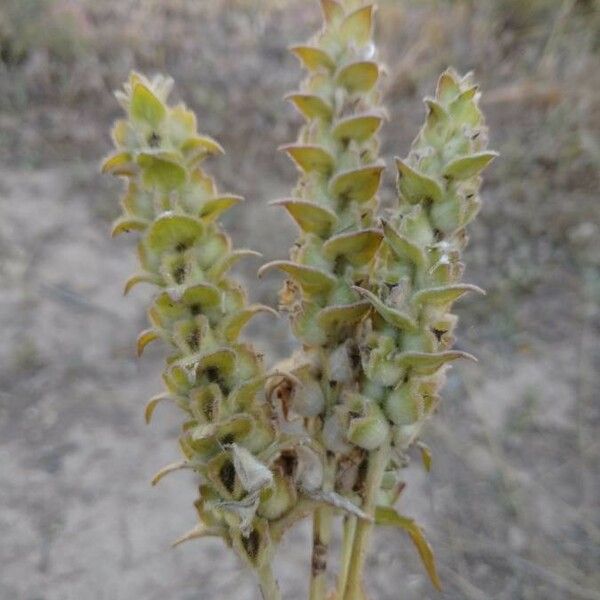
Plant Overview
Often called Shore Bedstraw or Sea Crosswort, Crucianella maritima is a resilient coastal specialist found clinging to the sun-drenched dunes of the Mediterranean. It is a master of survival, designed to endure the harsh conditions of shifting sands and salty sea breezes. This plant is a favorite for seaside gardeners looking for a tough, geometric groundcover that smells faintly of the Mediterranean summer.
🔍 How to Identify
- 🌿 The "Cross" Leaves: Tiny, pointed, leathery leaves grow in whorls of four, creating a distinct geometric pattern that looks like miniature green crosses when viewed from above.
- 🌼 Spiky Blooms: During late spring and summer, it produces small, pale yellow flowers gathered in dense, cone-like spikes at the ends of its stems.
- 🏗️ Prostrate Growth: It forms low, woody mats that hug the ground, rarely reaching more than 15–20 centimeters in height, which helps it avoid the brunt of coastal winds.
🏡 In Your Garden
- 🏖️ The Dune Specialist: Because it originates in sand dunes, it requires exceptionally well-draining soil. In a garden setting, it thrives in sandy or gritty "poor" soil where other plants might struggle to find nutrients.
- ☀️ Sun Worshiper: This plant cannot tolerate shade; it needs full, direct sun to maintain its compact shape. It is a "set it and forget it" plant for xeriscaping or rock gardens, as it is highly drought-tolerant once established.
⚠️ Safety & Toxicity
- ✅ General Status: Crucianella maritima is generally considered non-toxic to humans and common household pets like dogs and cats.
- 🧴 Texture Warning: The leaves are quite stiff and scale-like; while not dangerous, they can be slightly abrasive to sensitive skin if you are weeding around them with bare hands.
✨ Fun Fact
The name Crucianella is a diminutive of the Latin word crux, meaning "little cross." If you look straight down at a single stem, the leaves are perfectly aligned in a cross-shape, a trait it shares with its cousins in the Madder (Rubiaceae) family.

Detailed Care Instructions
To grow Crucianella Maritima, also known as sea pink or thrift, follow these steps:
- Choose a suitable location: Crucianella Maritima prefers full sun but can tolerate some light shade. It also needs well-draining soil, preferably sandy or loamy.
- Prepare the soil: Ensure the soil is well-draining by adding organic matter, such as compost or well-rotted manure. This helps improve soil structure and nutrient content.
- Planting method: You can grow Crucianella Maritima from seeds, cuttings, or container-grown plants. If using seeds, sow them in early spring or late fall. If using cuttings or plants, plant them in the ground or containers at the same depth they were originally growing.
- Watering: Water the plant thoroughly after planting and keep the soil moist until the root system establishes. Once established, Crucianella Maritima is quite drought-tolerant but still appreciates occasional watering, especially during dry periods.
- Fertilizing: Apply a balanced slow-release fertilizer in early spring to provide essential nutrients. Follow the instructions on the fertilizer package for the recommended application rate.
- Pruning: Trim back the faded flowers after blooming to encourage further flowering and maintain a compact shape. Additionally, pruning can be done in early spring to remove dead or damaged growth.
- Mulching: Apply a layer of organic mulch, such as shredded bark or compost, around the base of the plant to help retain moisture, suppress weeds, and insulate the roots during extreme temperatures.
- Pests and diseases: Crucianella Maritima is generally pest and disease resistant. However, keeping the surrounding area tidy and removing any debris can prevent potential pest or disease problems.
- Propagation: If you want to propagate more plants, collect seeds from the flowers when they turn brown and start to open. The seeds should be stored in a cool, dry place until the following spring when they can be sown.
By properly caring for Crucianella Maritima, it should thrive and provide you with beautiful blooms throughout the growing season.

Place in a bright room that is sun drenched almost all day. Or directly in a south-facing window.

To water this plant, you should first check the soil moisture level by inserting your finger about an inch deep into the soil. If the soil feels dry, it's time to water. Use a watering can or a hose with a gentle spray nozzle to water the base of the plant, making sure to avoid getting water on the leaves. Water thoroughly until the soil is moist but not waterlogged. Allow the soil to drain for a few minutes before placing the plant back in its location. It's important not to overwater this plant, as it prefers well-draining soil and can suffer from root rot if the soil is too wet. Depending on the climate and soil conditions, this plant may need watering every few days to once a week.
To properly fertilize Crucianella Maritima plant, follow these instructions:
- Start by selecting a balanced, water-soluble fertilizer with equal ratios of nitrogen, phosphorus, and potassium (NPK). A 10-10-10 or 20-20-20 fertilizer will work well.
- Dilute the fertilizer according to the manufacturer's instructions. Typically, a concentration of 1 tablespoon of fertilizer per gallon of water is suitable.
- Water the plant thoroughly before applying the fertilizer to avoid burning the roots. Ensure that the soil is evenly moist.
- Slowly pour the diluted fertilizer solution around the base of the plant, taking care not to splash it on the foliage. This helps prevent leaf burn and fungal diseases.
- Use enough fertilizer solution to moisten the soil and reach the plant's root zone. Avoid over-fertilizing, as it can lead to excessive growth and weaken the plant.
- Repeat the fertilization process every 4-6 weeks during the growing season, typically from spring to early fall. Adjust the frequency based on the plant's response and specific fertilizer recommendations.
- Regularly monitor the plant for any signs of nutrient deficiencies such as yellowing leaves or stunted growth. If observed, increase the frequency of fertilization or consider applying a specific fertilizer for the deficient nutrient.
Remember to always read and follow the label instructions of the specific fertilizer you are using as different brands may have varying guidelines. Additionally, it's essential to provide adequate sunlight, water, and proper soil conditions for the overall health and well-being of the Crucianella Maritima plant.
It is recommended to use a well-draining soil mixture for this plant. A mix of peat moss, perlite, and sand is often suitable. The soil should not be too rich in nutrients as it prefers nutrient-poor soil, but it should have a pH range of 6-7.5. It is also important to make sure that the soil is kept moist but not waterlogged.
Crucianella maritima, a flowering plant belonging to the family Rubiaceae, is commonly propagated through several methods, including seed sowing, stem cuttings, and division. Here is a detailed explanation of each propagation method:
- Seed Sowing:
- Start by collecting mature seeds from the plant. Ensure that the seeds are fully ripe and have a hard outer covering.
- Prepare a well-draining seed starting mix by combining equal parts of peat moss, perlite, and vermiculite.
- Moisten the seed starting mix and fill small seed trays or pots with the damp mixture.
- Scatter the Crucianella maritima seeds evenly over the surface of the soil, avoiding overcrowding.
- Gently press the seeds into the soil, ensuring they make good contact.
- Cover the tray or pot with a plastic dome or a clear plastic bag to create a humid environment.
- Place the tray in a warm location with indirect sunlight and maintain a consistent temperature around 65-75°F (18-24°C).
- Regularly mist the soil surface to keep it moist but not waterlogged.
- Germination usually occurs within 2-4 weeks, and once the seedlings have developed their second set of leaves, they can be transplanted into individual pots or directly into the garden.
- Stem Cuttings:
- Select a healthy, non-flowering stem of the Crucianella maritima plant.
- Using clean and sharp pruning shears, cut a 4-6 inch (10-15 cm) section from the end of the stem. Ensure that the cutting has at least two sets of leaves.
- Strip off the lower set of leaves to expose a small section of bare stem.
- Dip the end of the cutting into a rooting hormone powder to stimulate root development (optional).
- Prepare a well-draining rooting medium, such as a mixture of perlite and peat moss, and moisten it lightly.
- Insert the cutting about 1-2 inches (2.5-5 cm) deep into the rooting medium, ensuring that it remains upright.
- Place the pot in a warm and bright location with indirect sunlight.
- Keep the rooting medium evenly moist by misting it regularly.
- The rooting process typically takes 4-6 weeks, and once roots have formed, the cutting can be transplanted into a larger pot or directly into the garden.
- Division:
- Choose a mature Crucianella maritima plant that has formed a clump with multiple shoots.
- Lift the plant gently from the soil, trying to keep the root ball intact.
- Shake off excess soil to expose the roots and locate natural divisions or separate the clump gently by hand.
- Use a sharp and clean gardening knife to divide the clumps into individual sections, ensuring each division has a good amount of roots and shoots.
- Immediately replant the divided sections into prepared holes or pots filled with well-draining soil.
- Water the newly divided plants thoroughly and place them in a location with partial shade to allow them to recover and establish.
Remember to provide adequate care, such as regular watering, fertilization, and protection from extreme weather conditions, to ensure the successful establishment of Crucianella maritima plants propagated through any of these methods.








