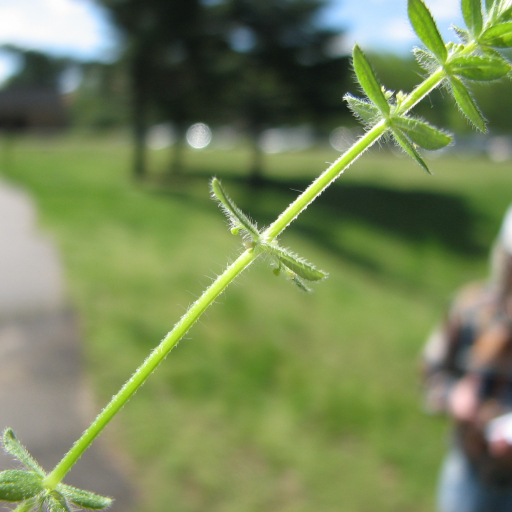
Plant Overview
Often called the Piedmont Bedstraw, this delicate annual is a master of the "miniature." While it might look like a simple weed at first glance, its architectural symmetry—with leaves arranged in perfect golden crosses—makes it a favorite for those who appreciate the subtle beauty of a wild meadow. It is a humble traveler that has successfully migrated from the sunny hills of Europe and the Mediterranean to the roadsides and fields of North America.
🔍 How to Identify
- 🌿 The "Cross" Leaves: Look for its namesake feature: leaves arranged in distinct "whorls" of exactly four along the stem, forming the shape of a tiny green cross.
- 🌼 Axillary Blooms: The flowers are microscopic, pale yellow stars. Unlike many wildflowers, they don’t sit at the top of the plant; they hide tucked inside the leaf joints (axils).
- ☁️ Hairy Stems: The entire plant is covered in fine, stiff hairs, giving it a slightly "fuzzy" or frosted appearance when caught in the morning dew.
🏡 In Your Garden
- 🌱 The Scrambler's Habit: Because it has very weak, thin stems, this plant rarely stands tall on its own. It prefers to "scramble" or lean on neighboring grasses for support, making it an interesting (though sometimes aggressive) filler for a wild, "untamed" meadow aesthetic.
- 🏜️ Drought Specialist: You will usually find it in dry, rocky, or sandy soils. It thrives in neglected corners where other plants might struggle with low nutrients, as it doesn't require rich compost to complete its quick life cycle.
⚠️ Safety & Toxicity
- 🟢 Safe Status: Piedmont Bedstraw is generally considered non-toxic to humans and common household pets like cats and dogs.
- 🧤 Skin Sensitivity: While not poisonous, the stiff hairs on the stem can be slightly abrasive. If you have very sensitive skin, handling large amounts of the plant might cause a mild, itchy sensation.
✨ Fun Fact
🛌 Nature's Mattress: The common name "Bedstraw" comes from a centuries-old tradition where these plants were dried and used to stuff mattresses. Their slightly "clingy" texture helped the stems mat together, creating a springy, cushioned bed that stayed in place better than loose hay!

Detailed Care Instructions
To grow Cruciata Pedemontana, also known as the Alpine Bedstraw or Northern Bedstraw, follow these steps:
- Climate and Location: Cruciata Pedemontana is native to alpine regions, so it prefers a cool and temperate climate. Choose a location in your garden that receives partial shade or full sun, depending on your climate.
- Soil Preparation: The plant prefers well-drained soil that is rich in organic matter. Prepare the soil by removing any weeds, rocks, or debris and then amend it with compost or well-rotted manure to improve fertility and drainage.
- Sowing Seeds: Cruciata Pedemontana can be grown from seeds that are sown in the spring or early summer. Sow the seeds thinly on the prepared soil and lightly cover them with a thin layer of soil or sand. Water gently to ensure the seeds are moist, but not soggy.
- Watering and Maintenance: Keep the soil slightly moist during germination, which usually takes around 2-4 weeks. Once the plant is established, water it regularly but avoid overwatering, as excessive moisture can lead to root rot. Remove any weeds that compete with the plant for nutrients and space.
- Pruning and Support: Cruciata Pedemontana is a low-growing plant that spreads by stolons. If desired, you can trim it back after blooming to maintain a neater appearance. Support may be needed in windy areas, so consider using stakes or a trellis.
- Mulching: Apply a layer of organic mulch, such as bark chips or straw, around the plant to help retain moisture, suppress weed growth, and regulate soil temperature.
- Fertilizing: While Cruciata Pedemontana doesn't require excessive fertilization, you can apply a balanced, slow-release fertilizer in early spring to promote healthy growth. Follow the manufacturer's instructions for application rates.
- Winter Care: In colder climates, the plant may benefit from a layer of mulch or straw in the winter to protect it from frost. However, ensure the mulch is not too thick to prevent excessive moisture retention.
- Propagation: Cruciata Pedemontana can also be propagated through division. Lift the plant carefully, divide it into smaller sections, and replant them in prepared soil.
Remember that each climate and region may have specific requirements for growing Cruciata Pedemontana. It may be useful to consult with your local nursery or gardening experts for further guidance tailored to your specific conditions.

Place in a window with dappled sun or a spot in the middle of a room. Or directly in a window facing west or east.

To water this plant, moisten the soil around the base of the plant slowly and gently. Do not overwater, as this may drown the roots. Check the soil regularly to determine if it needs watering. Generally, it is best to water deeply and less frequently, rather than shallowly and frequently. Avoid getting the foliage wet, as this can lead to disease and fungal growth. It is important to provide the plant with adequate drainage, so that excess water can drain away.
- Start by preparing the soil where you will plant your Cruciata Pedemontana. The soil should be well-draining and have a pH level between 5.5 and 7.5.
- Add organic matter to the soil such as compost, manure or leaf mold before planting.
- When the plant is established and begins to grow, apply a balanced fertilizer containing equal amounts of nitrogen, phosphorus and potassium. This type of fertilizer is usually labeled with the numbers 10-10-10 or 20-20-20.
- Follow the manufacturer's instructions for the amount of fertilizer to use. In general, apply about 1 pound of fertilizer per 100 square feet of soil. Alternatively, you can apply a slow-release fertilizer in early spring, which will gradually release nutrients over time.
- Water the plant thoroughly after fertilizing to help the nutrients soak into the soil. Avoid overwatering, as this can cause the plant to become waterlogged and potentially damaged.
- Fertilize the Cruciata Pedemontana plant every 2-3 months during the growing season, which is typically from spring to fall. Stop fertilizing in the winter when the plant is dormant.
Remember to wear gloves and follow all instructions on the fertilizer packaging while handling it.
The recommended soil for this plant is a well-draining soil with a slightly acidic pH level. The soil should be rich in nutrients and organic matter, and should also retain moisture well without becoming waterlogged. It is also important that the soil is free of any contaminants or pathogens that could harm the plant. A mixture of peat moss, compost, and sand is often recommended for growing this plant. Additionally, it is important to ensure proper drainage by using a pot with a drainage hole or creating a layer of gravel at the bottom of the pot.
Propagation of this plant can be done by collecting the seeds or by dividing the rhizomes. When collecting seeds, it is best to wait until the seedpods have dried out and turned brown. Then, carefully collect the seeds and sow them in a well-draining potting mix. Keep the soil moist and warm, and the seeds should germinate within a few weeks.
Alternatively, you can divide the rhizomes of the plant. Carefully dig up the plant and gently separate the rhizomes with a sharp knife. Each rhizome should have some roots attached. Replant the rhizomes in individual pots or in the ground, making sure to keep the soil moist until they start to grow new shoots.








